










































Freedom on the Net 2017: Manipulating Social Media to Undermine Democracy
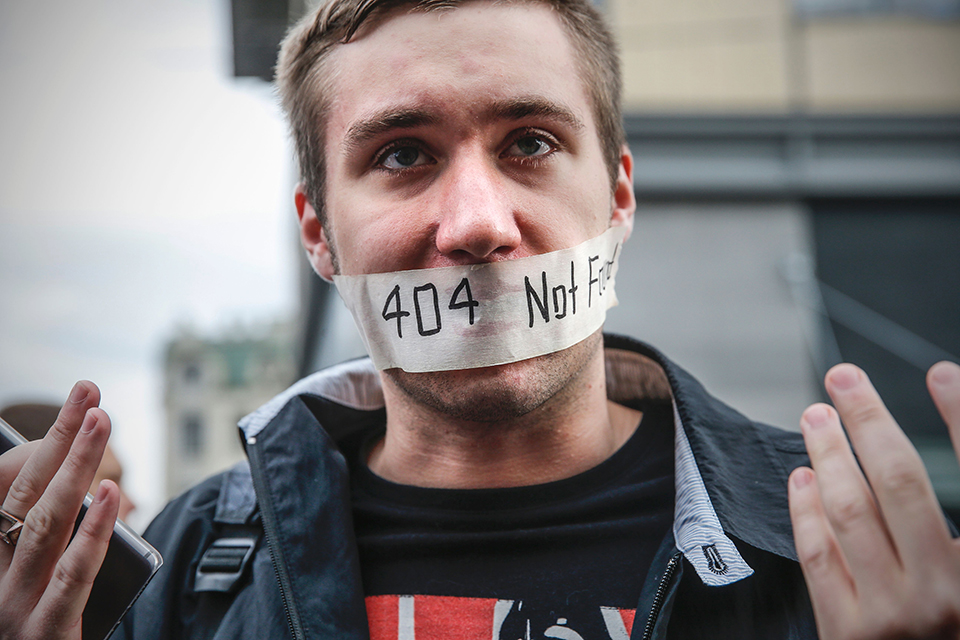
"In the absence of a comprehensive campaign to deal with this threat, manipulation and disinformation techniques could enable modern authoritarian regimes to expand their power and influence while permanently eroding user confidence in online media and the internet as a whole."
Governments around the world are increasing their efforts to manipulate information on social media, according to Freedom on the Net 2017, Freedom House's annual country-by-country assessment of online freedom. More than 70 researchers, nearly all based in the countries they analysed, contributed to the project by examining laws and practices relevant to the internet, testing the accessibility of select websites and services, and interviewing a wide range of sources.
Between June 2016 and May 2017, 32 of the 65 countries (87% of the world's internet users) that were assessed experienced declines in internet freedom, China being named the worst abuser for the third year in a row, followed by Syria and Ethiopia. Most notable declines were documented in Ukraine, Egypt, and Turkey.In Egypt, the authorities blocked over 100 websites, including that of the Qatar-based news network Al-Jazeera, the independent news site Mada Masr, and the blogging platform Medium. Social media users received lengthy prison sentences for a range of alleged offenses, including insulting the country's president.
Less than one-quarter of users reside in countries where the internet is designated free, meaning there are no major obstacles to access, excessive restrictions on content, or serious violations of user rights in the form of unchecked surveillance or unjust repercussions for legitimate speech.
Online manipulation and disinformation tactics played a key role in elections in at least 18 countries over the past year, including the United States. Freedom House documented examples of fake news around elections or referendums in at least 16 of the 65 countries assessed. For instance, government agents in Venezuela regularly used manipulated footage to disseminate lies about opposition protesters on social media in a quest to create confusion and undermine the credibility of the opposition movement ahead of elections. Social media was another platform used for the manipulation of voters. An estimated 30,000 fake accounts were removed from Facebook ahead of the 2017 French elections. Governments have also used mobile shutdowns to suppress opposition groups during elections. For example, in Zambia, mobile broadband networks were reportedly disrupted for up to 72 hours in opposition-held regions following protests by opposition supporters who accused the electoral commission of fraud.
Only 13 countries earned an improvement in their internet freedom score. In most cases, the gains were limited and did not reflect a broad shift in policy.
Other trends:
- An increasing number of governments have shut down mobile internet service for political or security reasons; half of all internet shutdowns in the year studied were specific to mobile connectivity. Many of the mobile shutdowns occurred in areas populated by minority ethnic or religious groups that have challenged the authority of the central government or sought greater rights, such as Tibetan areas in China and Oromo areas in Ethiopia. The actions cut off internet access for already marginalised people who depend on it for communication, commerce, and education.
- More governments restrict live video, particularly during political protests, by blocking live-streaming applications and arresting people who are trying to broadcast abuse. Considering that citizen journalists most often stream political protests on their mobile phones, governments in countries like Belarus have at times disrupted mobile connectivity specifically to prevent live-streamed images from reaching mass audiences. Officials often justified their restrictions by noting that live streaming can be misused to broadcast nudity or violence, but blanket bans on these tools prevent citizens from using them for any purpose.
- Technical attacks against news outlets, opposition, and rights defenders are on the rise. The relatively low cost of cyberattack tools has enabled not only central governments but also local government officials and law enforcement agencies to obtain and employ them against their perceived foes, including those who expose corruption and abuse. Cyberattacks against government critics were documented in 34 out of 65 countries. Independent blogs and news websites are increasingly being taken down through distributed denial-of-service (DDoS) attacks, activists' social media accounts are being disabled or hijacked, and opposition politicians and human rights defenders are being subjected to surveillance through the illegal hacking of their phones and computers. In many cases, such as in Bahrain, Azerbaijan, Mexico, and China, independent forensic analysts have concluded that the government was behind these attacks.
- Although virtual private networks (VPNs). Although VPNs are used for diverse functions, they are often employed in authoritarian countries as a means of accessing websites that are otherwise blocked. This has made VPNs a target for government censors, with 14 countries now restricting the connections in some form and with 6 countries introducing new restrictions over the past year.
- The number of countries that featured physical reprisals for online speech increased by 50% over the past year: from 20 to 30 of the countries assessed. Online journalists and bloggers who wrote on sensitive topics and individuals who criticized or mocked prevailing religious beliefs were the most frequent targets. In 8 countries, people were murdered for their online expression.
According to Freedom House, the effects of these rapidly spreading techniques of online content manipulation on democracy and civic activism are "potentially devastating. The fabrication of grassroots support for government policies on social media creates a closed loop in which the regime essentially endorses itself, leaving independent groups and ordinary citizens on the outside. And by bolstering the false perception that most citizens stand with them, authorities are able to justify crackdowns on the political opposition and advance antidemocratic changes to laws and institutions without a proper debate. Worryingly, state-sponsored manipulation on social media is often coupled with broader restrictions on the news media that prevent access to objective reporting and render societies more susceptible to disinformation."
Freedom House suggests that countering content manipulation and restoring trust in social media without undermining internet and media freedom should include public education aimed at teaching citizens how to detect fake or misleading news and commentary. In addition, democratic societies should strengthen regulations to ensure that political advertising is at least as transparent online as it is offline. Tech companies should reexamine the algorithms behind news curation and more proactively disabling bots and fake accounts that are used for antidemocratic ends.
Freedom House website and CyberGhost blog, both accessed on December 12 2017. Image credit: Freedom House
- Log in to post comments