










































Freedom and the Media 2019: A Downward Spiral
Freedom House
"Democratic countries must work to build a media environment that prioritizes independent and accurate reporting and guarantees access to quality information for all segments of the population." - Zselyke Csaky
This report draws on data generated in the course of Freedom House's Freedom in the World report to provide a global view of press freedom. The 2019 edition covers developments in 195 countries and 14 territories and assesses the real-world press freedom enjoyed by individuals, rather than governments or government performance per se. Press freedom can be affected by both state and nonstate actors, including insurgents and other armed groups.
Along with an analysis of the global trends impacting media, the report includes 4 in-depth essays:
I. Freedom and the Media 2019: A Downward Spiral, by Sarah Repucci - According to Freedom in the World data, media freedom has been deteriorating around the world over the past decade, with new forms of repression taking hold in open societies and authoritarian states alike. The trend is most acute in Europe and in Eurasia and the Middle East. "While the threats to global media freedom are real and concerning in their own right, their impact on the state of democracy is what makes them truly dangerous."
Having outlined these reasons for concern, Repucci suggests that experience has shown that press freedom can rebound from even lengthy stints of repression when given the opportunity. "In Malaysia and Ecuador, the lifting of political pressure on the media allowed independent outlets to rebound from censorship and previously pro-government outlets to produce less obsequious coverage. In Ethiopia, outlets that had been operating from abroad were able to return to the country. In The Gambia, persecuted journalists returned from exile, and more locals have decided to enter the profession." To cite another example, in order to address the information gap on the ground in Venezuela, some media outlets have forged direct relationships with subsets of the population. "Journalists enter communities that have had limited access to objective news under Maduro and report on local stories. This fosters public trust and makes residents more receptive to other impartial news."
Recommendations for policymakers in democratic nations to help ensure the sustainability of independent media worldwide:
- Ensure that their actions do not excuse or inspire violations of press freedom. Democratic nations have a particularly important role to play in maintaining media freedom. Words matter.
- Take strong and immediate action against any violations of media freedom globally through press statements, phone calls, meetings, letters, and the imposition of targeted sanctions on perpetrators. This includes speaking out against violence against journalists and authorities' failure to identify and prosecute attackers, restrictions on media access, blocking of websites, and censorship on particular topics.
- Stand up publicly for the value of a free press, and support civic education. Political leaders and teachers should reiterate the extent to which we all benefit from professional journalists who hold those in power to account.
- Ensure that foreign policy and assistance prioritises support for democratic principles, including media freedom. Foreign aid specifically focused on bolstering independent media by providing technical training and emergency assistance is especially needed given the threats journalists currently face. Countries that have experienced recent expansions in press freedom, such as Angola, Ethiopia, Malaysia, and Ecuador, are particularly vulnerable to backsliding and require special focus.
- Support social media as an alternative outlet for free expression in repressive environments. Alternatives to state-controlled media regularly spring up on social media, including recently in Venezuela, Armenia, and Sudan. Related technology can be used to circumvent censorship and keep reporters anonymous where needed. Donor agencies should provide funding for technology that increases journalistic freedom.
II. The Implications for Democracy of China's Globalizing Media Influence, by Sarah Cook - Cook looks at the ways in which the Chinese Communist Party (CCP) is expanding its overseas influence operations through involvement in news reporting, content dissemination, public debate, and in some cases electoral politics outside China. Chinese authorities influence news media content around the world through 3 primary strategies: promoting the CCP's narratives, suppressing critical viewpoints, and managing content delivery systems. Cook suggests that these efforts have undercut key features of democratic governance and best practices for media freedom by undermining fair competition, interfering with Chinese diaspora communities, weakening the rule of law, and establishing channels for political meddling. Looking ahead, Cook advises individuals and organisations wishing to explore principled responses to the threat to global freedom and democracy posed by China's globalising media influence to focus on investigating and exposing stealthy and deceptive activities, increasing the sophistication and scale of policy debates, and upholding local legal standards.
Recommendations for policymakers in democratic nations to help counter the potential negative impact of Beijing's foreign media influence campaigns:
- Increase transparency by adopting or enforcing policies that enhance publicly available information about Chinese media influence activities in their countries.
- Sanction Chinese diplomats and security agents who overstep their bounds and attempt to interfere with media reporting in other countries.
- Hold hearings to better understand the scope, nature, and impact of politicised censorship and surveillance on Tencent's WeChat platform, then explore avenues for pressuring the company to uphold the rights to free expression and privacy of users living in democratic countries.
- Include exile and diaspora media in funding, training, and other assistance opportunities for Chinese-language media. Foreign governments should proactively engage with such media, providing interviews and exploring other potential partnerships, while resisting pressure from Chinese diplomats to marginalise them. Funders should provide technical and financial support for responding to cyberattacks.
III. A New Toolbox for Co-opting the Media, by Zselyke Csaky - As Csaky reports, in their attempts to control the media, antidemocratic leaders in fragile democracies have deployed a new toolbox that includes economic, legal, and extra-legal means to silence critical journalists and bolster friendly news outlets. Serbia and Hungary declined to "Partly Free" in Freedom in the World 2019. Beyond these 2 countries, Csaky argues that a lack of trust in the media, the onslaught of fake news, increasing political polarisation, and the lack of a profitable business model impede press freedom, laying the groundwork for co-optation by political actors.
That said, there are signs of hope, Csaky indicates. For instance, citizens and lawmakers are protesting media abuses, particularly those by public broadcasters. In Serbia, protesters in March 2019 stormed the headquarters of the public broadcaster RTS after it failed to report on earlier protests and denied airtime to opposition leaders.
Recommendations for policymakers to help counter efforts by ill-intentioned political actors to co-opt media:
- Recognise and speak out against illiberal tactics - e.g., claims that the media are biased or part of the opposition, or that independent journalism and articles uncovering wrongdoing present a security threat. Policymakers and high-level officials in democratic countries should continue to speak out against laws, practices, and rhetoric that negatively impact media freedom.
- Closely watch vulnerable media markets to prevent illiberal co-optation. Countries where the recent populist upsurge is coupled with a media market that suffers from systemic problems, such as the deep intertwining of political and economic interests as seen in Romania or Italy, are particularly vulnerable to illiberal co-optation. Foreign assistance, where applicable, should include efforts to shore up press freedom.
- Provide tailored assistance to journalists in countries where the political leadership has co-opted the media.
- Counter the strategic use of lawsuits and regulatory action against media to silence and intimidate investigative journalists and other critics. Strategic Lawsuits against Public Participation (SLAPPs) are becoming a widespread tool to silence critical voices globally. Policymakers should further the adoption of local anti-SLAPP laws and, with the help of press freedom organisations, educate both the judiciary and local journalists about them.
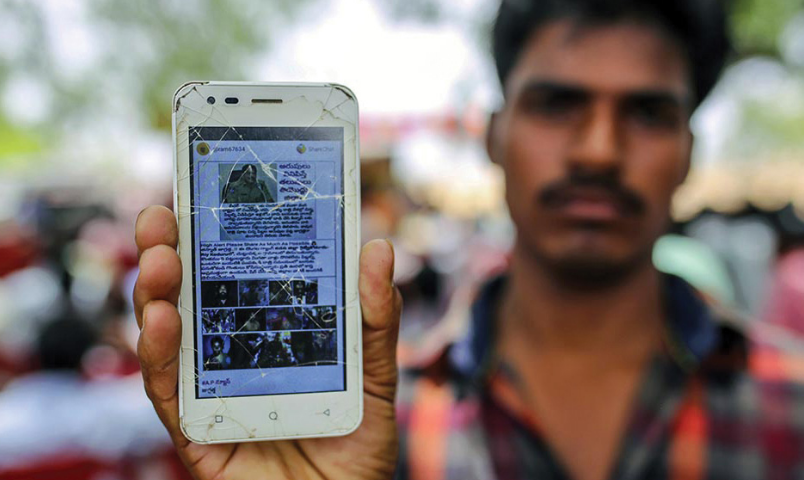
IV. Why Social Media Are Still Worth Saving, by Adrian Shahbaz - Shahbaz writes about the extent to which major technology platforms such as Google and Facebook have disrupted the online media ecosystem, for better and worse, around the globe. For example, live streaming is a feature built into many mobile applications and social media services. Particularly in countries where leaders or political factions dispute facts on the ground, live streaming provides a higher degree of credibility than any other media form. Unlike with a news article or photograph, it is difficult to dispute the timing, location, and creator of a live stream. The format is also highly transparent and interactive.
Shahbaz analyses how authoritarians and propagandists manipulate digital media to undermine democracy. For example, in Brazil, an investigation by the newspaper Folha revealed that business groups had illegally contributed to the 2018 campaign of far-right presidential candidate Jair Bolsonaro by funding some US$3 million in mass messages on WhatsApp. The groups also collected phone numbers through a third-party service, which is prohibited under Brazilian electoral laws.
Recommendations for governments:
- Concentrate on certain aspects of companies' conduct, not the speech of their users in order to tackle disinformation without curbing freedom of expression.. policymakers should establish independent multistakeholder bodies to evaluate companies' content moderation practices for transparency, proportionality, and the effectiveness of appeal processes. These bodies could also set minimum standards for the detection and elimination of coordinated inauthentic activity, such as paid trolls and bot accounts.
- Examine any proposals to regulate social media in light of their likely impact on freedom of expression, particularly as it relates to women, ethnic and religious minorities, LGBT (lesbian, gay, bisexual, and transgender) people, and other vulnerable groups.
- Provide resources to universities, non-governmental organisations (NGOs), and investigative journalists working to understand, detect, and share instances of coordinated inauthentic activity, particularly by state and quasi-state actors.
Recommendations for companies:
- Ensure fair and transparent content moderation practices.
- Engage in continuous dialogue with local civil society organisations (CSOs) to inform the companies' approach to content moderation, government requests, and countering disinformation, among other things.
- Label or eliminate automated "bot" accounts and establish transparent remedial mechanisms to remove the bot designation from any account that may have been mislabeled.
Freedom House is an independent watchdog organisation dedicated to the expansion of freedom and democracy around the world.
Fredom House website, February 14 2020. Image credit: Dhiraj Singh/Bloomberg via Getty Images
- Log in to post comments