










































The Backstory: A Media Freedom Podcast Series
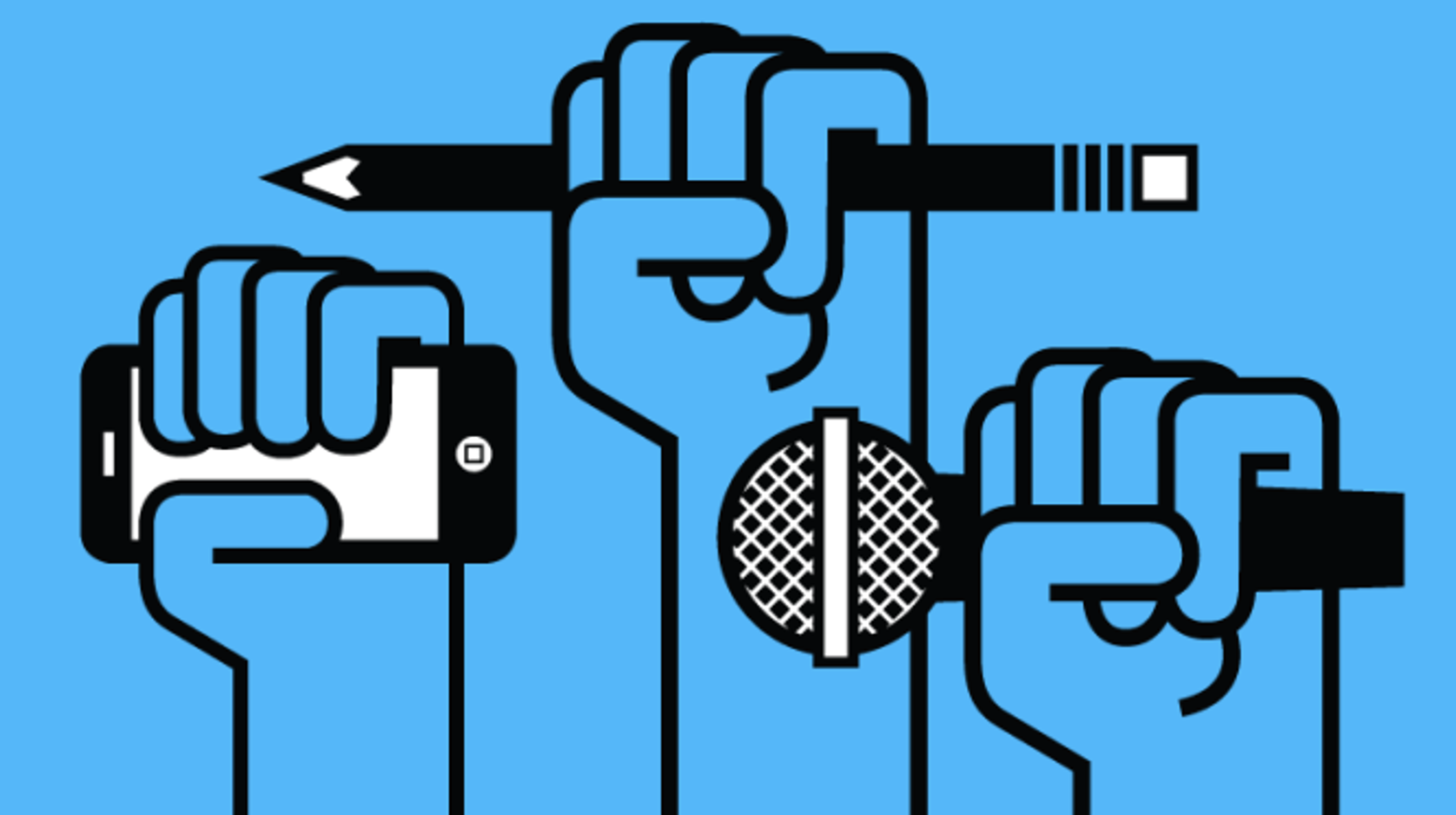
This series of podcasts produced by the World Association of News Publishers (WAN-IFRA) explores issues facing journalists and media organisations throughout the world. The podcasts highlight challenges such as those related to journalist safety, media viability, gender equity in the media, and freedom of expression, and they explore how media institutions have managed to tackle these obstacles in order to continue reporting the news.
The podcasts are intended for journalists, editors, and anyone interested in the backstory of how news is reported, presented, and published. The series is hosted by WAN-IFRA Media Freedom Director Andrew Heslop, with each episode featuring international guest speakers from a range of media institutions and media development organisations and other stakeholders.
Season 1 (2018):
- S1E1: Dying to be a journalist - Too often, journalists put safety aside to "get" the story; editors don't anticipate the problems their reporters or their newsrooms can face. This episode examines the threats facing journalists worldwide, how journalists can be prepared, and what editors should think about.
- S1E2: Show me the money: Censorship and financial independence - This episode looks at how to run an independent media organisation in a country where the government imposes censorship rules and how to support a successful media company without folding to pressure from funders or sponsors. Though the internet has exploded traditional media funding models, in some parts of the world, legacy media - even print - remains a strong source of independent information. The discussion explores how these companies are surviving. /li>
- S1E3: Social media and journalism: The good, the bad, and the ugly - Social media has opened up new channels for journalists to connect with their audience, but with mixed results. This episode discusses the rise of trolling, online harassment, and the manipulation of social media and asks how journalists and editors see its role today. The episode also looks at how journalists are adapting and how they can move forward in these seemingly chaotic times.
- S1E4: It’s personal: Female journalists facing harassment, and what to do about it - Journalism can be a dangerous job, and for female journalists, there is the added layer of sexual violence. Even when they are not working on stories that put them in physical danger, they face harassment and threats online. This episode looks at the specific threats that female journalists face - in the field, online, and in the workplace - and what they, and the profession, can do about it.
- S1E5: Fact or fake? Navigating the age of misinformation & fake news - Journalists and news organisations today are seeing a shift in the use of social media, from engagement to propaganda and the spreading of misinformation, or so-called fake news. Facebook and other tech platforms are increasingly under pressure to change how they present information and sort truth from lies. But journalists themselves are also coming up with solutions. This episode covers their fight to control the narrative of a given story: It's a fight against propagandists, whether governments or online activists.
- S1E6: Soft censorship, hard impact: How governments manipulate media - It is increasingly rare to find instances of direct censorship of media in the world today. But indirect censorship, called soft censorship, is thriving. It manifests itself through government pressure on media groups through advertising decisions and restrictive legislation. This episode explores what is conceived of as existential a threat to journalism.
Season 2 (2019/2020): This series focuses on safety for journalists in a world increasingly hostile to the press.
- S2E1: Managing safety: What editors can do to keep journalists safe - If journalism protects democracy, then who is protecting journalists? In this episode, editors and safety trainers talk about how to start the safety conversation in newsrooms so as to make safety a priority rather than an afterthought. The podcast features actual situations that journalists and editors have found themselves facing, and it offers tips on how to start putting in place safety protocols in a newsroom.
- S2E2: Talking about trauma: Valuing mental health as much as physical safety - Many journalists see and even experience some kind of trauma, whether they're covering a conflict zone, protests, or violent crime, and they can experience anxiety, depression, or even post-traumatic stress disorder (PTSD). This episode looks at moral injury, the kind of trauma journalists can experience, and the symptoms they might exhibit, as well as how to value their mental health as much as their as physical safety.
- S2E3: The war online: Abuse and harassment, and what journalists are doing about it - Journalists are increasingly the target of insults or threats from individuals or groups online, which can have physical impacts and should no longer be seen as separate from the offline world. This examines ways journalists have developed to deal with online harassment - from shutting down social media accounts to confronting abusers to advocating for change on a systemic level.
- S2E4: The cost of safety - In this episode, journalists, editors, and security managers talk about how money can be a safety concern in itself, especially for freelancers who are often left on their own to negotiate budgets and insurance coverage.
- S2E5: Contracts that keep journalists safe - A contract may seem like an afterthought for a freelancer, and it's not obvious how it is linked to safety. But contracts should be a part of every journalist's conversation with an editor, especially when the assignment involves risk. What should journalists be asking for? And what should editors and news organisations be thinking about?
- S2E6: Covering protests: Staying safe to tell the story - Protests have become more frequent, and more violent, around the world. Covering them has become increasingly dangerous for journalists and has required new ways of thinking and acting. This episode puts safety issues into the context of covering protests. What are journalists' and editors' experiences, and what should they be thinking about?
Season 3 (2020): With a focus on women journalists, this series was produced in conjunction with WAN-IFRA's Women In News programme.
- S3E1: Where are the women? Finding gender balance in the news - Men's voices and men's perspectives account for roughly 75% of the news. Yet, women make up half the population. Research has shown that stories that feature women are more widely read by women. This episode asks: So, why does this imbalance persist?
- S3E2: Women leading women in the news - "Women in leadership", "diversity in the workplace" - Media organisations use catchphrases like these, but what do they mean? Why is it important to have women in top positions? And who are the women who are already there? Such questions are at the heart of this episode.
- S3E3: Women journalists taking on tech - Technology has revolutionised how we get our news. Data visualisation and multimedia are increasingly used to tell stories, and coding is no longer just for computer scientists. But when it comes to working with digital technology, men outnumber women in most newsrooms. This episode explores why men are still dominating this field and what it takes for women to get ahead.
- S3E4: Reporting on injustice: Women journalists championing change - Journalists should be committed to reporting facts and presenting the news in an honest way. But when they use their reporting to give a voice to those who are under-represented - to victims instead of perpetrators - they have the power to create social change. In this episode, four journalists from Latin America, the Middle East, and Africa talk about the unique opportunities they have as women to make a difference in their societies through their reporting on climate change, indigenous communities, migration, press freedom, health, and women's rights.
- S3E5: You better be prepared: Addressing sexual harassment in the media - Sexual harassment happens everywhere, and media organisations are not immune. Addressing it is good for journalists and for the media business in general. This episode explores how organisations can create a work culture where sexual harassment does not happen and how they can identify and address sexual harrassment.
- S3E6: Wellbeing and resilience: How women journalists are navigating COVID-19 - The COVID-19 pandemic has focused attention on issues that have been taboo in many newsrooms for a long time: mental wellbeing, stress management, technological burnout, and limits between personal and professional life. For women journalists in particular, where there is an expectation to remain productive under demanding circumstances, these challenges have been compounded. This episode looks at what journalists can do to improve their own wellbeing and resilience, and what editors and managers should be doing to better support their teams.
Season 4 (2021): This season focuses on the challenges facing media across Africa.
- S4E1: Press freedom in Africa, 30 years after Windhoek - Though some countries across the African continent have made press freedom gains since the Windhoek Declaration for the Development of a Free, Independent and Pluralistic Press in 1991, many continue to struggle with journalist safety, independence, and financial pressures. This episode looks at the press freedom challenges facing African media and what steps are being taken towards improvement.
- S4E2: Where is the money? Financing African media - In a time of crisis for newsrooms and media companies everywhere, African media are facing huge financial challenges. But this time of uncertainty is also forcing media companies to find innovative ways of coping. Where is the money coming from, and how is the digital transition helping – or hindering - a future economic model? This episode looks at the struggles African media companies are confronting, and the solutions they are finding.
Publishers
WAN website on November 15 2021. Image credit: WAN-IFRA
- Log in to post comments