










































Kuziva Mbuya Huudzwa and Luthando: Children's Rights Radio
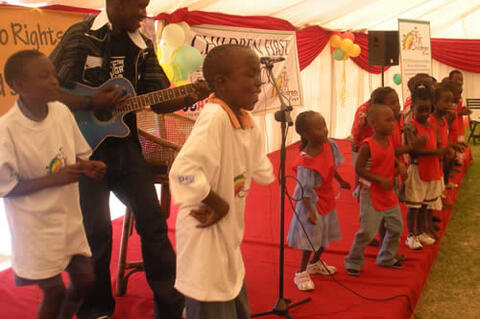
The scripts for Kuziva Mbuya Huudzwa and Luthando were based on the UN Convention on the Rights of the Child, the African Charter on the Rights and Welfare of the Child, as well as other children's legislation in Zimbabwe. Orphans and vulnerable children between the ages of 6 and 17 were the primary intended audience of the radio programmes, as well as caregivers of orphans and vulnerable children, child protection committees, teachers, and school development committees.
Along with broadcast, Children First distributed CD players and CDs with recorded episodes of the radio drama programme to Children First partners in order to expand the reach of the radio drama. With assistance from local writers, illustrators, and the radio drama production teams, Children First transferred the radio drama episodes to CD listening modules. Each module was accompanied by a set of interactive materials consisting of activities such as quizzes and writing and drawing exercises, as well as a facilitator’s guide. The materials and CDs covered relevant legislation such as The African Charter on the Rights of the Child, and were pre-tested at the Maulana School of Orphans, in Epworth (a low income Harare suburb) and Sihlengeni Primary I in Umzigwane district.
To ensure that orphans and vulnerable children would be able to listen to the programmes, CDs were played in partner or community-facilitated interactive listening groups in schools and other central locations. By confining the programme to listening groups, Children First intended to ensure that the programme can monitor and evaluate effectiveness and control quality. The sessions are facilitated by an adult who is trained in psychosocial support and reproductive health by using a facilitator's guide pack. Viewers receive interactive booklets that are used to generate discussions around issues raised during the radio listening sessions. In addition, a psychosocial support box (PSS Box) is placed in a convenient location where viewers can note personal issues they are experiencing and would like to have addressed in private.
Due to some of the electricity challenges with the CD Listener Program, Children First decided to integrate a visual component into the programme. Children First engaged teachers from local schools who then worked with a local artist and illustrator to develop a series of comic books based on the content of the CD Listener Program. According to Children First, in addition to providing an alternative learning method to the audio programme, the comic books are a child-friendly and fun way for students to learn about child rights, responsibilities, and child protection issues. The comic books are available in two vernacular languages: the Shona version, Kuziva Mbuya Huudzwa and the Ndebele version, Luthando.
PSI/Zimbabwe, World Education Inc. (WEI), John Snow, Inc. (JSI), United States Agency for International Development (USAID).
The Children First Project is an initiative of World Education Inc. (WEI) and John Snow, Inc. (JSI) working to improve the welfare of orphans and vulnerable children in Zimbabwe. Each drama deals with a different aspect of children's rights. Children First seeks to mitigate the impact of HIV and AIDS in Zimbabwe by developing and improving on proven models of care and support for orphans and vulnerable children. The project leverages the experience of national and community-based organisations to increase and improve access to quality care and support services for orphans and vulnerable children in Zimbabwe. Children First also provides technical and financial support to its partners to provide services and undertake advocacy activities for initiatives benefiting orphans and vulnerable children as well as community-to-community learning among partners.
Children First, Population Services International, United States Agency for International Development (USAID)
ReliefWeb website on December 16 2009; and Bantwana Initiative website, August 30 2010 and Children First website on December 17 2012.
- Log in to post comments