










































The Kenyan Election 2013: The Role of the Factual Discussion Programme Sema Kenya (Kenya Speaks)
BBC Media Action
"This paper seeks to identify the extent to which the national TV and radio programme Sema Kenya (Kenya Speaks), part of BBC Media Action’s governance work in Kenya, supported accountability, peace and inclusion at the time of the 2013 Kenya election. It shows the specific value placed on Sema Kenya by audiences and experts at election time."
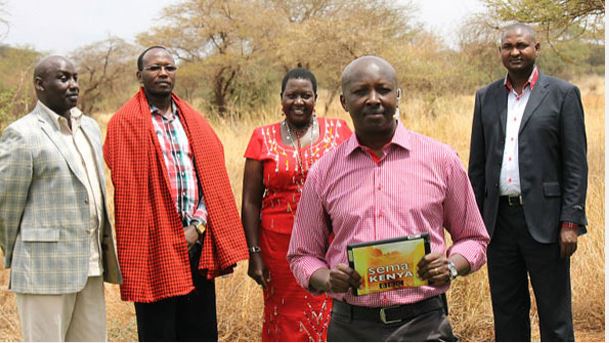
Sema Kenya is a programme involving a panel discussion led by questions from the audience, recorded in a different region of the country each week. This research document describes an evaluation done in June/July 2013 of Sema Kenya based upon qualitative data from two samples: a panel of 17 media and governance experts, as well as a broad cross-section of Sema Kenya’s TV and radio audience. In-depth interviews using semi-structured interview guides were completed after the 2013 Kenya election. Quantitative data from a nationally representative survey of Kenyan adults (aged 15 and over) was obtained to provide overall audience perceptions of the role of the media during the Kenya election as well as attitudes towards Sema Kenya among regular viewers and listeners of the programme’s second season (which launched in June 2013).
According to the quantitative data, 94% of regular viewers and listeners agree that Sema Kenya is playing a role in holding government to account by providing a platform for dialogue "where citizens were visibly empowered to question." The researchers pose the question: "What was the role of Sema Kenya in supporting accountability, peace and inclusion at the time of the 2013 Kenya election?" It examines whether the impact of Sema Kenya may have been more sustainable than other media programming broadcast during the election period and how far such a programme can go in helping to foster accountability and hold to account under-performing leaders.
The theory of accountability used by BBC Media Action includes: "Answerability" which "relates to the obligation of governments to provide information on (and explain) what they are doing" and "enforcement" which "refers to the capacity of a principal, either an individual citizen or a collective force such as mass media or civil society, to impose sanctions on power holders who have violated their public duties....Media and communication can help societies to negotiate "difference” peacefully by creating public platforms for dialogue that can make a contribution to supporting the development of inclusive political settlements, as opposed to violence."
From the Executive summary: "To understand the specific contribution of Sema Kenya, this paper explores in parallel the overall role of the Kenyan media in the 2013 election. The research reveals that the Kenya 2013 election saw a conflict in media responsibilities between promoting peace (a top-down pressure from authorities and within the media sector) and acting as a watchdog and guardian of public interest, exposing wrongdoings and failures around election time (a bottom-up pressure from the general public). The media appears to have swung from one extreme in the previous Kenya election in 2007, when it was complicit in the post-election violence, to the opposite in 2013, when it self-censored to avoid instigating violence. This occurred to the extent that the media largely abdicated its watchdog responsibilities.
The research also shows that at a time when media coverage and debate was influenced by a peace agenda, resulting in an avoidance of sensitive issues, Sema Kenya provided the public with constructive, moderated, audience-driven discussion and arguably more detailed information than other media sources.
The audience and community-driven moderated discussion in Sema Kenya appears to have provided substantial opportunity to educate and inform audiences. Moreover, presenting dialogue and discussion from different areas of the country ensured that the programme was relevant to audiences outside the capital - sharing learning and exposing commonalities. Diverse groups and viewpoints were represented within the dialogue, and opposing views were discussed without friction in a peaceful and constructive manner."
BBC Media Action website, October 2 2013. Image credit: BBC Media Action
- Log in to post comments