










































BBC Sema Kenya takes a bow
Author: Jackie Christie, January 28 2015 - I first met Joseph Warungu in 2012 when he handed me a report he had written on the media environment in Kenya and the possibility of a programme themed on governance. None of us knew then that not only would he become the familiar face and host of the BBC Sema Kenya (Kenya Speaks) TV show, but that we would still be on air three years later.
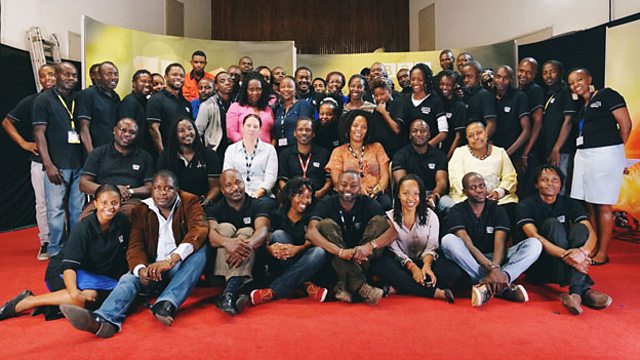
It will be a bittersweet moment for all the team when we record the final show with Joseph and our most recent host, Bonnie Musambi in January. As we say “Kwaheri” (“goodbye” in Swahili) for the last time, I want to take a moment to reflect on what Sema Kenya has achieved.
We were on the road for the first two seasons of Sema Kenya. Our entire production entourage would pack its bags and head deep into the towns, cities and counties of Kenya. Advance teams of audience producers would already be on the ground speaking to local people about their issues and recruiting them to participate in the ‘studio’ audience. As many as 140 people would patiently gather in soaring temperatures to ask questions of their leaders or sometimes just to listen to their account of their performance.
Bucking the trend
Sema Kenya played a particularly important role during the 2013 elections. The programme bucked the trend of mainstream media, who steered clear of sensitive topics and were accused of having abdicated their watchdog responsibility. By contrast, we continued to provide a platform for dialogue, discussing issues such as land, ethnic tensions and internally displaced persons.
In our final season we have based ourselves at our partner station KBC, the Kenyan Broadcasting Corporation, and brought audiences from around the country to the capital, Nairobi. The audiences have been smaller but more representative and I am happy to report that Kenyans from all 47 counties have participated in the show.
Audience participation in Sema Kenya has been one of the highlights for me. For example, the lady from Kajiado who quoted the constitution verbatim as she berated parliamentarians on their lack of public consultation, is a perfect example of how ordinary people have used the opportunity the programme offers to speak truth to power.
Our research tells us how motivating and inspiring this can be. A member of a focus group explained: “When you watch, it kind of inspires you to want to be like this other person…it makes you ask yourself, if this person is participating, why am I not participating? Because most of the time people don’t participate because they feel the political process is for the elite.”
Holding leaders to account
Supporting accountability is something we talk a lot about at BBC Media Action. For me this means insisting that elected officials and leaders are held responsible for their actions by the communities they serve. Politicians take the show seriously and now it's rare to have pull-outs or no-shows. Being asked by our Senior Producer John Byron Ohaga to come to the Sema Kenya shoot in Nairobi seems to inspire confidence and respect in politicians too used to giving the media the runaround. It has been hugely satisfying to see senior figures and decision makers, MPs, governors and senators sit before people who have probably only ever seen them on television.
Our final show will have no panel and be hosted jointly by our two presenters, reflecting on the trials and tribulations of hosting the show and airing some of the programme highlights. I asked our Editor Odhiambo Joseph what his own personal highlights have been during his tenure. He reminded me of a show where we discussed the menace of corruption in the police force. During the programme we had aired undercover filming showing traffic police taking bribes. It’s a familiar scenario to most drivers unlucky enough to be stopped at a roadblock in Kenya. As well as some penetrating and relentless questioning from Joseph Warungu keen to force the then-inspector general of police to accept responsibility for corruption in the force, he insisted that he go on record to promise the live audience that they would not be victimised or punished for speaking freely during the programme. People put their trust in us and the show became a safe space for them to air their issues.
Taking a bow
Over 80 episodes later, it is fitting we take a bow and hand over the reins to KBC to make the show their own. What is clear to me is that the appetite for dialogue, debate and discussion around issues which affect the lives of ordinary people in Kenya continues to grow.
“Kwaheri” BBC Sema Kenya. “Karibu” (“welcome” in Swahili) KBC Sema Kenya?
Click here to access this BBC Media Action blog and related links on Sema Kenya.
Image credit: BBC Media Action
Contact:
BBC Media Action
MC3A BBC Media Centre, 201 Wood Lane
London
W12 7TQ
United Kingdom (UK)
Phone: 44 (0) 20 8008 0001
Fax: 44 (0) 20 8008 5970
Media.action@bbc.co.uk