











































Rapid Qualitative Assessment of Maternal and Newborn Health Care (MNHC) Speaking Book in Two Districts in the Amhara Region, Ethiopia
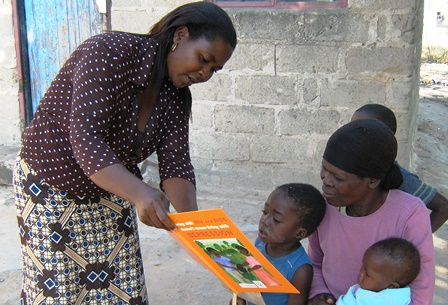
This 4-page research summary discusses the findings of a research study, conducted by the United Nations International Children Fund (UNICEF), on the use of "Speaking Books" as a health promotion tool to address maternal, newborn, child, and family health (MNCH) issues in the Amhara Region, Ethiopia. The MNCH book was designed to be used as a tool by health extension workers involved in Ethiopia's Health Extension Program (HEP), to complement the Family Health Card. The Speaking Book, which contains 16 key messages on community-based maternal and newborn health presented through text, pictures, and a recorded soundtrack in Amharic, was developed by the Federal Ministry of Health (FMoH) in partnership with UNICEF, the Integrated Family Health Program (IFHP), and the Last Ten Kilometers/JSI.
The research study included structured interviews, focus group discussions, (FDGs) and observations (use of book during home visits, outreach, and at health posts), to assess the effectiveness, acceptability, and relevance of the Speaking Book as a health promotion tool. 1,500 Speaking Books were distributed to the Amhara region during March 2012 and the field research occurred between May and July 2012.
The study found that in some locations, health extension
workers (HEWs) and Ethiopia's Health Development Army (HDA) were using the Speaking Books almost daily, while others used the books once a week in diverse locations such as during home visits, local meetings, market days, ceremonies, and in church. The Speaking Books were found to be a useful tool for engaging with the community, as it helped the HEWs (some of who are also low-literate) communicate their messages and information accurately and efficiently around such topics as the importance of antenatal care visits, danger signs during pregnancy and labour, birth preparation, attending a health facility, delivery, new born colostrum feeding, breast feeding, etc.
At the same time, participants appreciated that they also had the opportunity to ask questions to gain further information. Health workers mentioned that the Speaking Books helped to build credibility of both the message and the health workers themselves. It was also found to be attractive, creative, and valuable for communicating with people with low literacy. While the pictures in the book were considered attractive and clear, many respondents noted that voice as being the most informative aspect of the approach.
Based on the assessment, the report offers recommendations, including developing Speaking Books to cover other topics, increasing access through rotating the books among health workers, and mobilising resources to have more books for distribution. Technical improvements suggested were clearer, picture-based instructions about changing the battery in the book, and having adjustable volume settings.
Speaking Books website on February 2 2015.
- Log in to post comments