










































Southern African Development Community (SADC) Regional Media Development Project
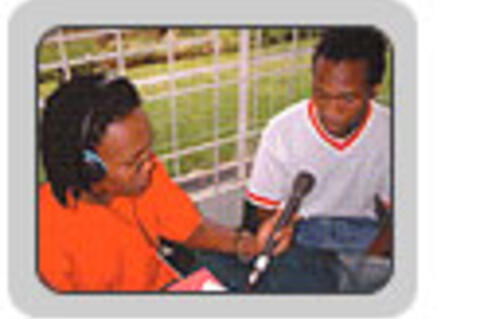
The project's purpose is to ensure that media practitioners in Southern Africa provide relevant, accurate, and balanced coverage/information to the public and are aware of their role in the democratisation process and their rights and responsibilities. Previously, journalists from outside South Africa had to travel to Johannesburg, South Africa, for IAJ courses, but this project hopes to make sure that programmes are organised in other SADC countries. The project organisers are working in partnership with local groups and institutions and in the first phase of the project focused on five countries - Democratic Republic of Congo (DRC), Angola, Zimbabwe, Zambia, and Swaziland.
As a first step the organiser undertook a stakeholder consultation process in 2004 in the pilot countries. This process was followed by a consultative regional workshop with key regional stakeholders and representatives from the five countries. For each of the five countries, the IAJ has identified institutional partners for its in-country intervention:
- Swaziland: Media Institute for Southern Africa (MISA) Swaziland; Swaziland National Association of Journalists
- Zimbabwe: Zimbabwe Union of Journalists; Harare Polytechnic
- Zambia: Zambia Institute of Mass Communication (ZAMCOM); MISA Zambia
- DRC: Union of Press (UNPC); l'Institut facultaire des sciences de l'information et de la communication (IFASIC); Radio Association (ARCCO); Panos
- Angola: Union of Journalists (SJA); MISA Angola
Together with the institutional partners the project aims to achieve its goals this by:
- establishing centres of excellence in some or all of the pilot countries;
- Establishing a training programme in the 5 countries;
- establishing a regional training programme;
- ensuring that the IAJ's regional and country courses are certified;
- establishing institutional partnerships and arrangements between the IAJ and relevant institutions on a country and regional level; and
- establishing the IAJ's regional management capacity
Media Development.
The IAJ believes that a strong, independent, and diverse media is critical in consolidating democracy. According to IAJ, the media can be an important agent of change because it can hold government and other powerful interests accountable to the public good. It has a responsibility to bring information to the public and therefore it needs to provide accurate and balanced information for people to make informed choices. The media has the ability to give voice to the public, particularly to those voices which are not easily heard. In order to perform this role in the democratisation process, the media sector must have the necessary conditions. The key conditions needed are an enabling policy environment, efficient capital, infrastructural and technological resources, and an informed and professional cadre of media practitioners.
According to IAJ, the media landscape in the region is characterised by a restrictive policy environment (increasing repression), poor technological infrastructure, and low professionalism. Although there have been some positive developments in the media landscape - increase in numbers of private media, increase in media bodies and associations, and increase in protocols governing media (like the African Charter on Broadcasting and the SADC Peer Review Mechanism) - the conditions under which media operate in the region are far from ideal. The region also faces serious economic and social challenges which make sustainability of the media a major challenge, as they have to balance their role in promoting open societies with financial sustainability objectives.
IAJ, The Media Institute for Southern Africa (MISA), Netherlands Institute for Southern Africa (NiZA), AMARC Africa, Nordic SADC Journalism Training Centre (NSJ), Southern Africa Media Trainers Network (SAMTRAN), Southern Africa Editors Forum (SAEF), Southern Africa Institute for Media Entrepreneurship Development (SAIMED).
Comments

- Log in to post comments