










































Glass Ceilings: Women and Men in Southern African Media
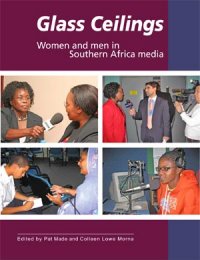
Gender Links
This 15-page document is an executive summary of an audit of women and men in Southern African media houses. Spanning 14 countries over a year starting in July 2008, Gender Links (GL) conducted the study in partnership with a network of researchers, gender and media activists, and partners in the Gender and Media Southern Africa (GEMSA) network as well as the Gender and Media Diversity Centre (GMDC). The study presents findings from 126 media houses. According to the publishers, the regional report should be read in tandem with the 14 country reports (see link below). The research covered media houses (as opposed to newsrooms) in countries in the Southern African Development Community (SADC): Botswana, Democratic Republic of Congo (DRC), Lesotho, Madagascar, Malawi, Mauritius, Mozambique, Namibia, Seychelles, South Africa, Swaziland, Tanzania, Zambia, and Zimbabwe - except Angola - representing 23,678 employees. The report found that men make up a higher number of employees in media houses. Only two countries have reached gender parity, and in four countries, less than one-third of employees are women.
The study also found that women constitute a little over a quarter of the directors on media house boards, and they are less than a quarter of top management. According to the report, women hit a "glass ceiling" in the media at senior management. Men tend to get better working deals such as open-ended, full-time contracts, and a larger majority of women are semi-skilled and not professionally qualified. Men dominate in the editorial, production, and technical departments, while more women are in the support departments like administration, finance, marketing, and human resources.
According to the study, the gender division of labour in beats is still pronounced, with male journalists dominating the "hard beats", such as investigative, sports, and political stories. Women predominate in coverage of gender equality, gender violence, and health. Male chauvinist attitudes were prevalent; however, women journalists are challenging gender stereotypes in some countries. For example, in Botswana there is gender parity in the coverage of sports.
The study found that there are no specific targets in place for achieving gender parity in media houses and that career pathing for women in Southern African media houses is not a priority. However, it also found that there are efforts to reach out to good women candidates. In terms of wages, women earn less, on average, than men. A large percentage of media houses offered maternity leave, but there is a low commitment to paternity leave. Child care is also not a priority, but flexible time is offered by most media houses.
Within the workplace, the study found that sexual harassment is a serious concern, and few media houses report having sexual harassment policies. Gender policies are also missing. Among those media houses that have gender policies, often employees could not articulate what the policy consists of. Gender awareness in media houses is generally low among both men and women, but there is an appreciation that having a critical mass of women in newsrooms makes a difference.
The report gives a number of examples of progressive women and men in media houses who are working to ensure gender balance and sensitivity in both composition and content of the region's media. The main recommendation of the report is that these findings be used to assist media houses in developing gender policies.
Gender Links website on January 11 2010.
