










































Managing Misinformation in a Humanitarian Context
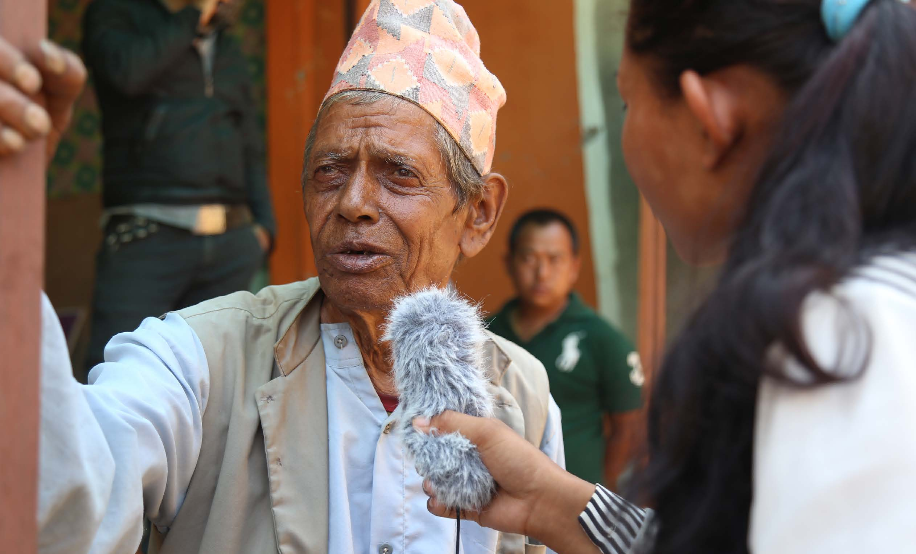
"Understanding how people communicate, in what language they are most confident and what person(s) and channel(s) they trust most is the foundation of implementing Internews Rumour Tracking Methodology."
Internews works to amplify the voice of those affected by disasters and conflict, to make the humanitarian system more accessible and accountable, and to provide technical expertise in Communicating with Communities (CwC). As part of this work, since 2014, Internews has implemented rumour tracking as a way to address misinformation during humanitarian crises in numerous countries and contexts. It is the lessons of these projects and the years of experience of Internews' Humanitarian Information Service (HIS) that inform the 3 modules in this Learning Collection guide, produced with financial support from the United States Agency for International Development (USAID). The 3-part manual offers case studies, practical instructions, and a template library to implement Internews Rumour Tracking Methodology and, through this, address rumours in humanitarian crisis and conflicts around the world.
Internews explains that disaster-affected communities are often in a disadvantaged position to access information. Infrastructure damage and a tendency of media to report on disaster survivors rather than for them further hinders communication. All this means that traditional media channels often don't reach the people most in need of information or give them the necessary information. Hence, affected communities often get their information from hearsay - from stories that circulate amongst their groups with limited means to fact-checking. Rumours are problematic because, in a crisis, a misunderstood or intentionally misleading message can cause panic, be harmful if advocating a certain type of action, or inflame an existing conflict. Per Internews: "Accessing trustworthy information is the key to taking control of your own survival and being able to recover."
The 3-part manual (with the third part packaged separately) includes:
- Part I. Context describes: the importance of access to fair, accurate, and actionable information; the damage rumours can do in a humanitarian context; and the role Internews Rumour Tracking Methodology can play as a tool for CwC and humanitarian accountability.
- Part II. Case Study gives an overview of several Internews rumour tracking projects and an in-depth case study of rumour tracking in Greece that focuses on the News That Moves (NTM) project, implemented in the wake of the refugee crisis (see Related Summaries, below). The case study also covers challenges and lessons learned in order to offer recommendations for future rumour tracking activities. One of the most evident lessons was the need to explain the goal of the project right from the beginning to all partners; other recommendations include, in brief:
- Raise awareness on project goals with all stakeholders.
- Create a flexible budget that allows for adaptation according to the needs of the community.
- Start the registration process as a priority; create partnerships that allow access through other organisations.
- Find multiple ways to communicate with community members face to face.
- Ensure that social media is first and foremost social and that interactions online focus on two-way communication rather than disseminating information.
- Implement formal feedback and complaints mechanisms.
- Establish a multilingual fact-checking team early during set up.
- Increase efforts to include multiple partners in the rumour tracking process early to increase the scope and scale of the project.
- Part III. How To Guide provides a step-by-step methodology for establishing, facilitating, and monitoring a rumour tracking project in a humanitarian context, as well as 2 training modules and a template library. In brief, there are 5 key components needed to run a project using Internews Rumour Tracking Methodology:
- Understanding Context & Community
- Project Planning & Set-Up
- Collecting Rumours
- Analysing & Answering Rumours
- Sharing Outputs
57 (Parts I and II: Context and Case Study); 62 (How To Guide)
Internews website, January 24 2020. Image credit: © Internews
- Log in to post comments