










































The State of Humanitarian Journalism
University of East Anglia (Scott); University of Edinburgh (Wright); City University of London (Bunce)
"Humanitarian journalism plays a crucial role in how citizens, aid workers and international organisations around the world respond to emergencies and human suffering."
This report presents the findings of a four-year global research project that sought to investigate how different funding models for humanitarian journalism change the news that is produced, how governments influence the international reporting of humanitarian issues, and what news citizens and aid workers want to see more of.
As explained in the report, although there has been some research into which topics and crises receive the most and least coverage, little is known about the different kinds of humanitarian journalism produced by different news organisations, the practices and funding models involved, and the impact of such coverage on audiences. Seeking to fill this gap, the research highlighted in this report sought to answer the following questions:
- Which news organisations regularly report on humanitarian affairs? How are they funded, and what ethical problems or professional dilemmas does this create for journalists covering humanitarian affairs?
- When natural disasters and violent conflicts are reported, what kinds of journalistic coverage do they receive? Do news outlets differ from one another, and if so, how?
- How interested are news audiences in journalism about humanitarian affairs?
- How well does existing coverage serve their needs and the needs of those involved in international aid? Which significant "gaps" are there in news provision?
- What effects does news coverage have on public attitudes towards international aid?
To answer these questions, the researchers interviewed nearly 200 journalists, news managers, and media funders and undertook newsroom observations in: London, United Kingdom (UK); Geneva, Switzerland; Washington, DC, United States (US); Bangkok, Thailand; and Nairobi, Kenya. In addition, the research included an analysis of English-language news content from around the world, as well as reports on audience surveys with citizens and aid workers.
In summary, the research found that:
- Very few international news organisations routinely cover humanitarian affairs. Only 12 news outlets reported on all four of the humanitarian events that were analysed in 2016. Because of the high costs of producing regular, original journalism on humanitarian issues, commercial news organisations do not usually cover humanitarian issues, with the exception of major "emergencies".
- Most humanitarian journalism is funded by states or private foundations. This is worrying because claiming that particular actors or activities are "humanitarian" is a powerful form of legitimacy. It is important that media about the suffering does not become a vehicle for commercial or political interests.
- A major challenge of foundation funding is its unsustainable nature, as most foundations want to provide start-up money rather than give ongoing support. Meanwhile, government funding can constrain where and how humanitarian reporting takes place because of foreign policy objectives and diplomatic tensions.
- Journalists are often criticised for sporadic, sensationalistic, and de-contextualised news coverage on conflicts, side-lining detailed analyses of long-running crises. But the research shows that news organisations that produce a lot of humanitarian coverage tend to do the opposite. They produce relatively few "hard news" reports, focusing instead on detailed features, analysis pieces, and some campaigning reports.
- There were a number of gaps in the topics that news reports addressed. Gender was treated in a very narrow way within humanitarian reporting during 2017, and almost no articles looked at the specific problems faced by women and girls in relation to the conflicts in Yemen and South Sudan.
- News articles about humanitarian emergencies quote some sources of information far more than others. International organisations and non-governmental organisations (NGOs) were quoted frequently in reports on conflict, for example, while local citizens were not.
- Journalists are often accused of producing homogenous and decontextualised constructions of natural disasters. But news outlets vary enormously in how they cover these emergencies. For instance, Thomson Reuters focused on breaking stories about dramatic and timely events, and they reported with a largely Western audience in mind. By contrast, the specialist humanitarian news outlet IRIN wrote thematic pieces and analysis, geared toward a more global audience.
- Audiences are interested in humanitarian journalism - more than journalists think. In a large-scale survey of international audiences (UK, France, Germany, and the US), more people claimed to follow news about "humanitarian disasters" (59%) either "closely" or "fairly closely" than any other type of international news. Another survey of 1,600 people working in the aid sector found there was widespread dissatisfaction with the quality of most mainstream news coverage of humanitarian issues. Respondents said they wanted more investigative reporting and consistent coverage of ongoing crises.
- Newspaper headlines don't always have an immediate or direct effect on mass public perception of international aid. The Daily Mail's criticisms of international aid agencies "wasting money" do not seem to have damaged audiences' interest in, or commitment to, international aid.
Based on the findings, the report makes the following recommendations:
- "It is vital that funding for humanitarian news is given on a secure, ongoing basis and without strings attached. We call for the aid sector, governments and foundations to recognise that support of humanitarian journalism is crucial to making responses to suffering more effective. However funders should also be mindful of the indirect but significant consequences that impact requirements can have on the journalism they support.
- Editorial teams at specialist news outlets (and their funders) should note the existence of considerable 'gaps in the market', such as more varied reporting on the issues affecting women and girls, investigative reporting and including more diverse and/or local perspectives in coverage of conflict situations.
- Although humanitarian journalism is important, media headlines are not necessarily an accurate reflection of public attitudes towards aid. Government officials should therefore refrain from knee jerk reactions to negative media coverage of particular projects or sectors.
- News editors and managers at major, non-specialist outlets need to challenge the assumption that audiences are uninterested in humanitarian journalism, and should take into account the apparent desire of their audience for wider range of different kinds of humanitarian reporting. They may wish to consider conducting more consistent reporting - including follow-up reports and analyses after the event."
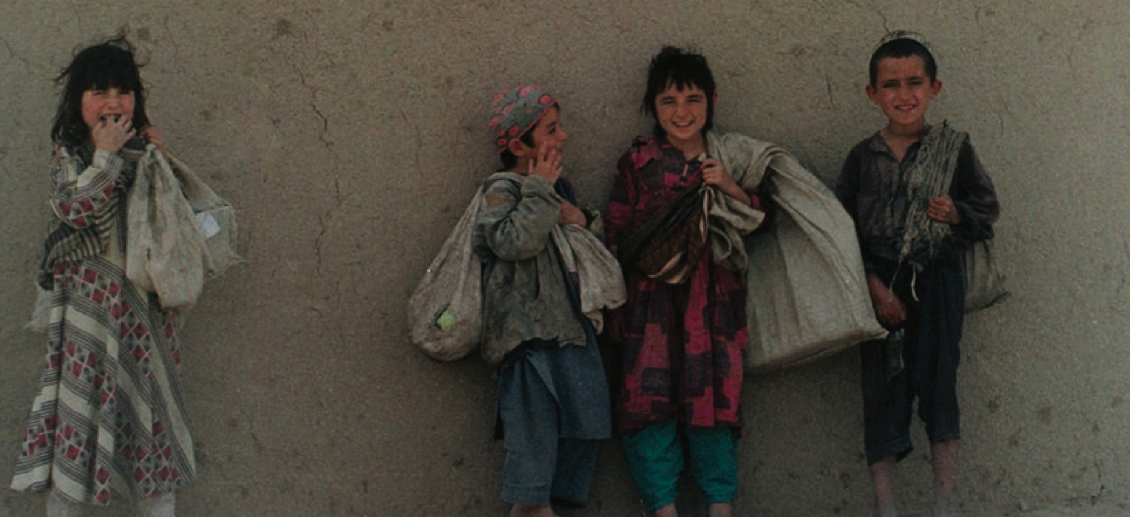
Humanitarian Journalism website on March 31 2021. Image caption/credit: Children stand in front of a BBC camera news crew at the beginning of the US-led invasion of Afghanistan. Khwaja-Bahauddin. 2001. Yannis Kontos - Polaris - Panos