










































Listening In: An Internews Assessment of Community Radio in Tanzania
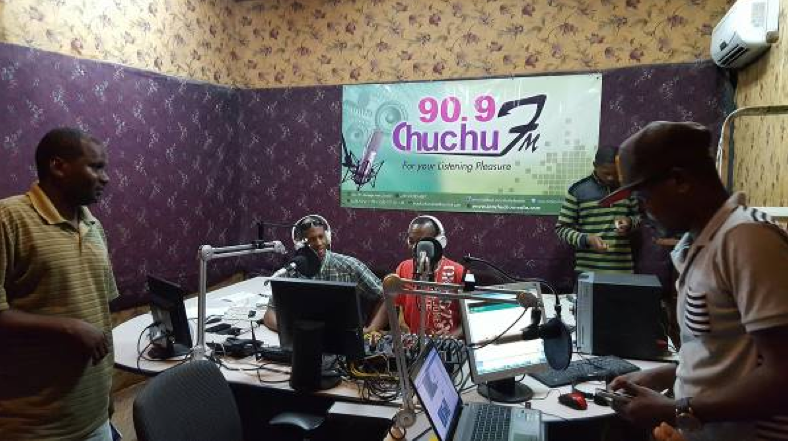
“Internews believes that information is a root solution to myriad development challenges. Markets do not work efficiently or justly without shared information. Governance cannot improve without transparent information sharing and accountable actions to eliminate deficiencies. Without quality information that informs and empowers people in their everyday lives, democracy becomes irrelevant. The uninformed choice of the people leads to often to demagoguery and ruin.”
This report by Internews shared the results of a rapid, structured assessment that set out to take stock of community radio stations (CRS) in Tanzania. The research was designed to create a better understanding of the extent to which CRS across the country were providing a valuable public information service, and what barriers could be overcome and opportunities seized to increase their effectiveness in supporting two-way feedback and accountable governance.
A team of Internews staff and consultants visited 22 CRS in Arusha (8), Dar es Salaam (2), Lindi (5), Mtwara (2), and Zanzibar (5). During each visit, the researchers asked a consistent set of questions about basic characteristics of the station, their role in local governance, and the needs of the community for further development. To complement this information, Internews staff visited local non-governmental organisations (NGOs) in each location and interviewed a number of radio listeners in the general public.
The report is structured according to Internews’ Strategic Framework, which breaks down media and information problems and solutions into four categories: access (ensuring reliable access to information), content (filling gaps in critical content), inclusion (reducing systematic information exclusion, especially around gender) and engagement (supporting thoughtful citizen engagement). Each section offers mini case studies of radio stations that demonstrate particular findings related to these four categories.
In summary (drawing on the Executive Summary), the report shares the following findings and recommendations for further support to CRS in Tanzania:
Build the capacity of media to support better local governance - The research found that most CRS currently do not have the knowledge and capacity necessary to facilitate dialogue on the issues facing their communities, let alone have an impact on them. Mining, land rights, foreign tourism, gender-based violence, and inter-community dialogue are among many issues that a high-functioning CRS should be able to discuss with their community in an enlightening way. The report recommends improving the capacity of CRS operators on how to organise and facilitate talk shows, social media campaigns, outreach and dialogue with listeners, and related activities. This also requires building relationships and networks that tie together NGOs and CRSs. In addition, building their capacity to tackle issues of gender-based violence, human rights, accountability, youth, resource use, and land conflicts, which are the frequent flare points in rural areas, will be critical.
Improve business management at stations - Findings showed that most CRS are run by a few committed social entrepreneurs, but few have the managerial, financial, marketing, or fundraising skills necessary to build sustainable organisations over the long term. The report recommends a dedicated programme of training, mentoring, and matchmaking for CRS leaders with resources in business management, which will help these entities increase revenues, manage funds efficiently, and reinvest in content that engages their audiences. The report offers suggestions on how this can be achieved. For example, incentives for improved human capital should be matched with investments in physical capital, such as improved recorders, computers, transmitters, and other content generating equipment.
Focus on empowering women through community radio at all levels - While there was female representation among the journalist staff at stations examined in the survey, they were rarely among the leaders of the operations who would be responsible for editorial decisions, assignments, or setting the tone for the station’s content. In the majority of cases, there were no women present during Internews meetings, or those who were present did not speak. Often women are seen by their male colleagues as community liaisons to fellow women, not as journalists with critical contributions to make to the content. For that reason, fostering up the next generation of female station directors and news leaders will help to counteract the decline of women’s representation in the mainstream commercial media of the last few years.
Support the enabling environment that helps community radio thrive - CRS are a relatively weak actor in local governance that falls short of its potential impact. With the repeated attacks against freedom of expression and freedom of information since President Magufuli was elected in 2015, it has become critical to support the enabling environment for CRS and support advocacy by local organisations to defend their rights as a unified bloc. Furthermore, licensing requirements complicate the CRS sector. Non-commercial licenses limit the scale of advertising revenue that allows small stations to grow, while the costs of commercial licenses are substantial for small station.
Work with established local partners that can improve journalists’ performance - These can include local NGOs and initiative groups such as Union of Tanzania Press Clubs, Tanzania Editors Forum, the Media Council of Tanzania, Tanzania Media Women’s Association (TAMWA), and Community Media Network of Tanzania (COMNETA), and regional equivalents such as Zanzibar Journalism and Mass Media College (ZJMMC) and Zanzibar Press Club (ZPC), which have much to offer to CRS. Ensuring support for journalists long into the future will require building organisations like these to be able to provide significant expertise on their own, without the backing and financial oversight of an international organisation.
Further study of the information ecosystems of local governance - Due to funding constraints, this rapid assessment was limited to a handful of cities and regions of Tanzania. Much more could be learned through surveys, using mobile phones or focus groups, about the information available to Tanzanians who form the potential audience of these stations. Questions about whom Tanzanians trust, whom they share information with, and how they engage with local governance based on the information they receive will greatly advance understanding of the information ecosystem - as will a comprehensive map of station locations and signal coverage, which would inform the geographic areas in greatest need of help and areas where an intervention is likely to result in the greatest impact.
Tailored support to eligible community radio stations and journalists - The report recommends directly supporting select motivated CRSs. The level of support will vary from station to station, depending on ownership structures, their financial potential, and existing capacity. For example, better performing stations in cities will need training in programme production, interviewing skills, and managerial skills, while those in rural areas will likely need more basic equipment, management, and editorial training support. In addition, technical assistance on how best to cover sensitive topics would also be tailored to each station and region, based on the pressing governance challenges facing each community.
Assistance for new media convergence - Greater use of social media by the stations will make them more viable with a younger, urban audience. In Arusha, internet penetration is already high, and CRSs will miss out on market opportunities if they do not adapt. In less developed areas, texting remains the main form of communication for some of the villages outside the main urban centres, but even this is changing with the unfolding economic opportunities in some areas, such as Mtwara. But it is clear that stations are not currently equipped to run social media platforms, and will need significant help to gain this ability.
Internews website on April 28 2017.
- Log in to post comments