










































Injectable Antibiotics for Treatment of Newborn Sepsis
PATH (Coffey); Consultant to PATH (Kelly); Johns Hopkins University Bloomberg School of Public Health (Baqui); United States Agency for International Development (Bartlett); Aga Khan University (Bhutta); World Health Organization (Hedman); PATH and the Maternal and Newborn Health Integrated Project (Mazia); Save the Children/Saving Newborn Lives Program (Wall)
"Assessing the current supply and demand of procaine benzylpenicillin, gentamicin, and ceftriaxone is the first step toward ensuring access to affordable, high-quality injectable antibiotics that are listed on the World Health Organization Essential Medicines List for Children for neonatal sepsis treatment in low-resource settings."
In the context of the fact that neonatal mortality is responsible for 41% of the total mortality rate of children under the age of five, with approximately 99% of these deaths occurring in developing countries, this case study addresses the role of injectable antibiotics - including communication and advocacy strategies to stimulate demand for this commodity. This can be tricky due to several challenges, such as lack of information and supply: "little is known about national policies, availability and use of these drugs at various levels of the health care system. Similarly, few data are available about the supplier manufacturing base in low-resource settings. This presents a considerable barrier to determining actions and policies around these commodities at the global level. These antibiotics are not readily available or are subject to stock-outs in weaker health systems, particularly in remote areas....The supply of procaine benzylpenicillin, gentamicin, and ceftriaxone for neonatal sepsis treatment in the developing world has not been quantified or characterized."
One section of the case study, which was prepared for the United Nations Commission on Life-Saving Commodities for Women and Children, focuses on cultivating demand for injectable antibiotics from caregivers. (Footnote numbers have been removed, below.) It is noted that facility-based health workers at referral centres are primary caregivers of newborn sepsis treatment. Yet, in instances where referral fails, first-level and community workers may also be the ones who provide treatment. (Many births and neonatal deaths occur in the home, and so village health workers, midwives, and other nonclinical workers may be one of the most effective ways to reach children at risk of dying from sepsis in the first few days of life.) The Gadchiroli study in India showed that home visits by village health workers and the mobilisation of community activities to improve newborn health can improve detection rates and outcomes, including the cause-specific neonatal morality rate, which decreased by 90%. Also cited here is the ANKUR project in India (a scale-up study based on the results from the Gadchiroli study), which assessed diagnosis and antibiotic treatment of sepsis by village workers in urban areas. It showed a 79% reduction in the sepsis-specific neonatal mortality rate when the algorithm approach along with treatment by village health workers was used. Results from one study in Mirzapur, Bangladesh, showed that community health workers were able to successfully use a clinical algorithm to identify infants needing immediate referral. In a related study in Sylhet, Bangladesh, community health workers were able to use an algorithm to assess, identify, and manage neonates with potentially serious illnesses. It also showed that they were able to treat infants safely and effectively with antibiotics for 10 days in cases where parents refused referral.
Several studies evaluating community management of newborn sepsis are currently underway, as detailed in this report. For example, in Nepal, the Dhanusha study is examining the impact of sepsis management by community volunteers and use of a community group mobilisation model on newborn survival. One note is that there is a dearth of data, such as a "need for evidence from representative settings that could assist in formulating guidance about which antibiotics to use by what type of health worker at which level of care".
Suggestions going forward:
- "Assess national policy and regulatory environment and financing strategies around the procurement and use of injectable antibiotics for the treatment of neonatal sepsis.
- Undertake a rapid situational assessment to gather country-specific data on the status, availability, and related barriers to use of procaine benzylpenicillin, gentamicin, and ceftriaxone at various levels of health care delivery.
- Conduct a landscape analysis of suppliers of available procaine benzylpenicillin, gentamicin, and ceftriaxone products in low-resource settings.
- Engage in dialogue with distributors/manufacturers about security of future supply particularly in regard to procaine benzylpenicillin.
- Engage with end-users to determine the most feasible and acceptable presentation of gentamicin for treatment of newborn sepsis.
- Fund research to facilitate the development of a point-of-care, rapid, and effective diagnostic tool for the identification of serious bacterial infections in neonates that can be used in low-resource settings."
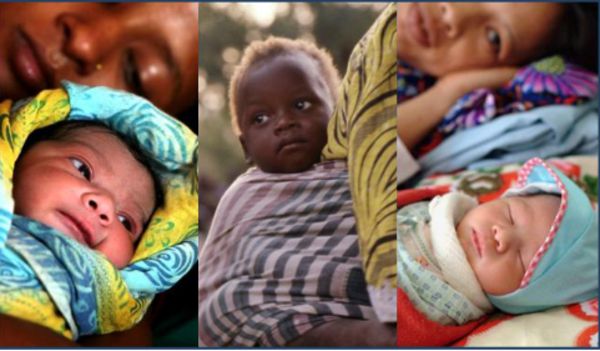
Image credits/captions: Photo 1: A mother in Nepal lies with her baby. © 2008 Suaahara/JHUCCP; courtesy of Photoshare. Photo 2: A baby in Djoliba, Mali. © 2000 Hannah Koenker; courtesy of Photoshare. Photo 3: A newborn child sleeps next to his mother at the Tinh Gia District Health Center in Vietnam. © 2004 Philippe Blanc; courtesy of Photoshare.
- Log in to post comments