











































Facilitating Youth Caregiver Solidarity and Empowerment - An Animator's Guidebook to the Giving Hope Empowerment Methodology
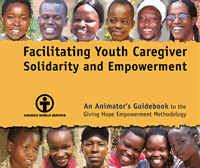
Prepared by Church World Service to facilitate a youth empowerment approach among organisations working with orphan- and youth-headed vulnerable households, this guidebook was created to focus the efforts of social workers and community volunteers on creating spaces where youth who have become the caregivers of their families can come together and take charge of their futures. This guidebook seeks to share a complementary or perhaps an alternative approach to current orphan and vulnerable children’s care and support programming. It aims to help social workers and community volunteers appreciate the skills and resources youth can contribute to the protection and development of HIV-affected families and to assist social workers and community volunteers to build their own skills for mobilising and "animating" these youth.
The guidebook has 7 modules for social workers and community animators working with young caregivers. It suggests a process for forming youth self-help groups through activities, reflections, and tools. This methodology is currently (2009) used to assist more than 30,000 youth-headed households in East Africa.
"As a methodology, it seeks to influence the way Animators work with youth, which can be summarised in the following seven Principles of Youth Caregiver Animation:
- Cultivate Solidarity among Youth: Animators create safe and respecting spaces where youth caregivers can come together and form supportive youth working groups.
- Foster Self-Confidence within Youth: Animators recognise and reaffirm youth caregivers’ existing assets, and create opportunities for dialogue where youth caregivers can also begin recognising and appreciating their own and others’ assets. As a result of this recognition and self-confidence, youth caregivers begin expressing and documenting their hopes and dreams.
- Incite Youth to Action: Animators stimulate youth caregivers' critical thinking, goal setting, decision-making and action toward realising their dreams - toward setting goals, creating merry-go-round work schedules, building small joint projects and launching group savings and loan activities that focus youth working group energy on helping youth working group members with their individual caregiver responsibilities and in realising their dreams.
- Inspire Youth Leadership: Animators inspire and respect youth leadership. They reinforce group-appointed youth leaders’ capacities as peer educators of their youth working group members by offering a variety of skills trainings that correspond to the dreams and goals of their youth working groups.
- Reinforce Youth's Investment: Animators recognise and reaffirm the value of youth caregivers' contributions and joint investment in the realisation of their groups' and their individual members' dreams and goals. They reinforce and support youth working groups by looking for ways to invest in (i.e., match, but not out-do) youth working groups' own investments.
- Promote Youth's Self-reliance: Animators encourage youth working groups toward independent management and growth by facilitating their registration with local government or association structures, and by coordinating opportunities for youth working groups to peer exchange and form relationships/networks with other youth working groups in their region.
- Stimulate the Transformation of Adults within the Community: Animators create opportunities for local authorities and community members to engage with youth working groups so that they may experience and better appreciate youth caregivers’ capacities for self-development, thus generating greater respect and acceptance of youth caregivers as equal contributors to their communities' development."
198
Email from Emily Davila to The Communication Initiative on November 19 2009.

- Log in to post comments