










































Ethiopian Environment Journalists Association (EEJA)
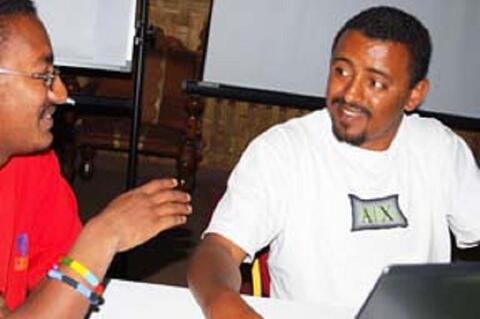
According to EEJA, environmental and development reporting in Ethiopian media has only recently been recognised as a priority, and the quality and quantity of such reporting has been low. To address this, EEJA engages in activities to promote interest in the field of environmental reporting, as well as training to be able to do so. Articles written by environmental journalists are posted on the EEJA website.
Training activities include courses and workshops. For example, in December 2008, EEJA, with the support of the Henerich Boll Foundation and Panos Ethiopia, organised a 5-day training for 14 journalists from private, government, and international media houses in which South African media specialist Franz Kruger and other local experts briefed journalists on issues such as pollution, wetlands, and energy.
As part of sharing experiences with other journalists in the region, with the support of the Department for International Development (DfID) and Fredskorpset Norway, EEJA also facilitated a series of exchange visits. In 2008/2009, EEJA hosted a Malawian journalist, while an Ethiopian counterpart was posted to Malawi for one year. The previous year, EEJA also sent a journalist to Malawi and hosted an exchange visitor from Uganda.
Beyond the Headlines was a project designed by EEJA and supported by DfID to highlight developing countries' and economically poor communities' perspectives on climate change through awarding fellowship grants for journalists. Awardees covered such issues as climate change adaptation and its relation to agriculture, energy, water, health, and other aspects of development.
Environment, Media
According to EEJA, development journalism is becoming one of the most important components of sustainable development practice in developing countries. Information is a human rights issue, and professional journalists are well placed to serve all development actors.
Fredskorpset Norway, The Heinrich Böll Foundation (HBF), Department for International Development (DfID), Panos Ethiopia
EEJA website on May 7 2011 and October 16 2012.