
























Media development action with informed and engaged societies

After nearly 28 years, The Communication Initiative (The CI) Global is entering a new chapter. 

Following a period of transition, the global website has been transferred to the University of the Witwatersrand (Wits) in South Africa, where it will be administered by the Social and Behaviour Change Communication Division. Wits' commitment to social change and justice makes it a trusted steward for The CI's legacy and future. 

On the transfer, co-founder Victoria Martin expressed her pleasure to see this work continue under Wits' leadership, knowing that co-founder Warren Feek (1953–2024) would have felt deep pride in The CI Global's Africa-led direction. 

As Wits, we honour the team and partners who sustained The CI for decades and look forward building from that strong base. This includes co-founders Warren Feek (1953-2024) and Victoria Martin as well as La Iniciativa de Comunicación (CILA), which continues independently at lainiciativadecomunicacion.com with links to The CI Global site. We are also eager to forge new partnerships and entertain new ideas as we consider how best to contribute to social and behaviour change in our rapidly evolving environment.

If you are joining the International Social and Behaviour Change Communication (SBCC) Summit in Panama, please join Wits and CILA on Monday, 22 June, to share your thoughts and suggestion for the relaunch of the Communication Initiative. We will be in Pacifica 5 from 12-1:25 for the Refuel, Reflect, and Renew Lunch Series: The Communication Initiative: celebrating a driving force for Communication for Social Change and the way forward. We will reflect on the legacy of Warren Feek and family in creating the Communication Initiative, consider the contributions of CI over the years and then turn our attention towards the future in this dynamic session. 

If you are unable to join us in Panama, we still want to hear from you. Please contribute your thoughts by following this link: https://redcap.link/CommunicationInitiative2026 or reaching out to ci_surveys@commint.com

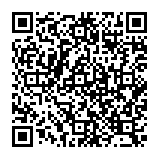
You can also follow the QR Code:

 https://redcap.link/CommunicationInitiative2026

Time to read
1 minute
Read so far

Special Edition Kenya - Conflict Sensitive Journalism

1 comment
Image
SummaryText
Reacting to the sudden outbreak of violence in Kenya and the mounting pressure on media following the disputed presidential election on December 27 2007, International Media Support (IMS) together with Article 19 and Reporters Without Borders carried out a mission to Kenya in the early days of January 2008 to assess the needs for support to the Kenyan media community. One of the findings of this assessment mission was the need to promote the concept of conflict-sensitive journalism among Kenyan journalists - most of them reporting for the first time in their life on such widespread conflict.

This handbook in conflict-sensitive journalism, special edition Kenya, is part of IMS's response to the needs expressed during this first and subsequent assessment missions to Kenya. The handbook is designed to be a practical everyday guide, which seeks to contribute to the theoretical refinement and practical realisation of conflict-sensitive journalism as a tool for Kenyan media practitioners covering conflict. It builds upon the work of Ross Howard and his handbook in conflict-sensitive journalism, first published by IMS in 2003.

The book includes the following chapters:
  • Understanding Conflict - What is conflict? What causes conflict?
  • Journalism and Conflict - The power of the media, the role of journalists, and conflict analysis.
  • Good Journalism around the World - What is good journalism and what should it include?
  • Conflict-Sensitive Journalism - A checklist and examples related to conflict-sensitive journalism.
  • Newsroom Cultures - Professionalism versus patriotism and newsroom diversity.
  • Code of conduct for Kenyan journalists - Extracts from the Kenyan Media Act relevant to reporting conflict situations.
Publication Date
Languages

English

Number of Pages

43

Source

IMS website on November 23 2008.

Teaser Image
http://www.i-m-s.dk/files/images/1312-ConflictA5.jpg

Comments

User Image
Submitted by Anonymous (not verified) on Tue, 07/20/2010 - 10:22 Permalink

DEAR COLLEAGUES:

THOUGH THE ONLY WAY TO REPORT CONFLICT SENSITIVE BY JOURNALISTS IS TO REPORT ADEQUATELY, ACCURATELY AND FAITHFULLY,BUT YOU CAN TURN YOUR PEN LIKEWISE BY INTERVIEWING BOTH SIDES OF THE PARTIES CONCERNED BY NOT GIVING THEM ANY SINGLE CHANCE TO HARM ONE ANOTHER. THIS WILL GIVE THE READERS THE TIME TO CHOOSE CORRECTLY WHICH ONE IS RIGHT IN TERMS OF GIVING BOTH SIDES OF THEIR COMMITMENTS.

HAVING BEEN IN DANGER ZONES WHILE PERFORMING MY WORK AS INVESTIGATIVE JOURNALIST, I CAN SIMPLY SAY WHO IS GOING TO LIGHT MORE FIRE TO THE NEWS READERS. IT HAS HAPPENED MANY TIMES WHEN I WAS TRYING TO COVER THE NEWS ON EX-PRESIDENT OF BURUNDI MICOMBERO ASSASSINATION IN MOGADISHU SOMALIA IN 1988-1989.
TILL TODAY,THERE IS NO ANY SINGLE STORY THAT WAS TOLD.

NTARUGERA FRANCOIS