










































Changing the Narrative: Media Representation of Refugees and Migrants in Europe
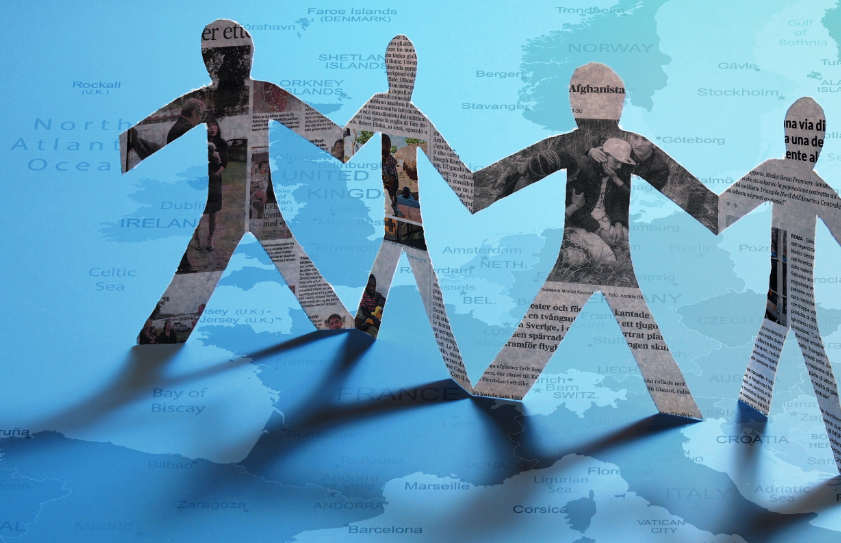
"Media can present and explain the existing challenges, provide accurate information on issues and events which can become inflammatory or be misunderstood, and provide a platform for the voices of refugees and migrants themselves. This enables the audience to move beyond a label to a real person with experience and expertise."
This report comes from the Refugees Reporting website'Refugees Reporting' project on refugees and communication rights in Europe, conducted in 2017 by the World Association for Christian Communication - Europe Region (WACC Europe) and the Churches' Commission for Migrants in Europe (CCME). WACC Europe and CCME engaged in this joint project to provide analysis and new communication tools to support information exchanges and advocacy for balanced media and public debate. These organisations believe that the representation of refugees and migrants in the media plays a major role in the tone of the public debate and, ultimately, in the welcome and integration of refugees and migrants into their new countries.
As the report explains, for refugees in Europe, as for other under-represented people, "communication rights" means being able to express themselves fully and without restrictions, being adequately and respectfully portrayed by the media, and having each individual's personal story acknowledged. Communication rights go beyond freedom of opinion and expression to include areas such as democratic media governance, media ownership and control, cultural diversity, linguistic rights, and the right to education, privacy, peaceful assembly, and self-determination. That is, communication rights are understood here as vital to full participation in society.
WACC has used media monitoring in the Global Media Monitoring Project (GMMP) and used a similar methodology here. There is both a quantitative analysis, which, through a set of codes and data, provides an objective assessment of the representation of refugees in the news, and a qualitative component, which is an analysis of a smaller sample of articles that identifies good and bad practices, as well as missed journalistic opportunities. For this project, all relevant news stories related to asylum and migration published across three days (Tuesday May 30, Wednesday June 7, and Monday June 12 2017) were included. The overall sample collected consisted of 571 items, divided as follows: 154 items from printed newspapers, 296 items from online newspapers, and 121 items from Twitter.
Participating countries were Greece, Italy, Spain, Serbia, the United Kingdom (UK), Sweden, and Norway. In addition, interviews were conducted with representatives of refugee networks and media, including a September 2017 consultation bringing people from both groups together to review the initial research findings. "The opportunity within this project for meetings between media professionals and refugee activists has shown that communication between these groups can move from mutual distrust to productive interaction."
Some of the key findings of the research include:
- Only 21% of news items on asylum and migration reference a refugee or migrant. Over three-quarters of the stories analysed in this project that talk about migration and asylum issues do not identify an individual refugee or migrant nor include their voice or experience.
- Women and some other groups of people are disproportionately absent from the news on refugees and migrants. Of the 21% of articles that mentioned a refugee or migrant, in only about one-quarter (27%) was that person a woman. In other words, of all people mentioned in the news articles, only 6% were refugee women.
- Of the 21% of the news items that reference migrants or refugees, less than half (40%) of the articles quoted them directly. This result points to a trend of indirect representation of refugees and migrants in the news. Direct quotes are the most accurate way to represent people. Inaccuracy of representation can easily lead to misunderstanding, and misunderstanding can in turn lead to a lack of tolerance.
- In the majority of cases (67% of the overall sample) migrants and refugees are subjects of the stories; only in 3% of the cases are they present as experts. In 43% of the articles mentioning a refugee or migrant, their occupation is not stated; while in 27% of the cases the only "occupation" mentioned is that of migrant or refugee. Project organisers contend that, when media does not go beyond the refugee label, and when the public tacitly accepts refugee as an occupation, people are deprived of their humanity and dignity.
- A little over one-third of the news stories identified the refugee/migrant as a perpetrator, while a little less than one-third put that person in the category of victim/survivor.
- Low percentages of articles across most countries are believed to actively promote negative stereotypes. The exception is the UK, where almost half (46%) of the articles are seen as promoting negative stereotypes. The London Bridge attack, which occurred during the course of this study, undoubtedly affected the way in which the nationality and immigration status of the attacker were covered.
- Only 26% of the print newspapers sample and 25% of the online newspapers sample made any reference to human rights or refugee law legislation. According to WACC and CCME, understanding and using appropriate legislative frameworks is a way to challenge hate; providing accurate information based upon internationally and nationally agreed upon principles lessens the possibility of misinterpretation and misuse of the information.
One issue repeatedly raised by media professionals in the study is the difficulty of gaining access to certain places, especially refugee camps. In some cases, civil society or activist organisations that manage those camps appoint themselves as "guardians", even without a proper mandate to do so. In these cases, according to the journalists interviewed, not only is it impossible to talk with refugees and migrants, but sometimes refugees are not even asked if they would like to talk with the media.
Media professionals also highlighted the difficulty of convincing editors to publish stories on a topic on which so much has been published already, as well as the necessity of finding new and different ways of telling a story. Media fatigue was one of the key topics discussed, as the issue of migration and asylum appears to be slowly slipping away from the main news agenda.
Project participants were positively surprised by the overall neutral tone in approximately half of the stories in the sample, with another one-third deemed sympathetic. In contrast to impartial journalism, which presents facts and perspectives from different sides, sympathetic journalism runs the risk of over-emphasising the refugee as a "victim". Thus rather than sympathy, the report stresses, journalists should strive for empathy, allowing the person to express her or himself and covering the issue from a perspective of understanding, based on facts.
During the consultation, both refugee and media groups put forward a series of suggestions for better collaboration and improvement in the representation of refugees and migrants in the news.
- In the short term, the role of social media as an outreach tool was highlighted. Through social media, it is possible to directly contact media professionals and to generate live coverage of particular events, which may then be picked up by more traditional media. The organisation of more meetings between refugee groups and media professionals was also a common suggestion.
- For the medium term, both groups underlined the importance of working with students of journalism and training them to ensure that the next generation of media professionals will have developed a sensitivity to the topic of migration. Including migrants and refugees themselves in such training is essential.
- For the long term, it was deemed critical to include more people with a refugee/migrant background in the newsroom and on editorial teams to ensure that stories are more inclusive and better represent the views and opinions of refugees and migrants. Specific programmes for the inclusion of refugee journalists should be developed where they are not already available.
- The final message was a call for refugee organisations, civil society, and media to work together to change the narrative: "'There is no such thing as a migration or a refugee crisis in Europe.' This needs to be repeated, loud and clear, until the ears on which it falls are no longer deaf."
The report goes on to make other recommendations, including separate ones for media professionals and news organisations, refugee-led organisations and groups, and civil society organisations working with refugees and migrants.
For the media, these include, among others:
- Adhere to the five core principles of ethical journalism: accuracy, independence, impartiality, humanity, and accountability.
- Respect the five-point guideline on migration reporting: Facts not bias, Know the law, Show humanity, Speak for all, Challenge hate.
- Include more individual refugees and migrants in stories on refugee and migration issues, and use more direct quotes from refugees and migrants.
- Include refugees and migrants in news reports as experts.
- Seek and share news focusing on the positive contribution of refugees and migrants in host countries.
- Foster links and mutual capacity building with refugee networks and groups.
- Seek increased diversity, including more people with a refugee or migrant background, in newsrooms and on editorial teams.
Recommendations for refugee-led organisations and groups include, among others: identify journalists at local and national level who work on migration and asylum issues and reach out to them to develop a relationship; train and engage refugee communities in the use of social media to reach out to different publics, especially building upon the expertise of younger generations; and understand the needs of the media in order to be able to present stories most effectively and in a way that enables the media to make the best use of them.
Recommendations for civil society organisations working with refugees and migrants include: grant refugees and migrants the right to determine whether or not they want to engage with media professionals; assist in identifying stories with a human angle; and work with media professionals and refugee-led organisations to develop training programmes.
A final recommendation for all: "Work together to change the narrative in Europe from 'crisis' to 'opportunity', from 'faceless floods' to individual people each with their own story, hopes and capacities."
Click here to download: the full report in English; an Executive Summary in Arabic, English, French, German, and Spanish; and video clips from the public presentation of the report.
Editor's note: The above summary includes text that is copy-pasted from different portions of the report.
CDAC Network, December 20 2017, Refugees Reporting website, and Refugees Reporting press release, November 16 2017 - all accessed on January 29 2018; and email from Sara Speicher to The Communication Initiative on February 9 2018.