










































How Did Local Radio Stations Support Their Communities During the Ebola Crisis?
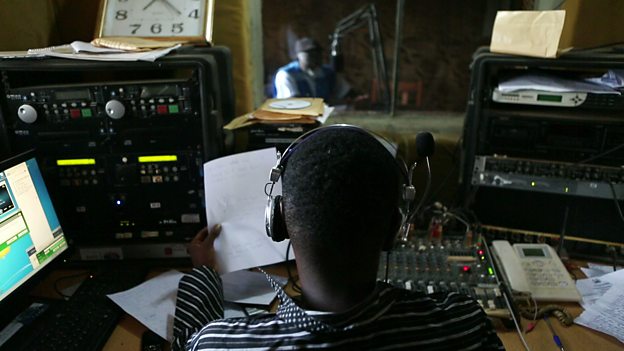
"During the 2014/5 Ebola outbreak in Sierra Leone BBC Media Action supported staff at 42 local or community-based radio stations to improve communication about the disease. Case studies indicate these stations were able to provide actionable information and contributed to changing listeners’ attitudes as well as providing a platform for people to interact with those involved in the response."
From BBC Media Action, this research summary analyses BBC Media Action's work with local radio stations during the Ebola outbreak as part of the Social Mobilisation Action Consortium (SMAC) to "provide platforms for discussions and give listeners timely, relevant and practical information." The SMAC project began before the peak of the outbreak in October 2014 and addressed widespread misinformation on the disease and prevention. "BBC Media Action's support to local stations involved training sessions, on-the-job mentoring and providing production equipment and financial support. This work was funded with UK [United Kingdom] aid from the UK government."
The August 2015 research consisted of four case studies at partner stations in: Freetown, Kambia, Bo, and Kailahun, involving focus groups discussions with listeners and interviews with station managers, journalists, and local stakeholders. The studies looked at "how the stations were supporting their local communities during the outbreak, and how the partnership with BBC Media Action supported the stations."
Key findings include:
- "Radio was seen as a key source of information during the outbreak, helping to raise awareness about the disease and reinforce behaviour change communication carried out by social mobilisers, health professionals and local leaders.
- Radio stations were seen to have helped to change attitudes among listeners at different points during the outbreak. Examples included helping to increase sympathy for and reduce fear of Ebola survivors and helping to reduce listeners' fears about attending hospitals or treatment centres
- The stations provided a platform for those involved in the Ebola response locally to update their communities on the response. They also provided a channel for two-way communication with those involved in the Ebola response, as listeners could text or call in with questions.
- Examples were given of how local shows helped to promote accountability - audiences in one area mentioned that they could call into the station and highlight places which did not have hand-washing facilities.
- Mentoring helped stress to some journalists the importance of providing positive, actionable information to communities.
- Training and mentoring also helped journalists to produce engaging content about the disease - particularly later in the outbreak when listeners were felt to be tiring of hearing Ebola coverage.
- In some cases, the provision of equipment and training helped journalists to report safely from affected communities. Listeners highlighted this 'on-the-scene' reporting as helping to bolster the credibility of a station's Ebola coverage."
The summary concludes that local radio stations are well placed to respond to a crisis involving communicating behaviour change because:
- "They are an established and often already well-trusted source of information for people in affected communities.
- They can broadcast in local languages or dialects. BBC Media Action research indicates that 15% of rural audiences understand neither Krio nor English (national survey, 2015).
- Local stations can produce content which speaks directly to localised issues and concerns, and features trusted local figures - in a way that nationally or regionally produced content cannot."
BBC Media Action website, April 13 2016.
- Log in to post comments