











































What Role Do Localised Debate Programmes Play in Addressing Local Issues? Case Studies from Nepal
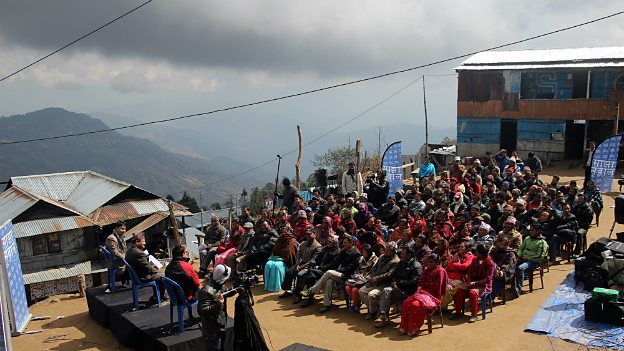
"Through supporting the production of local discussion programmes in Nepal, BBC Media Action’s Global Governance Project aims to provide a platform for ordinary people to raise important local issues with government officials."
The project aims to achieve this level of local discussion through "building the capacity of regional radio stations across the country to produce localised versions of the national debate programme Sajha Sawal (Common Questions)." (See Related Summaries below.) The goal of these local discussions is to "provide a forum for ordinary people to raise important issues facing their local communities and to interact directly with service providers, political leaders, government officials and other concerned stakeholders on the issue."
This study explored the role and impact of local discussion radio programmes in bringing about change. "Eight case studies, two each from FM radio station partners in four districts of Nepal, were selected as part of the study. Each case study included qualitative interviews with audience members (local community members), panellists (relevant stakeholders) and production staff involved in the programme, following up several months after the episode had aired to understand from multiple perspectives what had happened following the show. Case studies of specific episodes were purposively selected based on anecdotal reports from partner FM stations." As reported in this research, case study participants "felt that these programmes contributed in a positive way to helping resolve local issues. Nepal continues to face a number of challenges in establishing stable and democratic governance."
Findings include the following:
- "Local discussion programmes provide a platform upon which local government officials can be questioned and directly asked to follow up, thus supporting accountability of leaders.
- Local discussion programmes successfully highlight issues of local importance and prompt officials to commit to taking action. However, impact and satisfaction among audiences, in terms of actions taken following the show, varies across episodes.
- The programmes help to inform and make local people fully aware of the issues being discussed and, in some cases, help identify who is accountable for the service.
- Local discussion programmes bring attention to the needs of a diverse audience and ensure the voices of all groups have the opportunity to be heard, including women and girls and other marginalised groups.
- Programmes motivated some communities to take action to address their own problems."
Implications include the following:
- "Audiences reported that local discussion programmes contributed in a positive way to helping resolve local issues through:
- making people more aware and informed about a particular issue;
- making people aware of their right to question authorities; and
- allowing the opportunity for an open discussion on important issues.
- Audience members and panellists alike felt that connecting ordinary people to key government stakeholders was a successful element of the programmes.
- Respondents felt that bringing all concerned stakeholders together in one forum effectively puts pressure on those in positions of power to be accountable.
- Where solutions involve tangible actions at the service delivery level and were within the control of a singular public authority or office, commitments made on the show tended to be reflected in changes observed during the follow up case studies.
- Where redressal was needed at a higher policy level, or required collaboration between several groups (including private companies), local people reported being less satisfied that commitments from the show had been fulfilled sufficiently."
BBC Media Acton website, July 1 2015.
- Log in to post comments