










































1 minute
Self-Assessment Toolkit for Community Radio Stations and Practitioners
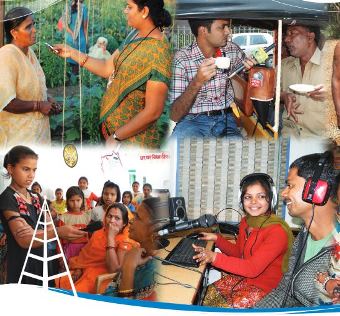
The Self-Assessment Toolkit (SAT) is a community radio tool from Indian non-governmental organisation (NGO) Commonwealth Educational Media Centre for Asia (CEMCA) Community Radio Facilitation Centre (CCFC) assembled as part of the project entitled “Enabling Media Access for Community’s Self Expression”. A second and complementary toolkit is entitled “Ethical Practice Guidelines for Community Radio Stations”. This work was carried out as a part of the Ford Foundation Supported Grant to CEMCA for setting up and establishing a Facilitation Centre for Community Radios.
The toolkit was designed through a 12-month consultation process beginning in a workshop held in New Delhi on December 19 2011. It included two lead partner organisations: Chanderi Ki Awaz, based in Chanderi, Madhya Pradesh, and Radio Active, based in Bengaluru, Karnataka, who field tested the toolkit and refined it, based on their experience. In October 2012, 10-15 potential replicating institutions were invited to be part of this process, feeding back their experiences in using it.
The toolkit contains an illustrated question-answer format section on use of the toolkit, questionnaires for gathering information, and tips on tracking performance.
Contents:
- Section 1: The Why and How of Self-Assessment Toolkit
- Section 2: How Are Your Scores?
- Section 3: Questionnaires: Technical Capabilities; Management Committee; Marketing; Infrastructure; Financial Management and Budget Planning; Policy Understanding; Content Review; Appraisal and Evaluation; Grievance Redressal Mechanism; Licensing/Renewal.
99
Email from The Commonwealth of Learning to The Communication Initiative on August 1 2014 and email from Jayalakshmi Chittoor Parameswaran to The Communication Initiative on August 22 2014.
- Log in to post comments