










































Hashtag Journalism
Columbia Journalism Review
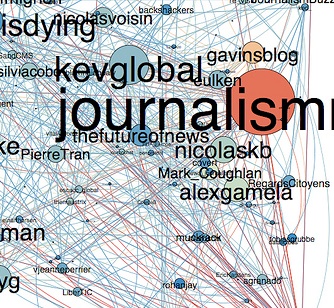
This Columbia Journalism Review article describes the way journalists use hashtags to identify trends for their topic choices and speculates on whether that is the best way to research what to write about. Hashtags are electronic metadata keywords that may be embedded in a piece of writing through the placement of the symbol #. They make it possible to group available writing on the hashtag topic to identify trending topics so that, for example, journalists are more likely to produce "second-day news stories and opinion pieces" on topics that are being frequently read by the public.
Hashtagging results in algorythmic ranking. Twitter is a response mechanism by which quick response "tweets" can indicate the focus of public attention. Because of "hashtag activism", the use of tagging to bring a topic to public attention, journalists are challenged to decide if the topics merit new coverage. "[I]ndeed, many of the news stories that have been subject to the efforts of hashtag activists have succeeded in redirecting the attention of both the public and reporters toward a previously more obscure angle. But while hashtag activism is a good way to introduce a story or perspective into the mainstream news cycle, it doesn’t typically lead to sustained coverage of that story."
A hashtag can bring a topic to national news by frequency of response, such as the #YesAllWomen tag in response to a gender-based violence shooting in the United States that resulted in: a national magazine printing "best tweets" from the hashtag, a major news story in a national newspaper, and opinion pieces in digital outlets. However, news stories are likely to fade as newer news trends emerge, as has, for example, the story of kidnapped Nigerian teenage girls ( #BringBackOurGirls).
Though a tool for activists, Twitter is not representative of a large reading public: "As of last year, only 18 percent of online adults were using it, but 58 percent of journalists were....Most digital news consumers get their news one of three ways: visiting a site directly, search, and Facebook..." which has launched a "trending" box on its site.
The article concludes that, though journalists' attention to creating stories around topics gaining readers' attention, "[i]t would be better for journalists to expand the scope further, to look beyond Twitter’s trending hashtag box and examine the full range of ways digital consumers let us know what they’re interested in."
Columbia Journalism Review, July 31 2014, and Center for International Media Ethics - CIME newsletter, June 6 2014. Image credit: OUseful.Info