











































Community-Based and Mass Media Communication Change HIV/AIDS: Related Social Norms & Sexual Behaviors in Mozambique
Johns Hopkins Bloomberg School of Public Health Center for Communication Programs
This 2-page impact study shares the experience of Tchova Tchova, Juntos Vamos Mudar (TTHV - Moving Forward, Together We Will Change), a three year social and behavioral change communication project for HIV/AIDS prevention and treatment led by Johns Hopkins Bloomberg School of Public Health Center for Communication Programs (JHUCCP). Tchova Tchova was designed to provide focus on large-scale communication activities to influence main drivers and social determinants, especially gender factors, that directly fuel the HIV/AIDS epidemic.
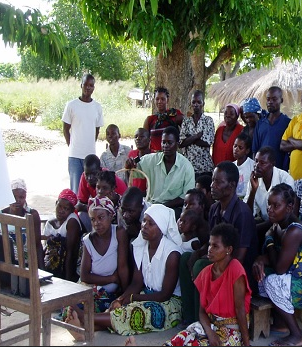
According to the report, in Mozambique 11.5% of adults aged 15-49 are HIV positive. Women bear more of the burden as their prevalence rate is 13.1% as compared to men’s 9.2%. Urban areas are also more affected with 15.9% of the urban population having HIV/AIDS as compared to 9.2% of the rural population. One of the most significant disparities is seen between young men and women aged 15-24. A key component of TTHV is the HIV/AIDS prevention gender tool developed by JHUCCP which includes 10 video and written profiles of Mozambican "positive deviant" men, women and couples who tell their stories of how they overcame gender, cultural, and social barriers to make positive changes in their lives, especially related to HIV treatment and prevention. The video profiles are shown in interactive community sessions followed by a dialogue led by two trained facilitators (one male, one female).
TT Radio utilised the mass media to reinforce the messages from TTHV at the community level and communities not exposed to TTHV. TT Radio consisted of 34 radio programmes in 7 different languages. A radio debate on gender and HIV where listeners could call in or send SMS to a HIV/AIDS specialist aired following the episodes. From the extensive multi-level monitoring put in place, the programme was able to identify 54 "Champions of Change", which were success stories of people who have changed their practices and who were critical in supporting normative and behavioural change. These champions became advocates and their transformational stories were shared with the community and through TT Radio.
According to the report, over the 18-month project, TTHV engaged 32,679 participants in 267 communities through the implementation of 1,134 workshops in the provinces of Zambezia, Nampula, and Sofala. The TT Radio programmes aired 4,930 times from December 2008 to July 2010 on 41 stations.
The impact study outlines the following as accomplishments:
- Participation in TTHV sessions had a significant and positive effect on gender equity as shown by participants reporting a greater number of shared household tasks between men and women (in particular for traditionally gender-differentiated tasks).
- Positive results were also seen in partner communication on HIV-related topics. Overall, 80% of all respondents reported that they talked with their partner about HIV and/or sexual behaviour in the last 3 months. Among the TTHV participants, this figure is 88% and 72% for non-participants. Among the non-participants who were exposed to TT Radio, 84% reported talking with their partner about HIV, while only 60% of the non-exposed to TT radio in the control group did so.
- Beyond numbers, the report states that TTHV was very popular and welcomed by the community participants. A male participant in urban Zambezia said of TTHV, "The programme makes us grow" A woman in peri-urban Nampula said that TTHV helped improve her domestic life: "Others ask me if I like TTHV and I say yes because I’m at peace, a peace I’ve never had in my home with my husband." Participants said they related to the stories in the videos as they themselves have been in similar situations.
According to the report, in order to advance TTHV’s goal of achieving social cohesion, participants agreed to hold weekly group discussions about local priorities such as opening new wells in the community. The Tchova Tchova legacy lives on through local Action Groups comprised of TTHV participants that conduct home visits to other community neighbours and offer counselling to couples affected by gender-based violence, etc.
JHUCCP website on June 22 2013.
- Log in to post comments