










































Are Donors Taking the Journalism Crisis Seriously? An Analysis of Official Aid to Media 2010-2019
Consultant (Myers); Center for International Media Assistance, or CIMA (Gilberds)
"The scale of the problem facing global independent media requires a more robust and sustained commitment by the world's established democracies."
This study, published by Center for International Media Assistance (CIMA), analyses trends in media development funding between 2010 and 2019. It looks in particular at what the Development Assistance Committee (DAC) of the Organization for Economic Co-operation and Development (OECD) donors committed to media assistance and what their main approaches are. Looking forward, it also explores what the prospects are for new commitments and investments by major bilateral donors for protecting free and independent media.
As explained in the document summary, "The future of independent journalism is in crisis. Escalating threats are driving a record number of journalists into exile and authoritarians are finding new ways to silence journalism, control the information space, and stifle public debate and dissent. Traditional business models for the media are no longer viable in the wake of digital transformations. To secure the future of independent journalism, international aid is critical."
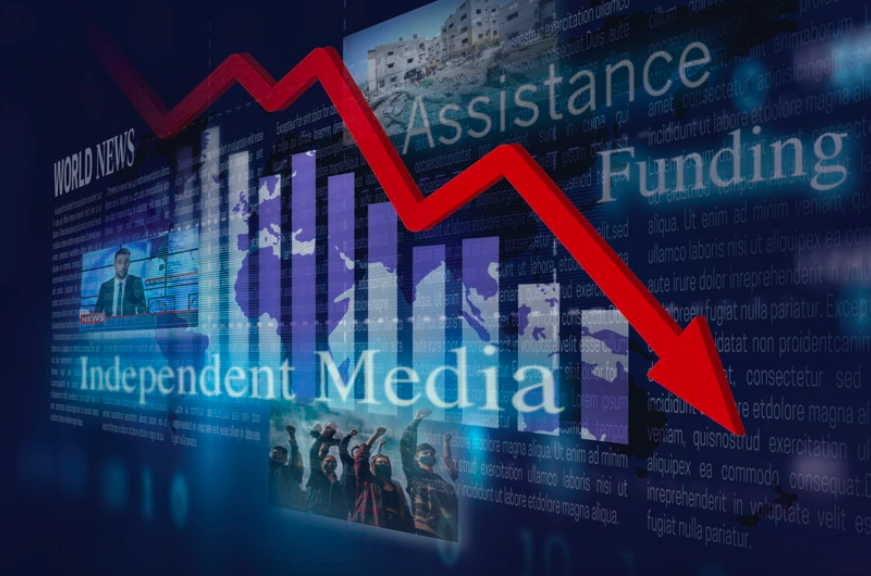
The study has two components. First, it offers an analysis of development finance data collected annually by the OECD DAC between 2010 and 2019, which sheds light on the amount and nature of ODA allocated to media development in different countries and how that has changed over time. The findings show that the top six donors are the United States, Germany, Sweden, Japan, France, and the United Kingdom, and it is the donations from these countries that are analysed further in the report to look at how the funds are allocated, how donations have changed over time, and what channels for implementation, such as governments, multilateral institutions, non-governmental organisations, or NGOs (international and local), private sector organisations, and universities and think tanks, are being used. The results showed that over the 10-year period, despite increased global attention to the importance of independent journalism, media freedom, and freedom of expression as cornerstones of democratic development and economic progress, commitments to media development remained largely stagnant, accounting for 0.3% of official development assistance (ODA). Among the DAC donors, aid to the media sector has largely flatlined since 2010. Moreover, the gross number of projects decreased by an average of 21 per year, resulting in an average drop of about US$2.3 million per year to the sector.
In relation to how funding is channeled, the findings show that between 2010 and 2019, 44% of media development ODA was allocated to public sector institutions, while 36% was allocated to civil society organisations, either international NGOs (INGOs) or NGOs based in recipient countries and regions. The remaining 20% was allocated to other channels, including multilateral institutions, the private sector, and universities and think tanks.
The second part of the report shares the results of in-depth interviews with several of the donor agencies that allocate the largest amounts of funding to media assistance and major INGOs that implement media support programmes. As explained in the report, the findings from the interviews offer additional context to the policy and financial commitments to media development over the last decade and how these policies have, in some cases, changed over time in reaction to perceived successes and failures in media support. They also provide a window to understanding the present (which is impossible to determine using the OECD DAC dataset because of the lag times between commitment, reporting, and publishing the data) and offer insight into how the major media donors are currently organising and articulating their media support, particularly in light of the COVID-19 pandemic and crisis in Ukraine. Finally, the interviews shed some light on the possible future of media support among the major donors, including whether they are likely to increase their commitments to and investments in media over the next few years and the corresponding rationales.
Overall, the interviews showed that there is renewed interest and urgency in supporting independent media as part of their development and governance agendas. Rising authoritarianism, rampant disinformation, toxic social media, the "democratic crisis", rising threats to journalist safety, the effects of COVID-19, and the war in Ukraine were mentioned repeatedly as reasons for increased attention to media development from 2020 to 2022. However, as the report shows, renewed attention to media development, press freedom, and freedom of expression as priority areas of international cooperation has yet to translate into substantial increases in aid to the media sector. Global crises such as the COVID-19 pandemic, the war in Ukraine, economic recessions, and record-breaking inflation have created new priorities for development assistance at the expense of funding for media support.
Nonetheless, as the report states in the conclusion, "compared with a decade ago, there appears to be a better understanding of media among the major donors. They are also increasingly concerned about the impact of technology and digital governance on news media and recognize the dangers associated with social media and information pollution. There is also a greater commitment to multilateral diplomatic efforts, such as the Media Freedom Coalition (started by the United Kingdom and Canada in 2019), the Summit for Democracy (launched in 2021 by the United States), the International Partnership for Information and Democracy (launched by France in 2019), and possibly what may be emerging as a 'diplomatic turn' in media development. Donor governments are increasingly talking to recipient country governments and lobbying for changes such as improved journalist safety, an end to impunity for attacks on journalists, trial observations by the international community, granting of emergency visas, and so on. Finally, the financial picture for media support could be worse, considering the enormous political, security, and economic headwinds that are currently buffeting most of the OECD DAC donor governments. Although media support is still barely attaining 0.3 percent of ODA, at least the major donors are not significantly cutting their aid to journalism. Overall, finance to media development as part of official development aid seems to be holding steady."
CIMA website on March 18 2024. Image credit: © Edward Crawford/Shutterstock.com
- Log in to post comments