










































Zambia Elections 2016 - championing live TV debate
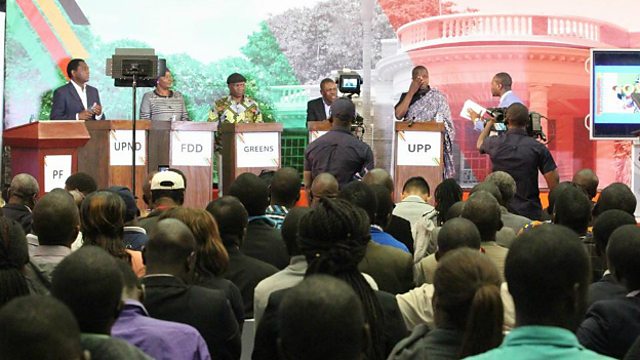
Author: Changwe Kabwe, August 17 2016 - In an election campaign dominated by personality politics, a national TV debate featuring key presidential contenders in the Zambian general election presented a rare opportunity for people to directly question candidates and hear about their plans for Zambia’s future.
In a large auditorium filled with hundreds of people, bright lights and watching cameras, Philip Sikainda, a gentleman in his sixties stood up and addressed the panel of presidential candidates.
"Zambia today has a lot of retirees languishing in poverty because of unpaid benefits, some of them die without receiving their benefits, what will you do if elected into government to [support their] plight?” he asked.
Held a week before Zambians went to the polls (11 August 2016), the debate provided a unique opportunity for people like Sikainda to question and hear from candidates, in yet another close presidential election race, just 18 months after the incumbent, Edgar Lungu won by less than 28,000 votes.
Newspaper headlines and radio shows have been dominated by personality politics in the election run-up. With little debate on real policies – the Zambian electorate were at risk of being denied the chance to make an informed decision about their vote.
The live television debate centred on key election themes such as jobs, the energy crisis, governance, the rule of law, the weakening economy and taxation. The show – produced by MUVI TV, Zambia’s only independent TV station – provided Zambians with an opportunity to hear each candidate’s vision of how they planned to turn around the fortunes of a country, considered to be one of the poorest in the world.
A live televised debate
In over 25 years of multi-party democratic history, Zambia has established a well-respected culture of smooth power transitions. Yet most of the country’s leaders have assumed public office without having to face the people in a live televised debate.
Since 2011, BBC Media Action has worked with local and national broadcast partners – including MUVI TV – to promote a new culture of live TV and radio debates through mentoring and training. This aims to help people discuss issues that matter to them and hold their leaders to account.
Social media buzz
A week before the debate, Hakainde Hichilema – the main opposition leader – took to Facebook and Twitter and challenged Edgar Lungu to accept the invitation to join the panel. The call was largely welcomed by many Zambians on social media who shared and retweeted the posting – but Lungu’s decision to decline appearing stood firm.
Unfazed, when the national TV debate was broadcast, MUVI TV producers ‘empty-chaired’ Lungu, leaving his podium place vacant on stage while the other main presidential contenders debated their policies.
Unlike some radio shows and public rallies where the candidates usually have latitude to speak unchallenged, the debate presented a chance of people to critically analyse statements from the contenders as the moderator kept reminding them of past declarations and challenging them to substantiate their claims.
A noticeable increase in ‘social media buzz’ since the last election presented an interesting and exciting build up to the debate. Many people joined the debate online through Facebook and Twitter, live tweeting punch lines from candidates, their wide-ranging views being reported and amplified by TV and radio partners.
The live show offered a unique opportunity for Zambians to make up their minds about candidates in a moderated environment – and marked another step forward for Zambia’s democracy.
Click here to access this BBC Media Action blog and related links on their work in Zambia.
Image credit: BBC Media Action
Contact:
BBC Media Action
BBC Media Centre, MC3A, 201 Wood Lane
London
W12 7TQ
United Kingdom (UK)
Phone: 44 (0) 20 8008 0001
Fax: 44 (0) 20 8008 5970
Media.action@bbc.co.uk
- Log in to post comments