










































What We Think We Know and What We Want to Know: Perspectives on Trust in News in a Changing World
Reuters Institute (Toff, Badrinathan, Mont'Alverne, Arguedas, Fletcher, Nielsen); University of Minnesota (Toff); University of Pennsylvania (Badrinathan)
"Trust is not an abstract concern but part of the social foundations of journalism as a profession, news as an institution, and the media as a business."
In the context of increasingly competitive digital environments, this report, published by the Reuters Institute for the Study of Journalism, looks at some of what is known (and unknown) about trust in news. Focusing on four countries with varying political and media systems - the United States (US), the United Kingdom (UK), India, and Brazil - it seeks to gauge media professionals' understanding of what is contributing to the decline in trust and what could be done to regain and retain it.
This is the first report arising out of the Reuters Institute's Trust in News Project, which seeks to improve understanding of what drives trust for different news audiences in different contexts and to identify evidence-based recommendations for publishers, platforms, and others working on issues around trust and news. The project will focus primarily on audiences and the way they think about trust, but it begins with this report to take stock of how those who study journalism and those who practice it think about the subject. The ultimate aim of the project is to gather actionable evidence to help journalists and news media make informed decisions about how best to address concerns around eroding trust.
The report is based on a combination of a review of existing research on trust in news (including nearly 200 interdisciplinary publications) and original interviews on the subject (including 82 with journalists and other practitioners across several countries).
As explained in the report, the choice of the four democracies - Brazil, India, the UK, and the US - was based on the fact that these countries encompass both the Global South and North, with a range of cultural heterogeneity and political practices that vary in their partisan and populist tendencies. For purposes of the project, one of the most important differences across these countries is in how audiences have integrated digital and social media practices into how they consume news. For example, whereas public social networking sites such as Facebook and Twitter have rapidly become key conduits of information in democracies worldwide, in Brazil and India, many of those interviewed pointed to the popularity of private groups and messaging applications like WhatsApp, which has been driven by an increased distrust in more traditional news sources.
In a discussion on why trust matters, the reasons emerging from the research included practical commercial considerations, since many media organisations' business models are more reliant than ever on direct revenue from subscribers and supporters. Many interviewees also stressed the importance of trust for journalism itself, as trust impacts everything from sourcing stories to reporters' safety to the public impact of reporting on corruption and malfeasance.
The report is divided into two main sections. In the first section, the report summarises four basic insights identified in previous academic research on trust in news as well as by practitioners that were interviewed (referring to "what we think we know" in the title). These insights include the importance of clarifying the terms of debate, gaps in the public's understanding about how news is made, and the need to reckon with past failures. Above all else, many interviewees echoed research findings that underscore the impact of partisanship and politics on how people feel about news.
In the second section, the report outlines four research questions that the work has generated so far (referring to "what we would like to know" in the title). These are:
- To what extent are platforms damaging to news organisations' brand identities?
- Which audience engagement strategies build trust? Which may undermine it?
- How much is too much transparency? What types of transparency matter most?
- Where do preconceptions about news come from, and how can they be changed?
The following excerpts convey key takeaways from both sections of the report:
- "There is no single 'trust in news' problem, but rather multiple challenges involving both the supply of news and demand for information. Different segments of the public, as well as journalists and researchers, hold different beliefs about how journalism works and sometimes conflicting views about what they expect from it. Thus, those who want to address it need to be specific in their strategic aims and, ideally, base their work on supporting evidence, as initiatives that work with one part of the public may not work with others.
- Many scholars and practitioners have diagnosed problems in the production of news that may contribute to distrust. The effects of changing distribution practices, especially the important role played by platforms, are less well understood but are likely to be important. Many of those interviewed fear platforms undermine the public’s trust in news, even as they also help people find news. Improving journalistic standards and practices may not improve trust if such efforts are not visible to users who come across news only fleetingly on social media.
- Internal and external initiatives focused around transparency, engagement, and media literacy have shown promise, but empirical evidence about what works, with whom, and under what circumstances, remains murky. Research has often been too disconnected from practice and too focused on only a handful of countries. There is a considerable risk here of doing things that look good and/or feel good, or imitating what others are doing on the basis of little or no evidence, which could lead to wasted efforts at best and counter-productive results at worst.
- Efforts to improve trust, as important as they may be, involve trade-offs in divided and polarised societies and can also be at odds with other important priorities, such as holding power to account. Combating entrenched preconceptions about how news works, whether strategically perpetuated by political leaders or passed down over generations in particular communities, involves making choices that are likely to alienate some audiences over others."
The report highlights two main lessons that arise out of the analysis. First, more descriptive comparative media research is needed to bring greater clarity to how and why news audiences in the Global North and South make the choices they do. Second, more prescriptive media research is also critical so that empirical evidence can be brought to bear on what works for building trust, with whom, and under what conditions.
As a way forward for the Trust in News Project, the research questions outlined above will serve broadly as a roadmap for future research with a focus on news users - the people whose trust journalists seek to earn - at the centre of the project's work.
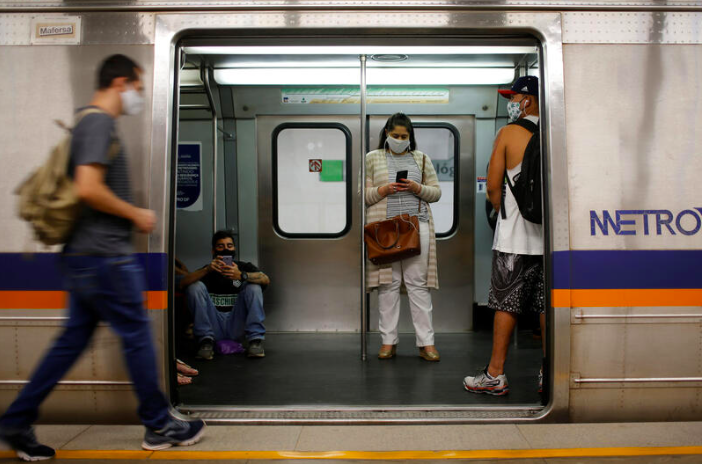
Reuters Institute website on March 26 2021. Image caption/credit: Passengers on a subway train, Brasilia, Brazil, July 2020. Reuters/Adriano Machado
- Log in to post comments