










































Voluntary Family Planning Programmes that Respect, Protect, and Fulfill Human Rights: A Conceptual Framework
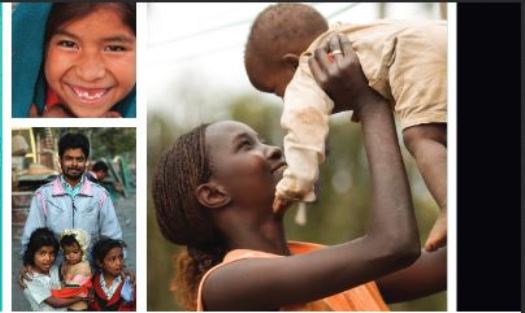
This paper presents a conceptual framework "designed to serve as a pathway to fulfilling both the Family Planning 2020 (FP2020) goal and governments' commitments to the provision of voluntary family planning programs that respect, protect, and fulfill human rights." The framework answers the key question, "How can we ensure public health programs oriented toward increasing voluntary family planning access and use respect, protect, and fulfill human rights in the way they are designed, implemented and evaluated?" To accomplish this, it applies human rights laws and principles to FP programme and quality of care frameworks and shows that human rights and public health approaches can be mutually reinforcing if programming is based on both public health and human rights outcomes.
FP2020 is the 2012 London Family Planning Summit goal of "reaching 120 million new users of family planning by 2020," a goal that civil society organisations felt could signal a retreat from the human-rights centred approach agreed upon in 1994, if special care were not taken.
The logic model framework links inputs and activities with outputs, outcomes, and impacts that are intended to assist policymakers, programme managers, donors, and civil society at the policy, service, community and individual levels with programme design, implementation, and monitoring and evaluation. The framework:
- Includes the inputs required at the policy, service, community, and individual levels to achieve the desired public health and human rights outcomes and impacts.
- Situates these four levels within the country context that affects both the supply of and demand for FP.
- Shows how the four levels support the right to reproductive self-determination; sexual and reproductive health services, information, and education; and equality and non discrimination.
- Links the current focus on quality of care in FP programming to the concepts of availability, accessibility, acceptability, and quality.
- Reflects the principles of public health and human rights programming.
- Applies to all phases of the programme life cycle (i.e., needs assessment, planning, implementation, monitoring and evaluation, scale-up, and sustaining).
- Presents the importance of accountability mechanisms for the effective redress of rights violations and handling of alleged or confirmed vulnerabilities.
- Promotes the agency of individuals to make reproductive health choices that are free from discrimination, violence, and coercion.
The following actions are some of the communication strategies recommended to make progress towards securing FP programmes that respect, protect, and fulfill human rights:
- Foster additional dialogue at the global and country levels to facilitate discussions around the critical issues of expanding access to FP....
- Disseminate the conceptual framework at country and global levels, including providing access to the framework and associated evidence and tools in a web-based platform, to facilitate its use.
- Further document and evaluate rights-based approaches....
- Develop guidance and tools to apply the framework....
- Foster innovation in rights-based, public health approaches…focus particularly on additional interventions to strengthen individual empowerment, community participation, and capacity building.
Email from The RESPOND Project to The Communication Initiative on September 11 2013. Image credit: Davis Dennis, Bill & Melinda Gates Foundation, Shreyans Bhansali