










































Vietnam Is Improving Science Communication
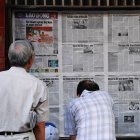
"By making sure that journalists are equipped with good scientific knowledge, and know-how to make science widely understandable, we are showing that the media can help the public develop more reasonable responses to health and environmental risks. Perhaps other countries can learn from our experience."
In this SciDev.net article, Vietnamese health journalist Son Kim Phan shares details of the progress his colleagues are making in communicating science and risk.
These changes have been made as a response to observations that Vietnam's media often have not provided enough information for people to make informed, rational judgments about risks they face, for example from tsunamis or avian flu outbreaks. According to Phan, "[t]he few television shows and science magazines that do involve Vietnamese scientists - mostly covering medicine or agriculture - are often unattractive and too academic, failing to engage the general public or to offer practical advice or solutions."
Signs of evolution are represented by a perceived lowering of discrimination and stigma in Ho Chi Minh City, home to about 70,000 HIV-positive people - due, Phan thinks, to a series of media and government communication campaigns over the past 10 years. Similarly, campaigns including scientists from different fields and United States (US)-sponsored training for journalists have contributed to Vietnam's success in controlling avian flu outbreaks in poultry in 2007 and 2008. Media outlets are themselves calling for - and stimulating - change. For example, the Saigon Marketing Newspaper highlighted the need for accuracy in stories about risks during health scares. The article, entitled "Risk of Risk Communication", was re-used by newspapers, magazines, and television shows across Vietnam. And a series of articles in Tuoi Tre Weekly called "100 Pieces of Scientific Knowledge that People Cannot Forget" is designed to make basic science simple, engaging, understandable, and attractive.
Journalists are reportedly heeding the call. For instance, Saigon Marketing Newspaper now runs a television show on Ho Chi Minh City TV. "Life Discovery" offers a series of short documentaries on natural disasters and health issues. The journalists working on the programmes collaborate with scientists to identify key topics and are trained to communicate the issues simply and comprehensively. Phan points out that, "[i]f journalists and other media professionals improve their grasp of science and commit themselves to making stories understandable and accurate, they can secure more external financial support for their work."
SciDev.Net Weekly Update (November 24 - December 1 2008); and email from Dr. Sian Lewis to The Communication Initiative on January 14 2009. Photo credit: Flickr/EverJean.
Comments

Vietnam is improving science communication
The situation is almost similar to Vietnam in Bangladesh, where science journalism is a vague term as journalists do foten confused about it. Neither government nor the media houses have yet taken any initiatives to help journalists develop skills to understand scince and coimmunicate complex messages in easy terms to general masses. I think my friend, Son, has written a timely article which would benifit journalists from developing world.