










































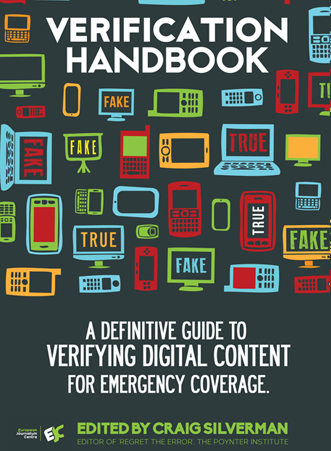
Verification Handbook: A Definitive Guide to Verifying Digital Content for Emergency Coverage
"In a crisis situation, social networks are overloaded with situational updates, calls for relief, reports of new developments, and rescue information. Reporting the right information is often critical in shaping responses from the public and relief workers; it can literally be a matter of life or death."
Authored by journalists from the BBC, Storyful, ABC, Digital First Media, and other verification experts, this is a resource for journalists and aid providers that offers tools, techniques, and step-by-step guidelines for how to deal with user-generated content (UGC) during emergencies. Noting that rumours and misinformation can cause people to invent and repeat questionable information in emergency situations due to uncertainty and anxiety - now amplified due to new technology like social media - the resource provides best practice advice on how to verify and use information provided by the crowd, as well as actionable advice to facilitate disaster preparedness in newsrooms. Case studies are included; for example: "Separating Rumor From Fact in a Nigerian Conflict Zone". Its advice and guidance are geared toward news journalists, citizen reporters, relief responders, volunteers, journalism school students, emergency communication specialists, and/or academics who are researching social media.
In one chapter, Steve Buttry, Digital Transformation Editor for Digital First Media, explains that verification employs a mix of 3 factors: (i) a person's resourcefulness, persistence, skepticism, and skill; (ii) sources' knowledge, reliability, and honesty, and the number, variety and, reliability of sources you can find and persuade to talk; and (iii) documentation. He notes that technology has changed how we apply all three factors. Joining that is this list of fundamentals:
- Put a plan and procedures in place before disasters and breaking news occurs.
- Develop human sources.
- Contact people; talk to them.
- Be skeptical when something looks, sounds, or seems too good to be true.
- Consult credible sources.
- Familiarise yourself with search and research methods, as well as new tools.
- Communicate and work together with other professionals - verification is a team sport.
- When trying to evaluate information - be it an image, tweet, video, or other type of content - you must verify the source and the content.
Email from Maddie Smith to The Communication Initiative on November 5 2013 and January 29 2014.
- Log in to post comments