










































Urungano (Generation)
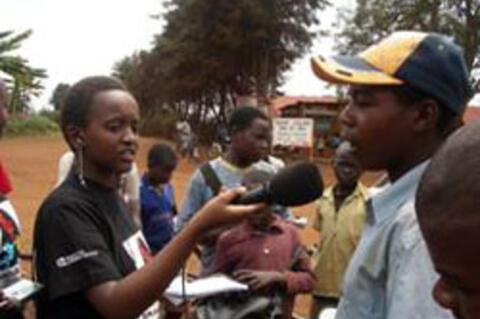
Each week, the hosts of the show conduct all the interviews as well as plan and lead the show. The girls typically begin their programme with a teenage chat and then work their way into discussions of such issues as underage marriage and child labour. Throughout the weekly programme, they move the conversation toward understanding how they, the next generation of Rwandan women, can empower themselves to build a better future. Designed to ensure that girls get their fair share of time on air, the team is designed to represent the diversity of youth in the capital, with a range of backgrounds and life experiences.
The first edition of Urungano focused on the subject of rural-urban migration. SFCG reports that Kigali is the world's fastest growing city and that the government is trying to remove its slums, while more and more people flood to the city. Rural-urban migration is therefore a subject about which people have an opinion. In addition to featuring the voices of youth from the countryside and the capital, the young journalists also interviewed a representative of the Ministry of Youth to ask him about the government's response to the situation. Between popular songs, sound clips, and jingles, the show also featured a studio discussion between two teenagers - one from the countryside and one from the city - who shared their perspectives on this trend and how it affects their lives.
The 2008 season ended with a 2-part series on the issue of street children. The segments looked at the realities of life on the street, including the challenges encountered during ordinary daily tasks like eating and sleeping. The coordinator of one of Kigali's centres for street children spoke on the show to share his perspectives on the realities faced by kids living on the streets. In the second programme, the young journalists spoke directly to former street children who are now living in rehabilitation and care centres. The programme highlighted services available to children looking to leave the streets, including education and housing. The kids interviewed told of their life in the streets, their battles with drug and alcohol abuse, and their lives away from family and friends. One former street child who has returned to his family told SFCG how proud he is that he left the streets.
In 2009, in commemoration of the genocide in Rwanda, Urungano focused on reconciliation. The reporters went into the countryside and found a mutual support group of genocide victims and perpetrators who, despite their tragic past of conflict, travel together from village to village to teach and model reconciliation. By selecting this topic, the girls sought to explain their vision of the Rwanda in which they want to live.
Urungano is broadcast on both Kigali's Contact FM and Radio Salus in Butare on Saturdays at 5pm (GMT+2), and can be heard online at the same time on the Contact FM website.
Youth
SFCG uses media, including both radio and television, across its 19 programmes around the world, including in the Great Lakes region.
European Commission, United States Agency for International Development (USAID), Search for Common Ground, Contact FM, Radio Salus
SFCG website on April 21 2009; and "A Reminder of Radio's Power" [PDF], by Chris Plutte, The Philadelphia Enquirer, on April 21 2009 and May 11 2010.