










































Truth vs Misinformation: The Collective Push Back - South Asia Press Freedom Report 2018-19
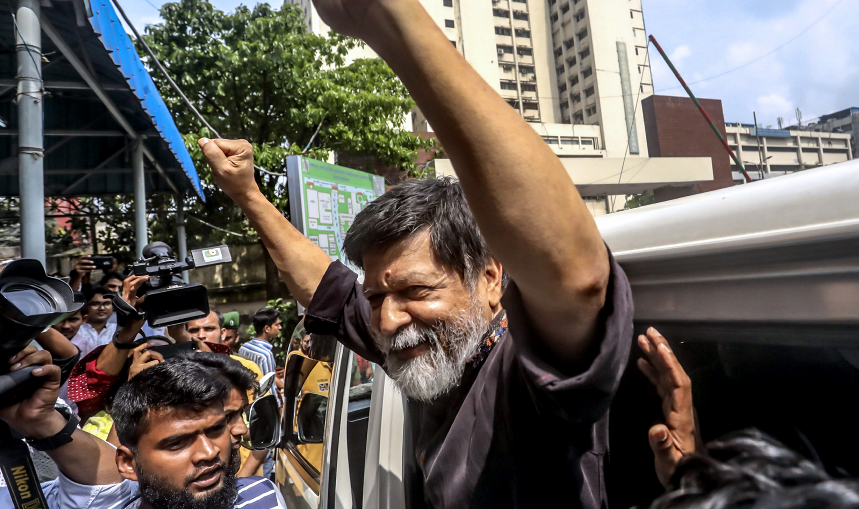
"[I]n spite of war mongering, the damaging impacts of fake news and hate speech, and the politics of control, South Asia's media workers made it very clear that they have a decisive role to play in fighting the scourge of misinformation and supporting democracy and human rights. And most importantly they have a leading role in truth-telling." - Jane Worthington, Director IFJ Asia-Pacific
In 2018, the International Federation of Journalists (IFJ) called South Asia the most deadly region in the world for media workers. Produced by the IFJ on behalf of the South Asia Media Solidarity Network (SAMSN), this report documents the ongoing challenges to press freedom in South Asia. It features analysis of online harassment and internet shutdowns ("the new normal in South Asia"), country chapters (Afghanistan, Bangladesh, Bhutan, India, Maldives, Nepal, Pakistan, and Sri Lanka), and a list of media rights violations under the Journalist Safety Indicators (JSIs).
IFJ provides context, noting that journalists' work to support democracy and human rights happens alongside enduring, intertwined, and often competing religious, cultural, tribal, political, and social histories. Also in the mix: a rapidly evolving geo-political environment pressured by economic imbalances, powerful political and business interests, growing extremism, and digital disruption.
The report offers many specific examples of targeted assassinations, who are part of the group of 22 journalists and media workers killed in South Asia from May 2018 to April 2019, 12 of whom were killed in Afghanistan. The IFJ also recorded: 130 non-fatal attacks on journalists in the year in review, 24 detained during the year, and "the mass haemorrhaging of journalist jobs in the region, most acutely in Pakistan. Those silenced by sacking in Pakistan included 700 journalists at Jang, 243 at Century Publications, 350 at Nawa-e-Waqt, 200 at Dunya, 200 at Abb Takk TV, and new media entity Bol TV has ceremoniously hired and fired at least 4000."
Furthermore: "Litigation against the press by political and business actors continues to be a way of silencing critical reporting and commentary. With judicial systems in most countries remaining ponderous and slow-moving, the process of securing discharge in these matters has turned out to be punishment in itself."
The report also documents internet shutdowns in South Asia, recording 106 shutdowns, 96 of which occurred in India. To cite a specific example: On April 21 2019, Sri Lanka's government blocked all social media platforms (Facebook, Instagram, WhatsApp, and Viber), citing the need to stop rumours and the propagation of hate against certain communities in the country. The report outlines regional trends in "digital disruption" - noting, for example, draft legislation on the information technology (IT) sector in Nepal that imposes registration requirements on social media platforms seeking to operate in the country.
However, as IFJ reports, South Asian journalists have proven resilient, standing up in protests, in solidarity actions, and in calls for governments and the powerful to be accountable - despite misinformation and threats, both online and offline. Looking at one example of push back (from the report's country chapters): "In an unprecedented show of solidarity, on October 15, 2018, editors of all the major dailies in Bangladesh formed a human chain in front of the National Press Club in Dhaka. They took to the streets demanding amendments to a new law, the Digital Security Act 2018, which was passed by the parliament on September 19, 2018. The rare show of unity was triggered by grave apprehensions about a law that has wide-ranging power to gag the media and arbitrarily penalize media workers. These concerns exist along with the real fear of attacks on the lives, dignity and property of media persons." In addition, region-wide, journalists reportedly played a crucial role in reporting elections in the region in the year.
Progress has also been made in terms of gender equity: Women in the entertainment and media industry in India, Pakistan, and Nepal broke the silence on sexual harassment in the workplace and added their voices to the global #MeToo movement. The media gave visibility to the spontaneous mobilisation of women across several cities in Pakistan, demanding labour rights, workplace safety, reproductive rights, and their rights as citizens. Sustaining such actions was the work of capacity building to strengthen women's leadership and effective participation in democratic processes.
IFJ website, January 31 2020. Image credit: AFP
- Log in to post comments