










































Toolkit for Tackling Misinformation on Noncommunicable Disease: Forum for Tackling Misinformation on Health and NCDs
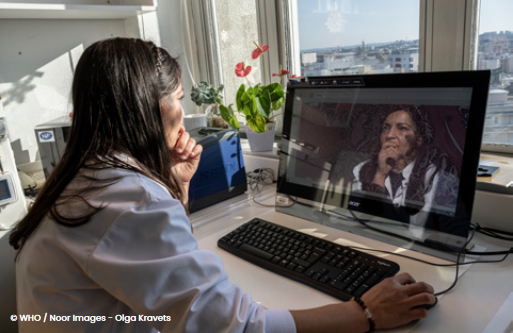
"...the urgency of action felt during the pandemic infodemic should be carried forward to continue pushing for collaborative, comprehensive and coordinated solutions for other health issues..."
Noncommunicable disease (NCD)-related misinformation is a growing concern as more and more individuals obtain their health information from digital venues such as search engines or social media platforms. As such, the World Health Organization (WHO hosted three online meetings (2020-2021) to discuss the topic with representatives from Member States, the media and social media sectors, and civil society. Drafted following these meetings, this toolkit includes the concerns, challenges, and conclusions shared during those conversations by all discussion partners. The goal is to provide options and pathways forward and to show how media literacy, content moderation, artificial intelligence (AI), good journalism, fact-checking, credibility labels, and other solutions can and should coexist and be supported to keep the people safe and ready to face the overabundance of health information that exists and will be created online in the next decades.
As WHO explains, NCD risk factors are inherently attractive topics of misinformation: they relate to day-to-day practices like eating, exercising, smoking, or drinking alcohol; they address commonly devastating diseases (e.g., cancer) that provoke strong emotions; and they concern topics that have been largely overlooked by efforts to combat misinformation on the part of government policies, digital platforms, traditional media, and the scientific community. For example, WebMD (a website providing health information) has in the past shown several testimonials that have argued for the healing effects of apricot seeds in the treatment of cancer. However, the general medical community has primarily advised against this use and instead pointed out its potential poisonous effects.
Broadly, the view of those at the three meetings was that the perils of health misinformation are visible and reasonably documented and that an "all-hands-on-deck" approach will be needed to tackle the problem. Public authorities, the industry (including news media and social media companies and platforms) and civil society (through non-governmental organisations (NGOs) and on an individual level) should be engaged simultaneously in the fight against misinformation. The scientific community should work to provide them with the roadmaps and the evidence needed for that.
The toolkit is organised as follows:
- The first part, Understanding the Problem, provides an overview of the health misinformation landscape, particularly in relation to NCDs, and expands on the roles of gatekeepers and sources before describing the problem as multilayered and requiring comprehensive and coordinated solutions.
- The second part, Consulting Stakeholders, explores the roles and initiatives being taken by governments and international organisations, traditional media and social media platforms, NGOs, and experts to provide an extensive understanding of the angles at which the problem of health misinformation is being approached.
- The third and final part, The Way Forward, describes how different stakeholders have collaborated during COVID-19 to tackle the "infodemic", and how that spirit and approach can and should be taken forward to other types of health misinformation.
Eleven case studies are offered throughout to illustrate concrete action being taken in this area.
In conclusion: "the COVID-19 pandemic represents a great opportunity to test how different stakeholders can come together to tackle health misinformation. The room to grow these partnerships exists and the role of this Toolkit is to highlight those opportunities in the hope of inspiring others to adopt some of the approaches presented herein."
104
WHO Europe website, January 27 2023. Image credit: © WHO / Noor Images - Olga Kravets
- Log in to post comments