











































Rural Women Reporting
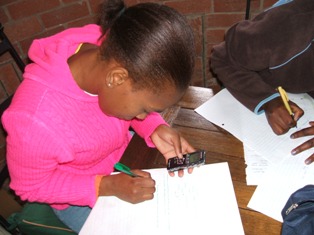
Community Media for Development (CMFD) Productions/FAHAMU
This 8-page report documents the process and key outputs of the Rural Women Reporting workshop series initiated by FAHAMU Networks for Social Justice and Community Media for Development (CMFD) Productions.
According to the report, rural women are rarely heard in the media; even more rarely do they actually have the opportunity to create media. The Rural Women Reporting project was developed to both produce programmes that speak to the issues rural women face, and to empower those who participated through skills and confidence-building to support ways to make their voices heard. The programmes were made available to local radio stations and places where people gather, and were distributed over the internet as podcasts.
According to the report, the workshops focused on participation and experiential learning, and followed eight key steps: an introduction outlining course objectives and radio formats, programme planning, creation of a detailed programme outline, research, conducting interviews, learning about and writing scripts, voicing narration and editing the programmes, and distribution.
The number and length of programmes created in each workshop varied based on what kind of programmes participants decided to create. The outputs for each country are outlined below:
- South Africa: Participants decided to create individual features, resulting in eight programmes of varying lengths in both English and isiZulu. Topics ranged widely, and included young women and employment, teenage pregnancy, child-headed households, women and inheritance rights, polygamy, grandmother and grandchildren, forced/arranged marriages, and evictions from the marital home. Each participant (seven women, one man) gained knowledge not only in making audio programmes, but also in interviewing and research. In addition, a reporter from a national newspaper came to speak with the participants. According to researchers, this is significant as it raised the journalists awareness of rural women's issues.
- Kenya: Participants decided to create a single hour-long feature on women and governance. Each participant then chose a thematic sub-topic and developed a segment for the magazine. Topics included women in politics, affirmative action, election violence against women, challenges facing women politicians, changes women in government will make, and vox pops on women in politics. According to researchers, this topic was particularly relevant as the country was heading towards the December 2007 elections, and putting women on the political agenda was felt to be especially important.
- Sierra Leone: Participants created three features around pregnancy and access to health care, early marriages, and theft in the community. According to researchers, rural women in Sierra Leone have little protection from discrimination and other human rights abuses. They have little access to justice or legal redress, and even where constitutional protections exist, customary law often overrules it.
The report suggests that the workshops demonstrated that rural women can, in a short time, produce audio content to have their voices heard. It argues that more communities would benefit from such an activity. The report recommends both expanding the project to other countries, and developing a more sustainable programme in the three initial countries, perhaps in partnership with local radio stations, as participants now have basic skills that should be built on.
CMFD website on August 15 2008; and email from Deborah Walter to The Communication Initiative on September 8 2008.
- Log in to post comments