










































Rooted in Trust
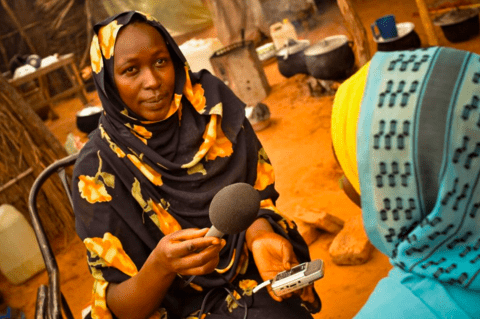
"The COVID-19 pandemic has created chaos and confusion around the world and put vulnerable communities in even more danger. Right now, accurate and relevant information about COVID-19 prevention, vaccines and new strains is imperative to protect the lives of the communities around the world that are already suffering from marginalization, displacement and insecurity."
Rooted in Trust is a pandemic information response programme that seeks to counter the spread of rumours and misinformation related to COVID-19 in Brazil, Colombia, the Democratic Republic of Congo, Iraq, Lebanon, Mali, South Sudan, Sudan, and Zimbabwe - all countries facing complex and often protracted preexisting humanitarian crises before the pandemic. Launched in 2020, the project works to track COVID-19-related rumours circulating among social media users and vulnerable communities and uses this information to inform risk communication efforts by humanitarian and public health organisations and to support local media in disseminating more accurate and actionable information that responds to community concerns. In order to build trust in reliable sources of information, the project supports humanitarian and media communicators to listen, engage, and respond to community information needs. Rooted in Trust is a project of the Internews Network and is funded by the United States Agency for International Development (USAID) Bureau of Humanitarian Assistance.
As explained on the Rooted in Trust website, the project "aims to build stronger information ecosystems in the countries where it works by meeting harmful health-related misinformation with locally informed and led analysis to understand the cultural and behavioural drivers that influence the scale and spread of rumours. Internews believes that the community needs more than quality information – they also need platforms they trust to ask questions and engage with media and health and humanitarian service providers" (hence the name of the project "Rooted in Trust").
The project's activities focus on the most vulnerable groups in the countries where it works - in particular, groups that may face additional barriers in accessing quality health information. Partners include local media, health and humanitarian organisations, and anyone involved in risk communication. The project teams tackle misinformation and build trust in local information providers through a variety of activities. They include:
- Research: To understand the local drivers of information, the project produces an Information Ecosystem Assessment (IEA), which is a study designed to understand the dynamics of transmission, production, and consumption of information in a given environment. It seeks to understand who is providing accurate COVID-19 information, whether people can access it, and, if so, how they interact with it. It also looks at what barriers exist that block people from the information they need and what factors influence trust and the impact of information. The IEA is essentially a mapping exercise that helps the project understand how misinformation travels through a particular context and informs the design of projects to effectively counter it. Click here to access the Information Ecosystem Reports produced by the project for the countries it works in. The project also generates research looking at the big issues impacting effective risk communication and the drivers of health-related misinformation.
- Tracking misinformation: Once there is a map of how information flows through the community, project partners can begin collecting, managing, and addressing misinformation from the source. Through a variety of conversations with the community, social media listening, and feedback from humanitarians and local media outlets, Rooted in Trust and its partners track questions, concerns, and rumours in a database. This rumour tracking methodology allows the project to analyse community feedback to understand and respond to the hopes, fears, questions, and concerns that often propel the spread of misinformation. Rumour analysis is presented in accessible products called "rumour bulletins" that are designed to support different stakeholders such as humanitarian and health communicators, local media, and the community itself. Click here to access country-specific rumour bulletins that have been published to date.
- Feedback loops: Rooted in Trust stresses that the most important step of the process is to close the feedback loop by providing factual information that responds to actual - rather than perceived - questions and concerns in the community. Informed by the IEAs and local partners, factual information is provided through preferred and trusted platforms, languages, and trusted messengers to reach vulnerable groups who face compounding barriers in accessing good-quality information.
- Community engagement: In-person listening groups, events, and dialogues with community members are considered the cornerstone of the project's approach. The project strengthens the relationship between the communities at risk and those offering services and information to them by partnering with trusted local organisations and media outlets to build capacity and share knowledge.
- Support to media: Local media play a critical role in understanding and responding to questions and concerns about the pandemic, vaccines, and the impacts on their lives. The project supports journalists to understand and respond to their community's health information needs by providing them with rumour bulletins, providing health science journalism training, supporting content production, and building peer-to-peer networks to encourage local skill and information sharing. They also seek to build effective connections between local media and humanitarian and health communicators.
- Small grants: The project provides grants to community and grassroots information providers to fuel creative and innovative responses to misinformation in their communities. These small grants are designed to be rapid, impactful, and inclusive of particularly information-vulnerable groups.
COVID-19, Media Development
Achievements as of March 2022:
- Since 2020, Rooted in Trust has tracked more than 23,000 rumours about the virus across 17+ languages, reaching over 81 million people with accurate and relevant information. In response to the unique rumours sourced from each country context, the project has produced a total of over 130 rumour analysis bulletins, 500 radio broadcasts, and 480 other media stories to connect communities directly with timely and accurate COVID-19 information.
- Through a series of training opportunities, events, peer-to-peer networks, and small grants, the Rooted in Trust project has supported 550 local media organisations to strengthen their capacity for health journalism.
- Rooted in Trust collected feedback from direct conversations with almost 350,000 people during 4,670 listening groups, where community members explained their worries and fears about topics such as COVID-19, vaccines, and access to healthcare.
- Over 2,400 survey respondents, 230 qualitative interviews, and 130 focus groups fed into IEAs in seven countries to support effective communication by local actors using the communities' preferred platforms.
Rooted in Trust website and Rooted in Trust [PDF] accessed on March 16 2022. Image credit: Internews
- Log in to post comments