










































Pontifical Catholic University of Peru - Specialisation in Communication for Development
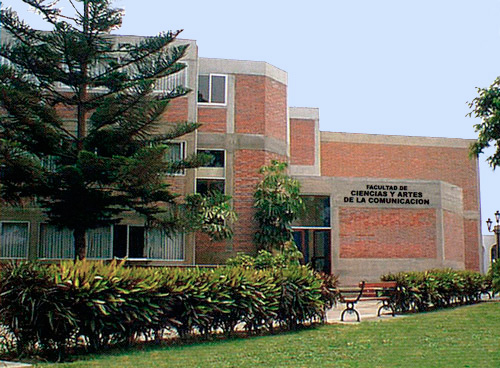
This course seeks to encourage students to have a particular sensitivity to local, national and global problems. With abilities to put oneself in the place of the other, to work as a team and to lead, mediate and coordinate interests, and work with initiative and creativity, which are considered fundamental for communication for social change processes. They should be interested in promoting democratic practices within organisations, and in the relations between different development actors.
Click here for more information.
Fifth level
- Theories of communication (3 credits)
- Communication and digital media (4 credits)
- Writing for communication (3 credits)
- Development theories and policies (3 credits)
- Communication and persuasion (3 credits)
Sixth level
- Research methods and techniques 1 (4 credits)
- Aesthetics and communication (3 credits)
- Deontology of communication (2 credits)
- Audiovisual production for development (4 credits)
- Communication for development: theoretical perspectives (3 credits)
- Intercultural communication (3 credits)
Seventh Level
- Semiotics for communications (3 credits)
- Research methods and techniques 2 (4 credits)
- Legislation in communications (2 credits)
- Communication and social conflicts (3 credits)
- Diagnosis and communication strategy (4 credits)
- Social campaigns elaboration workshop (3 credits)
Eighth Level
- Business management (3 credits)
- Organisational communication (4 credits)
- Economics for development (3 credits)
- Democracy and development (3 credits)
- Design and management of communication projects (4 credits)
- Communication resources (3 credits)
Ninth Level
- Research seminar 1 (4 credits)
- Project evaluation workshop (4 credits)
- Creative practices in communication (4 credits)
- Development workshop (4 credits)
Compulsory Alternatives (03 credits)
- Ecology and communication
- Citizenship and communication
- Social responsibility, consultation and conflict management
Tenth Level
- Research Seminar 2 (4 credits): The thesis work: methodology design, collection of information, tabulation and analysis of results, writing the first draft of the thesis, preparation of preliminary conclusions.
- Communication project for development (7 credits): Development of independent communication projects or projects, programmes or organisations with development objectives. Implementation, execution, monitoring and evaluation of part or all of the pilot experience.
Click here for more information.
As of the semester 2016-1 the Faculty has a new curriculum for the entrants. To each of the specialties is incorporated the course of Writing for Communication (CCO206) in order to strengthen and optimise the writing quality of students.
The student will be able to work in international and local development organisations and in private companies oriented to social development. Whether as part of a multidisciplinary team of professionals or as an independent consultant, students can work in municipalities, ministries and other public institutions, in companies and nongovernmental organisations, cultural and educational institutions, social organisations and communication companies. In addition, students will have the managerial ability to form their own company.
- AGUIRRE, H. D. (2003). Estudio de base para el fortalecimiento de las capacidades nacionales en comunicación en salud.
- COLONA, C. G. (2008). PERÚ: LOS DIARIOS Y LA CONFIANZA EN LA VIABILIDAD DEL BLOQUE. En Mercosul sob os olhos do mundo: como jornais de 14 países apresentaram o Mercosul aos seus leitores (pp. 183-198). Pelotas: Ed. Universitária da UFPEL.
- RUBIO, M. A.; FRANCO, R. y VEGA, J. F. (2012). Evangelizar en América Latina. EnLa Catolicidad de las Universidades Católicas (pp. 45-67). Lima: Fondo Editorial de la Pontificia Universidad Católica del Perú.
- Benedicto Xvi, P.; VEGA, J. F.; PEIRANO, L. A.; FERRAND, A. E.; Bruguès, J. L.; ANTONCICH, R.; LERNER, S.; Costadoat, J.; BACIGALUPO, L. E.; IGUIÑIZ, J.; ORTIZ, R. E. M.; RUBIO, M. A. y FRANCO, R. (2012). La respuesta de la Universidad Católica al gran reto de la humanidad. En La catolicidad de las universidades católicas (pp. 69-83). Lima: Fondo Editorial PUCP.
- GARGUREVICH, J. L.; AGUIRRE, H. D. y ACEVEDO, J. L. (2015). Juan Gargurevich, la visión crítica. Revista Latinoamericana de Ciencias de la Comunicación, 12 (22), pp. 146-154.
Aguirre Castañeda, Hugo David: Master, Social Communicator for the University of Lima with specialisation in Audiovisual Media, Master of Arts in Public Communication by the University of Puerto Rico. He currently holds a Doctorate in Anthropology from Pontifical Catholic University of Peru (PUCP). For 20 years, he has been dedicated to making communication and social diagnoses, which support strategies and interventions aimed at promoting development in areas such as health, education and the environment. He is also dedicated to teaching at the Universidad Nacional del Centro and Universidad San Luis Gonzaga de Ica, both of which belong to the Peruvian Network of Universities.
Colona Guadalupe, Carla Giuliana: Master of Social Communication from the University of Lima, she has a Masters in Arts in the School of Public Communication by the University of Puerto Rico. She currently holds a Doctorate in Anthropology from PUCP. She has been Editor and Coordinator of the newspapers The Republic, The Observer, and The Chronicle. Producer in the Association of Social Communicators Calandria and Researcher of the Multidisciplinary Association of Studies in Population AMIDEP. She was the coordinator of the Communication and City WG at the Latin American Association of Social Communication Researchers from 2000 to 2010. She is a senior lecturer in the Department of Communications, Director of the Master in Communications and Member of the Research Ethics Committee of the National Institute of Child Health Since 2004.
Franco Temple, Romulo: Master's Degree in Education and Professor of Language and Literature by the Pontifical Catholic University of Peru (1972). Bachelor of Philosophy by the Aloisianum Institute in Italy (1974). Doctorate of Literature in the Faculty of Letters at PUCP (1964-1971). Studies of Theology in Paris (1976-1978). Master's Degree in Communication at Northwestern University (1995). He has worked in the professional field as Director of the San Luis School in Jaén (1979-1985), member of the Consultative Council of Radio Marañón (1980-1985), National Advisor in the Central Office of Fe y Alegría (1986), Executive Director of CIPCA (Center for Research and Peasant Promotion) in Piura (1987-1992), and member of the Management Committee of Radio Cutivalú de Piura (1988-1992).
Gargurevich Regal, Juan Luis: Masters in School of Journalism (1966) and Master in Communications (1997) both at the Pontifical Catholic University of Peru (1999). He has been editor, editor and director of numerous media such as La Crónica, Expreso, Extra, La Voz, Marka, Época Magazine, Correo Editora, Diario Sur Tacna, and Correspondent in Peru of ALASEI News Agency. Teacher and director at the Professional School of Social Communication and Literature at the Universidad Nacional Mayor de San Marcos (UNMSM) (1972-2000). Vice president of the Latin American Federation of Journalists. Vice president for Latin America of the Vocational Training Council of the International Journalists Organisation. Currently, he presides over the Club of Journalists of Peru. He writes since 2005 in his blog "Stories of Journalists and Newspapers" on news and journalism.
Ramirez Jefferson, Maria Margarita: Masters in Graphic Design and Master in Communication from the Pontifical Catholic University of Peru. Master of Arts from the Lehman College of City University of New York (USA). Professional designer for various entities such as the Ministry of Education and the Latin American Federation of Faculties of Social Communication (FELAFACS). Consultant for the Ministry of Health, the Commission for the Promotion of Peru for Export and Tourism (PROMPERU), and academic advisor to the Peruvian Institute of Advertising (IPP). He has taught at the University of Lima, Peruvian University of Applied Sciences, University of Sciences and Arts of Latin America and IPP.
Background Information:
The specialisation in communication for development promotes the analysis and management of communication strategies with the purpose of generating or improving interpersonal, group and mass communication processes that bring about social development. It seeks to prepare the student for research, design, management and implementation of strategies, actions, and messages in communication projects and organisations, emphasising current issues for the improvement of the quality of life, such as health, education, citizenship and human rights, gender, institutional development, productivity, and the environment.
- Log in to post comments