











































PEG Access Media: Local Communication Hubs in a Pandemic
School of Communication at American University (Aufderheide, Santos); University of Pennsylvania's Annenberg School for Communication (Haywood)
"The way this hyperlocal media responded to the crisis is exactly what many proponents of 'strong' (or at least 'stronger') democracy advocate. This participatory media facilitated more direct civic engagement than traditional mass media, offering citizens interactivity with their officials, a venue to host their activities, and a chance to make their own programs."
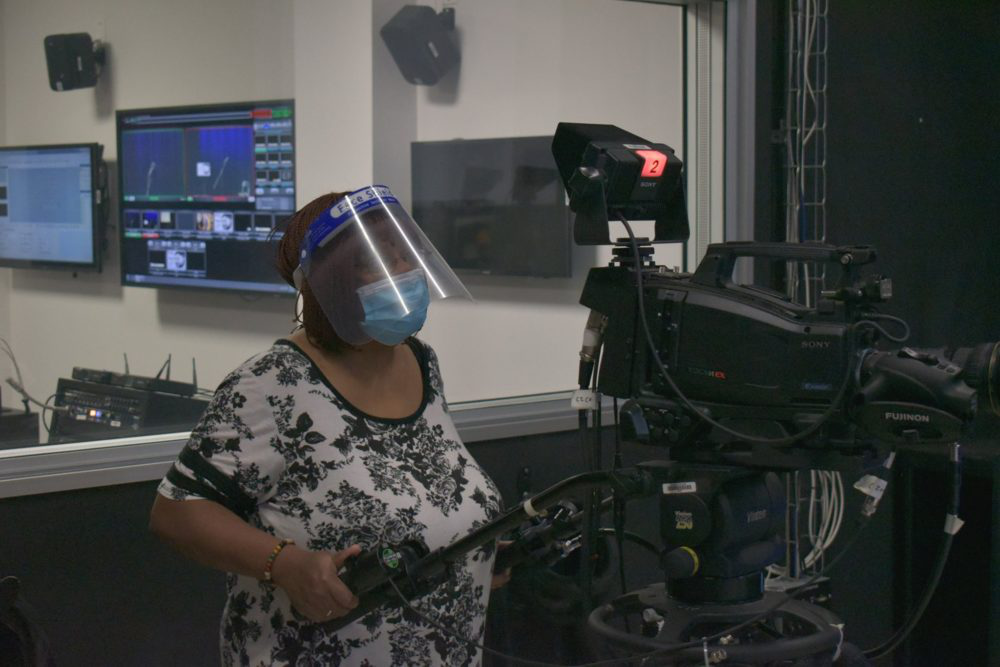
During the 2020 COVID-19 pandemic, many communities across the United States (US) turned to public, educational, and governmental (PEG) access cable channels for local information that shares common conditions and problems among affected people. Public access channels are open to the public to make and broadcast hyperlocal, noncommercial programming, and staffers offer training. Drawing from a nationwide survey of these community media services, this study from the Center for Media & Social Impact (CMSI) documents PEGs' role in providing community news, supporting technical operations for local governments and schools, and serving as a platform for community events. CMSI suggests that lessons learned during the pandemic could strengthen PEG's role in the future as a platform for community engagement and a means to encourage freedom of speech and civic discourse.
About 15% of the PEG operations in the US answered the survey (with 286 responses), which was sent in late May and early June 2020 to members of the Alliance for Community Media (ACM) and the National Association of Telecommunications Officers and Advisors (NATOA). CMSI also interviewed 10 of those who had volunteered in the survey to talk about their pandemic adaptation.
The survey found 4 categories in which PEG operations acted as critical communication hubs at the outset of the pandemic. They: provided timely news and information, functioned as a platform for important community events, provided educational support, and offered technology expertise.
More specifically, in most communities where staffers responded to the survey, PEGs functioned both as virtual town halls and public squares. They became a platform for residents to interact with their local elected representatives. For instance, a council meeting in Salem, Oregon, US drew 10,000 viewers; those who could access meetings on Zoom or through the livestream carried by the local PEG media outlet used chat functions to interact more with officials than had been ever seen in person. The fact that cable TV anchors PEG was described as important. For example, senior citizens often lack adequate broadband, and/or technical knowledge or equipment to use online services. While Facebook Live and YouTube were important ways to reach locals, PEG access media also livestreamed on their own websites. In some places, radio reached out to exurban (region beyond the suburbs) and rural communities. Religious services that turned virtual were cablecast.
Some PEG outlets also started hyperlocal news programmes, with contributions from residents reporting on their own neighbourhoods. Others hosted summer video contests, with virtual training to show community members how to tell their own pandemic-coping stories on their smartphones. Staffers also worked with educators in some communities to set up free Wi-Fi points throughout the area in order to help students without adequate home broadband.
However, PEG access media also encountered obstacles; for example:
- Unequal and unstable broadband has plagued PEG efforts. For example, staffers have different levels of broadband from home, at different times, and find it difficult to synch up transmission.
- PEG is chronically underresourced. PEG staffers believe their services should be recognised as essential, and they worry that their budgets will get even smaller.
- PEG exists only in communities where residents have advocated for it and supported it over time. Since the 1970s, it has not been a national requirement. In communities hard hit by this public health crisis, where PEG does not exist, it may be hard to develop support for such media.
In light of the strengths PEG outlets demonstrated in crisis, as well as the challenges they faced, CMSI recommends:
- For PEG services:
- Build on what worked to provide greater access to civic life, increase access to production with online training and remote services, and deepen community engagement.
- Leverage awareness of PEG media among officials as an essential service.
- Position and promote PEG staff as communication technology experts in their community.
- Extend or create new streams of revenue, with enhanced online capacity, e.g., online training services, partner, member, and production fees.
- Make digital security robust, as online work becomes ever more integrated into PEG functions.
- For the government/partners:
- Leverage the capacities of PEG to integrate official communication services throughout the locality, with appropriate payment for capital and operational expenses.
- Increase funding for content generation and journalistic staff, to assure reliable hyperlocal information flow.
- Encourage PEG's use of multiple modes of communication - cable, broadband, radio - with the public.
- Establish internationally recognised high-speed broadband standards and universal service requirements, and develop functional net-neutrality regulation, which would also contribute to more consistent broadband access.
- Ensure that PEG services can continue even when their institutions are closed and unable to provide in-person services, and develop contingency plans to maintain these essential services in such situations.
- Treat local communication services as interlinked essential services.
- Support local governments in getting community reinvestment payments from broadband, cable, and streaming media service providers so as to build enhanced community-managed communication infrastructures, which have proved to be essential during the pandemic.
In short, "What PEG access media leaders learned about providing reliable, consistent access to information, and a platform for community engagement, may permanently alter the role of PEG in the community." In conclusion: "Particularly with the national crisis in journalism and the dismaying growth of 'news deserts,' these cable-based services offer real possibilities. These are public services, with the overwhelming proportion of activity provided by the public itself."
"Public, Educational, and Governmental Access Media: Providing Contactless Community in a Pandemic", by Patricia Aufderheide, Antoine Haywood and Mariana Sánchez Santos, Social Science Research Council (SSRC), October 1 2020 - accessed on October 23 2020. Image credit: Michelle Clark and PhillyCAM
- Log in to post comments