











































News for the Powerful and Privileged: How Misrepresentation and Underrepresentation of Disadvantaged Communities Undermine Their Trust in News
Date
Summary
"I don't like journalists. I don't trust them. I put them in the same box as politicians and estate agents. I just don't trust them." - focus group participant
This study, conducted as part of the Reuters Institute Trust in News Project, sets out to understand the distinct perspectives of audiences who are particularly underrepresented in news coverage and/or hail from historically marginalised groups. Based on focus groups convened in the four countries at the centre of the Trust in News Project - Brazil, India, the United Kingdom (UK), and the United States (US) - the report seeks to capture, in their own words, how members of marginalised groups see news media in their countries when it comes to representing people like themselves. It also looks at how they perceive news institutions and what steps they would like to see news organisations take towards rebuilding trust with members of their communities.
This report uses data from 41 focus groups convened in the four countries. Participants were strategically selected from disadvantaged communities whose perspectives and experiences may plausibly differ from majority or dominant groups in important ways. Specifically, it focuses on how differences along lines of race, caste, religion, class, and place may point towards distinct needs and expectations around news and how this intersects with people's sense of trust. In Brazil, the research focused on Black and mixed-race audiences (people who identified as either preto or pardo); in India, it focused on audiences from marginalised castes or tribes and Muslim audiences; in the UK, it focused on working-class audiences, and in the US, it focused on Black and rural audiences.
As explained in the report, the findings are important for several reasons. First, they highlight in concrete terms the impact that inaccurate and inadequate representation in news coverage can have on the lives of people belonging to marginalised and other communities distant and disconnected from those parts of society that are privileged and powerful. Second, and related to the first point, while there are concrete steps that can be taken to address the inaccurate and inadequate representation of marginalised people, taking these steps may require reallocating often-scarce resources to make some of the required editorial changes. Third, despite real differences in perspectives about how people evaluate news in their countries, the report also highlights that many of the changes that participants wanted to see reflected in the coverage of their communities do not require a fundamental re-engineering of news values. In fact, many requested quite similar values to what some newsrooms already follow, which is for news to be: unbiased, fair, and to accurately cover matters relevant to their lives.
Below are some of the key takeaways from the focus groups as highlighted in the report:
This study, conducted as part of the Reuters Institute Trust in News Project, sets out to understand the distinct perspectives of audiences who are particularly underrepresented in news coverage and/or hail from historically marginalised groups. Based on focus groups convened in the four countries at the centre of the Trust in News Project - Brazil, India, the United Kingdom (UK), and the United States (US) - the report seeks to capture, in their own words, how members of marginalised groups see news media in their countries when it comes to representing people like themselves. It also looks at how they perceive news institutions and what steps they would like to see news organisations take towards rebuilding trust with members of their communities.
This report uses data from 41 focus groups convened in the four countries. Participants were strategically selected from disadvantaged communities whose perspectives and experiences may plausibly differ from majority or dominant groups in important ways. Specifically, it focuses on how differences along lines of race, caste, religion, class, and place may point towards distinct needs and expectations around news and how this intersects with people's sense of trust. In Brazil, the research focused on Black and mixed-race audiences (people who identified as either preto or pardo); in India, it focused on audiences from marginalised castes or tribes and Muslim audiences; in the UK, it focused on working-class audiences, and in the US, it focused on Black and rural audiences.
As explained in the report, the findings are important for several reasons. First, they highlight in concrete terms the impact that inaccurate and inadequate representation in news coverage can have on the lives of people belonging to marginalised and other communities distant and disconnected from those parts of society that are privileged and powerful. Second, and related to the first point, while there are concrete steps that can be taken to address the inaccurate and inadequate representation of marginalised people, taking these steps may require reallocating often-scarce resources to make some of the required editorial changes. Third, despite real differences in perspectives about how people evaluate news in their countries, the report also highlights that many of the changes that participants wanted to see reflected in the coverage of their communities do not require a fundamental re-engineering of news values. In fact, many requested quite similar values to what some newsrooms already follow, which is for news to be: unbiased, fair, and to accurately cover matters relevant to their lives.
Below are some of the key takeaways from the focus groups as highlighted in the report:
- Despite the diversity of groups assembled across a range of media environments, participants expressed similar frustrations about not being heard. Many felt wronged by what they saw as persistent misrepresentation and underrepresentation in coverage of people like themselves. Although groups varied in the depth of their concerns, the report highlights and discusses in more detail five key issues related to misrepresentation: (i) emphasising negative news; (ii) treating groups unfairly; (iii) perpetuating stereotypes; (iv) failing to cover them altogether; and (v) promoting divisiveness between groups.
- Among individuals from marginalised communities, many saw news media as biased, sensationalistic, or depressing, with distinctly personal and consequential stakes. For those who felt that negative coverage intentionally targeted their communities, such news was described as taxing on a uniquely personal level. In particular, coverage of crime and violence was often seen as a way to boost ratings or get clicks at the expense of vulnerable communities.
- The news media as an institution, especially in the UK, the US, and India, was often viewed as an extension of systems aligned to serve those in power - systems from which many people felt excluded. Impressions about mass media were often intertwined with broader concerns about inequalities such as racism, classism, and casteism. News media were rarely seen as catering to the entire public so much as reinforcing the interests of those already most privileged and powerful.
- Many groups saw journalists as out of touch, lacking the lived experience or knowledge to understand their realities, or even prejudiced, but many also gave positive examples of journalists they thought of as exceptions. Others distinguished journalists from the organisations that employ them, more typically blaming companies and broader commercial pressures for shortcomings they saw in coverage.
- Most described trustworthy journalism in ways aligned with other audiences, saying they wanted more impartiality, transparency, and accuracy in coverage. At the same time, ideas about what is newsworthy, what stories should be covered or ignored, and whose voices deserve to be highlighted were also often rooted in people's distinct vantage points, which could be quite different from one another.
- Focus group participants differed on the degree to which they valued the importance of journalists themselves coming from diverse backgrounds. Many, especially Black participants in the US, saw it as critically important that newsrooms improve diversity among both their reporting staff and their senior management to better reflect the communities they seek to serve, but groups were also wary of tokenism and suspicious of performative efforts they dismissed as pandering.
- Many spoke of the importance of niche and, in some cases, local news sources they felt more fairly and fully represented people like themselves and their interests. Younger people especially talked about relying on individuals, often non-journalists, whose content they accessed via social media, podcasts, or online video services they trusted, to speak more reliably to their concerns and highlight the stories that mattered to them. Others highlighted the importance of ethnic or community media for serving these purposes.
- Representation matters for trust, but concerns raised often went beyond trust. Many said restoring their sense of trust would require news organisations to pay better attention to their communities' concerns, genuinely and consistently, and represent the full range of their experiences and perspectives more fairly and positively. At the same time, not all were confident that such changes would ultimately alter the way they felt about news, and others were more willing to trust specific news sources even as they agreed that news in general ought to better live up to its purported ideals of serving the entirety of the public, not just the privileged and powerful.
- Focus on accuracy and reduce bias - Deliver impartial news that more fully, faithfully, and fairly captures diverse perspectives and does not treat the views of the privileged and powerful as more accurate by default.
- Tell more complete stories - Provide more positive coverage about diverse communities to counteract chronic problems of negativity, unfairness, and invisibility.
- Diversify newsrooms and improve training - Hire more journalists who better reflect the communities they serve, including among those who lead and manage news organisations.
- Appreciate distinct needs of different audiences - Truly listen to individuals in diverse communities and demonstrate a genuine commitment to understanding their concerns.
Source
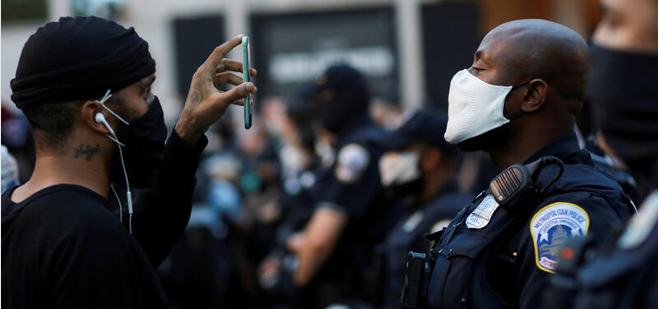
Reuters Institute website on May 12 2023. Image credit: REUTERS/Leah Millis
- Log in to post comments