










































mVAM for Nutrition Kenya Case Study
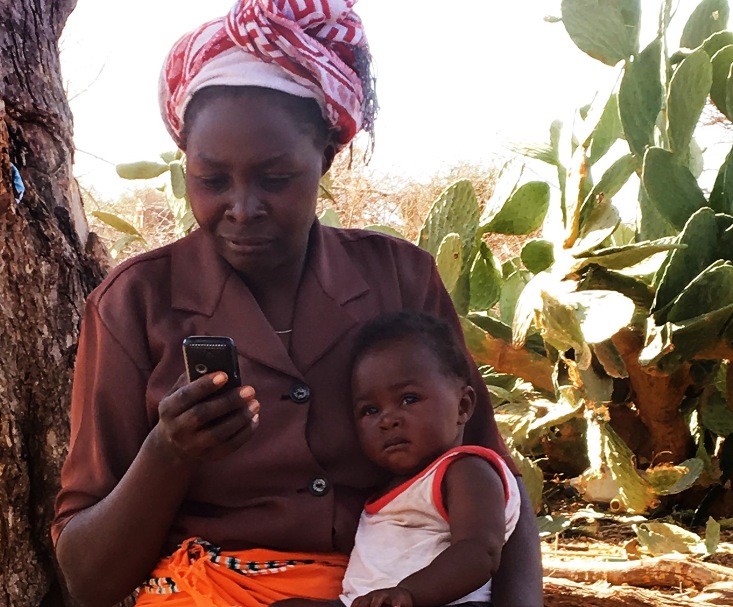
“Using mobile methodologies to collect dietary diversity data for young children and women of reproductive age helps to provide early warning of deteriorating nutrition situations and support global efforts to strengthen nutrition monitoring.”
This World Food Programme (WFP) case study reports on the results of an assessment in Kenya to determine whether use of Computer-Assisted Telephone Interviewing (CATI) with women is both feasible and as effective as face-to-face interviews in collecting accurate data on minimum acceptable diet (MAD) in children 6-23 months of age and minimum dietary diversity among women of reproductive age (MDD-W). The report offers recommendations for overcoming potential barriers to effective use of mobile phone surveys with women and suggests areas for follow-up research.
Funded by the United States Agency for International Development (USAID) and the United Kingdom Department for International Development (UKAID), this case study was a collaboration between WFP’s mobile Vulnerability Analysis and Mapping (mVAM) initiative, WFP’s Nutrition Division, and the Surveillance of Climate-smart Agriculture for Nutrition (SCAN) project implemented by the World Agroforestry Centre (ICRAF) and the London School of Hygiene and Tropical Medicine. It was conducted in two socioeconomically and environmentally diverse counties in Kenya in October and November of 2016.
Findings from focus group discussions and in-depth and key informant interviews conducted during the Phase 1 formative study indicated that:
- 60-90% of women owned/had access to simple mobile phones for making and receiving calls.
- Women’s use of other phone functions such as SMS (short messaging service, or text) was very low.
- Poor network coverage was the biggest barrier to phone surveys, although even in poor coverage areas, phone ownership was high, and women were willing to travel for phone calls.
- Women demonstrated a high degree of willingness to participate in mobile phone surveys and had no hesitation about answering questions about their diet.
- Women voiced concerns about receiving phone calls from unknown numbers, but also said that prior sensitisation in the community would help to resolve trust issues.
Phase 2, involving 2,200 participants, was intended to determine whether different modes of data collection resulted in different estimates of MAD and MDD-W. A test/re-test method was used to compare results from face-to-face (F2F) surveys and mobile phone surveys using CATI. The study showed that mode had no significant impact on results of data collection for MDD-W; however, the CATI MAD data showed a significant bias towards higher dietary diversity and more adequate diets for young children compared to data from F2F surveys. The case study concluded that in conjunction with other data on nutrition and food security, both MDD-W and MAD time series data collected using CATI can be used to provide timely early warning for deteriorating nutrition situations and for nutrition monitoring.
The study determined that phone surveys for women can be feasible and that barriers to women’s participation can be overcome using steps such as sensitising communities to build trust, engaging with men/husbands in advance where cultural and gender norms play a role, and scheduling calls in advance. For future mobile phone surveys, the report recommends best practices including:
- qualitative formative study findings to inform CATI survey design and implementation
- recruiting qualified, motivated call centre operators and providing training, supervision, and daily feedback
- pre-testing survey instruments and methodology to identify and address potential challenges.
The report suggests that further work is required to test the validity of using CATI for collecting and reporting single point estimates for MAD. It also recommends triangulating data with other sources of information to inform interpretation, and evaluating the applicability of advanced statistical methods to make adjustments for the mode effects and sub-population biases.
mVAM website on January 8 2018.
- Log in to post comments