










































Meeting the Sexual and Reproductive Health Needs of Young Married Women and First-time Parents Toolkit
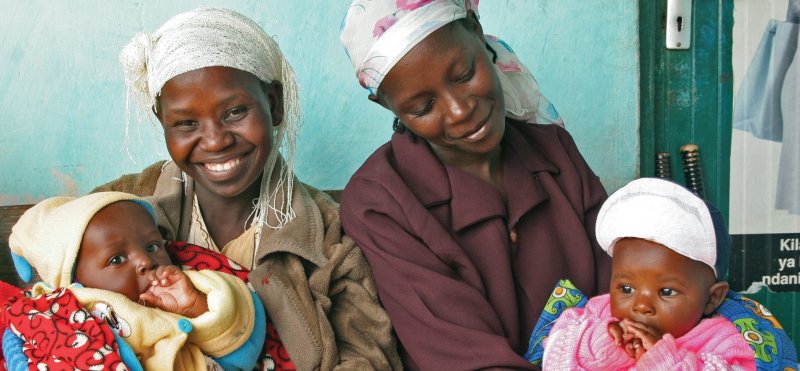
This toolkit brings together a collection of tools that are meant to support programme designers, implementers, donors, and policymakers to advance the sexual and reproductive health needs of young married women and first-time parents. It seeks to expand and improve programming and services that help young married women and first-time parents access contraception, make informed decisions about their fertility and reproductive health, negotiate healthy relationships, prevent gender-based violence, and enjoy their right to a healthy sexual and reproductive life. The toolkit was developed by Pathfinder International, in collaboration with its Evidence to Action (E2A) project.
As explained in the toolkit, "In many countries and regions of the world, young people (ages 10-24) experience early marriage followed directly by pressure to bear children, making young married women (YMW) a cohort with particularly high fertility rates, high unmet need for contraception, and high rates of closely spaced pregnancies. Young married women and first-time parents (FTPs) face a unique set of challenges to living healthy sexual and reproductive lives - challenges that are different to those faced by unmarried adolescents, older married women or older parents."
The materials in the toolkit address a range of topics relevant to meeting the needs of this group, such as: contraception, healthy timing and spacing of pregnancy (HTSP), couples' communication and building healthy relationships, maternal and newborn health, gender equality, gender-based violence (GBV), HIV prevention, and life skills. Some of the materials in the toolkit were designed for specific regions or countries (e.g., Uganda, francophone West Africa, Tanzania, Nigeria, Nepal, Malawi, India, and Madagascar), whereas others are global. All can be adapted to meet the needs of the user's specific context.
The resources are organised as follows:
- Essential Knowledge & Evidence - contains materials that could inform the design of an intervention designed to reach YMW and FTPs, as well as for use in advocacy efforts related to YMW and FTPs (e.g., literature reviews and foundational peer-reviewed articles).
- Implementation Experiences - offers case studies, lessons learned, and data from interventions targeting FTPs and YMW, which could be used in intervention design or advocacy efforts.
- Training Resources - offers a range of teaching and training materials for different groups working with YMW and FTPs, such as community health workers, facility providers, and peer support groups. These are best used during implementation for essential capacity building and quality improvement.
- Tools and Job Aids - contains practical materials that aid in programme implementation and support quality service delivery. These range from discussion guides, to facility assessment tools, to workbooks for the intended populations, and include behaviour and social norm change tools.
English
Knowledge for Health Blog on October 10 2017.