










































Mediatised Transitions: Democratisation in an Age of Media Abundance
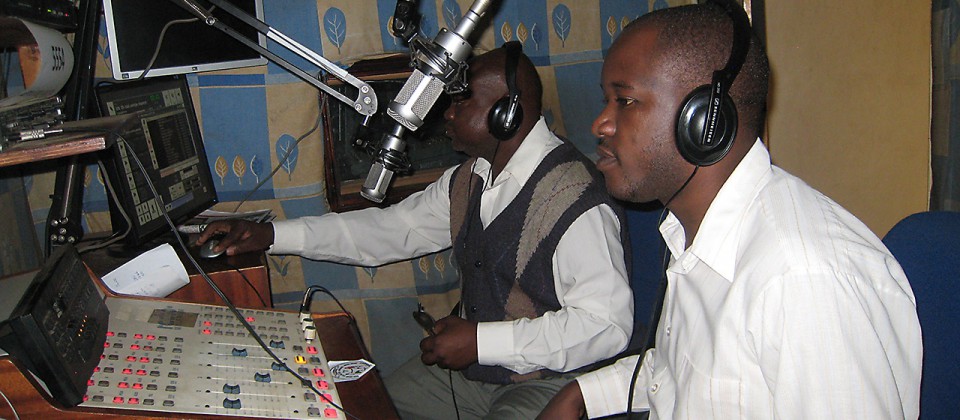
“Changes associated with the mediatisation of politics are not only reconfiguring democratic politics in established democracies, but have put emerging democracies on a new pathway of transition.”
This paper explores the role of media and communication in the transformation of political power and citizenship in transitional “fourth wave” democracies. It addresses the question of how recent changes in the media environment impact on the dynamics and outcomes of struggles for democratic transition. The research is part of the Media Conflict and DEMocratisation (MeCoDEM) programme’s larger investigation into the conditions, scope and consequences of mediatised politics in transitional societies. “Fourth wave” democracies are emerging in an era in which the internet and fundamental changes in communications are transforming political action and political organisations. This paper focuses on the impact the new communication environment might have on the politics of emerging democracies, aiming to add a more nuanced understanding of the process of the transformative power of media and communication.
To establish a framework for their exploration, the researchers broaden the concept of mediatisation from the traditional institutional understanding to include digital communications, social networks, and network media logic. The authors begin with an overview of the main arguments of current mediatisation scholarship, and then discuss how today’s changing communication environment has become an integral part of the dynamics of democratic transitions. They go on to argue that although the concept of mediatisation was developed in the context of advanced democracies, the process is equally at work in transitional and less democratic circumstances. They discuss how mediatisation plays a role outside of institutional politics, in citizen and contentious politics, transforming strategies of political activists and fostering new forms of political organisation outside of traditional institutions. For example, they point to social movements like the Arab Spring that highlighted the internet’s potential for mobilising large-scale protests and forging collective identities across borders.
The report also suggests that unique features of “fourth wave” transitions such as institutional fragility and the expansion of citizen politics can be perceived as the outcome of mediatised democratisation processes. In examining opportunities for participation and mechanisms for accountability the researchers explore the transformation of citizenship and the ways citizens incorporate media and communication into activism, which in turn impacts grassroots mobilisation. The paper also examines the transformation of power, the ways political leaders and governments adjust to media logic, and the resulting openings for new institutional forms of representation.
The report suggests that digital media and network media logic have transformed the strategies of political activists and fostered new forms of political organisation. It argues that modern popularism flourishes in media-saturated environments, shaping its political rhetoric, messages and organisation around media logic. The authors suggest that network media logic by nature enables digital communications to drive mass mobilisation without any unifying force in the form of leadership, ideas, ideology or long-term strategy; it coexists, intersects and occasionally combines with traditional media logic in ways that can shape, enable, and constrain access to knowledge and options for political action. The authors point to situations where activists and organisers used digital media, social network logic and the logic of connective action to reach broad arrays of people with different personal reasons for joining a movement or protest.
The paper states that media voices and outlets have created new opportunities and new challenges for political actors in fourth wave democracies to influence public opinion, especially among younger populations who don’t trust ‘legacy media’ and turn to internet and social media for information. The researchers suggest that political actors, activists and civil society groups must adapt to both traditional and new media logic and that use of media strategies, rather than the development of organisational structures, is essential for success in these transitional societies.
The paper also indicates that mediatisation in transitional democracies is ambivalent, providing examples that illustrate how:
- Mediatisation of politics has opened up new opportunities for citizen politics but has also undermined the establishment of sustainable and effective institutions;
- Mediatisation is a way of challenging political authority, but at the same time it serves the authoritarian ambitions of political leaders; and how
- Mediatisation increases the power of the media in politics and at the same time forces political actors to develop strategies to instrumentalise and muzzle the media.
MeCoDem website on August 15 2017.
Image credit: Iginio Gagliardone.
- Log in to post comments