










































Media/Communications on Peacebuilding/Social Cohesion/Changing Prevailing Narratives on Conflict
University of Birmingham
"The media can play a positive role in peacebuilding/conflict prevention. Recognition of this has led to increasing programmes on media/communications and peacebuilding, with common interventions including training of journalists, and development of pro-peace programme content."
Based on a literature review, this K4D Helpdesk report* looks at what lessons can be learned from media/communications for development interventions that focus on peacebuilding and conflict resolution. The report looks at the different roles the media can play in peacebuilding and conflict resolution; the types of interventions and the key actors, with specific examples from Africa, Bosnia, and Nepal; and the challenges they face. In particular, it highlights the challenges in evaluation and generally makes the point that while some interventions have generated positive results (e.g., reduced election-related violence), evidence is limited, and it is hard to make causal links between interventions and impact.
The review draws on a mixture of academic papers and grey literature. As explained in the report, the term 'media' refers to "both mass media (television, radio, newspapers) and to social media (e.g. Facebook, Twitter, online blogs) because today both are used as sources or tools of news and information (Betz, 2018: 2). 'Peacebuilding' is defined as 'a process that facilitates the establishment of durable peace and tries to prevent the recurrence of violence by addressing root causes and effects of conflict through reconciliation, institution building, and political as well as economic transformation'. In this review peacebuilding is taken in the wider sense to include conflict prevention as well as post-conflict restoration of peace."
The report begins by looking at the different roles the media can play in peace building and conflict resolution. This includes: building bridges between people and groups; improving governance; increasing knowledge of complex issues; providing early warning of potential conflicts; serving as an outlet to express emotions; and motivating action to promote peace.
It outlines the diverse types of media/communication interventions for peacebuilding, which include: media monitoring; media professionalisation programmes; peace journalism training; international broadcasting; promotion of an enabling legal and regulatory environment; use of media to convey peacebuilding messages; citizen journalism initiatives; and crowdsourcing initiatives to collect and share information. The type of intervention depends on the context - in particular, on the stage of the "conflict cycle".
Key actors involved in media/communication and peacebuilding programming include: non-governmental organisations (NGOs), e.g., Internews, Search for Common Ground, Panos, and Intermedia; international broadcasters, e.g., BBC World Service, Voice of America; and tech-oriented organisations, e.g., Frontline SMS, Ushahidi.
The report also highlights some of the challenges these actors face in carrying out interventions. These include: those related to the willingness and interests of media owners who may not want to play a peacebuilding role; lack of readership/viewership for peace stories compared to those on violence and conflict; reluctance by journalists on the grounds that the media should be objective; resource constraints; legal and regulatory restrictions; and lack of media outreach. The evaluation of media/communications interventions for peacebuilding was found to be particularly challenging. Reasons include the fact that outcomes are not clearly defined, and benefits are hard to measure directly; conducting research can be onerous and dangerous; and it is difficult to attribute changes solely to the media/communication intervention when other factors are likely involved.
In terms of impact and effectiveness of media/communication and peacebuilding interventions, the challenges faced in evaluation are confirmed by two reviews of evidence, which focused on the contribution of media in war to peace transitions, and the role of new information and communication technologies (ICTs) such as the internet and mobile phones. The reviews found that although media interventions have been shown to bring around some positive changes, there is still no consistent body of evidence showing the causal impact of media interventions.
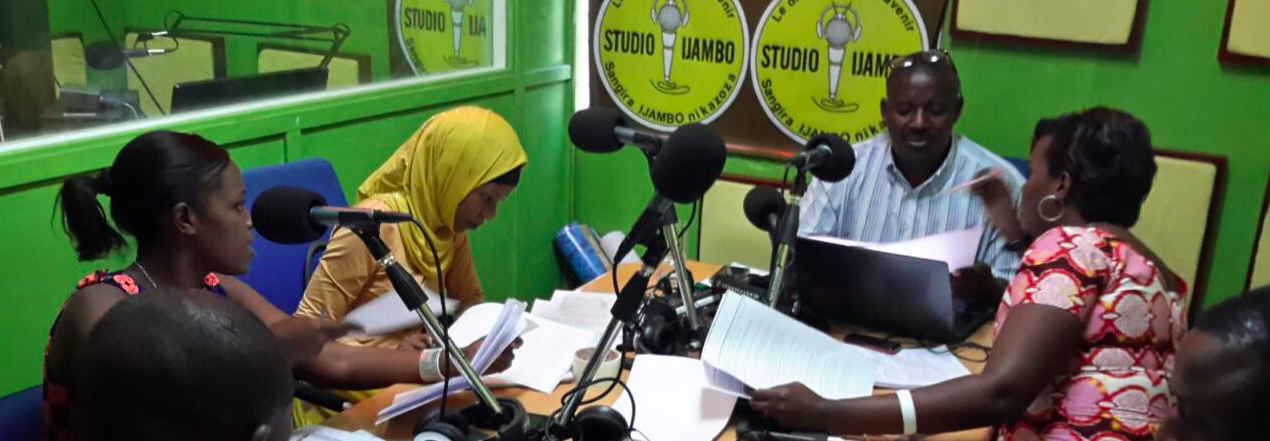
The report takes a closer look at a selection of initiatives from Africa (Kenya, Nigeria, Burundi, Rwanda) and from other parts of the world (Bosnia, Nepal) in order to highlight the activities and impact of these individual initiatives. Examples include: Search for Common Ground's radio initiative in Burundi called Studio Ijambo; the Nigeria Stability and Reconciliation Programme (NSRP), which sought to build capacity in conflict-sensitive reporting; and BBC Media Action's radio and television debate programme, Sajha Sawal, in Nepal.
The review highlights the following lessons that could inform the work of development practitioners seeking to use media for peacebuilding and conflict resolution:
- Include the role of the media in context and conflict analysis.
- Consider the interaction between local information systems and global media networks and audiences.
- Know and understand the audience.
- Give voice to all people, including the most marginalised and excluded, from the outset.
- Promote regulatory reform of the media as part of peace settlements and their implementation.
- Ensure the safety of media workers.
- Ensure that interventions apply the "do no harm" principle.
- Build linkages with other peacebuilding and state-building institutions.
The report also highlights a number of factors that do not work, which include, for example, media that reflects divisions rather than commonalities; ill-timed interventions that don't take account of the political, social, and media context; and interventions that put development goals over audience engagement.
Finally, the report suggests that more research is needed, particularly on: changes over time and in different contexts; other factors influencing impacts; how interventions and impact are linked; the role played by different forms of communication/media channels; the role media and technology play in hybrid spaces of governance; and the need to gather evidence from a wider range of geographic contexts, as much of the available evidence is focused on Africa.
* The K4D helpdesk service provides brief summaries of current research, evidence, and lessons learned. Helpdesk reports are not rigorous or systematic reviews; they are intended to provide an introduction to the most important evidence related to a research question. They draw on a rapid desk-based review of published literature and consultation with subject specialists. Helpdesk reports are commissioned by the United Kingdom (UK) Department for International Development (DFID) and other government departments.
Email from Dwi Rachmawati to The Communication Initiative on June 11 2020. Image credit: Search for Common Ground
- Log in to post comments