










































Mang'elete Community Radio
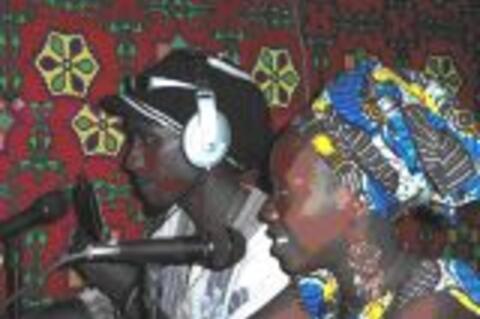
MCIDP originally started as radio listening groups; participants were exchanging information on reproductive health, agriculture, and other developmental issues when they realised that the establishment of a radio station would enhance their knowledge. Such an endeavour would enable them to both acquire and share more information, as well as enhance their participation in the community.
According to the organisers, the station produces programmes that have direct bearing on the day-to-day lives of the community. The producers work with the assistance of community members from different villages. The station has increased its daily broadcasting hours from 8 to 16 (6am to 10pm). The radio has 22 staff, one of whom is a Station Manager. The 21 volunteers produce and present the programmes. For effective management, the station is divided into departments: the News Department, Finance and Administration Department, Technical Department, and Sales and Marketing Department.
The radio programmes provide women with information on planting methods, best planting seasons, and yield improvements approaches that can help others and improve farming and the living standards of communities in general. It also airs programmes on nutrition and HIV/AIDS, including topics such as baby feeding methods and what to feed them, and communicates alerts on outbreaks and poisoned foods. Information about women's rights is also provided. According to organisers, the fact that women are responsible for most of the programming at the radio has helped to a great extent to eliminate the traditional notion of what a woman's position is supposed to be in these communities.
In November 2008, with the support of the Commonwealth of Learning (COL), EcoNews Africa, Kenya Community Media Network (KCOMNET), and the United Nations Educational, Scientific and Cultural Organization (UNESCO), Mang'elete Community Radio embarked on an organisational development process that involved 60 representatives from the 33 women's groups that established the station. The 2 interactive workshops were expected to lead to: a comprehensive curriculum for the organisation development process of community radio, based on the evaluation of the pilot at Mang'elete Radio, as well as a documentation portfolio containing photographs of the session, video footage, radio programmes, and booklets. (These materials are available as open educational resources on the Community Media node of WikiEducator; click here).
Women.
Organisers claim that, as a result of the quality and appropriateness of the local content aired: women have been able to seek redress in areas where their rights were violated; cotton and horticulture farming has been increased with improved yield and nutrition levels within the population; and certain beliefs, such as witchcraft, have been questioned and discussed openly.
Paper presented by Matu Nguri & Rose Kimani at the 2005 AMARC Panafrican Conference in Nairobi, Kenya 18-23 April 2005; Voices Newsletter, Farm Radio International, Nov. 2007; and Community Media node of WikiEducator.
- Log in to post comments