










































Making friends with Mehendi
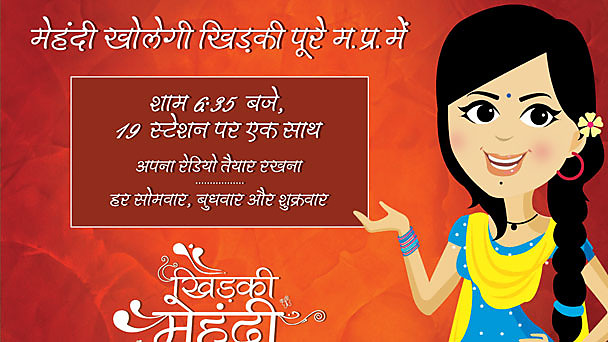
Author: Shefali Chaturvedi, June 13 2014 - It was my first foreign trip. My first international conference. And my first chance to talk about our radio programme Khirki Mehendiwali on the international stage.
As an associate producer for BBC Media Action, I was in Colombo, Sri Lanka for the three-day Asia Pacific Broadcasting Union (ABU) Conference to represent our weekly show whose title means "Mehendi opens a window" and which aims to improve the health of mothers and babies in India.
The conference hall had been abuzz with discussion about modern technologies and marketing techniques, but after I hit play, everyone was drawn in by the story of Mehendi, a feisty young woman who dreams of becoming a radio DJ, and her friend Dr Anita, who offers life-saving advice to families in two Indian states, Bihar and Madhya Pradesh.
Mehendi's story is one of reaching the unreached in India through "listener villagers" and "self-help groups" in remote "media-dark" villages with no radio or TV reception. Everyone was all ears!
As the questions poured in from the Australian, Taiwanese, Japanese and Bangladeshi broadcasters in the hall, I knew that our beloved Mehendi had found some new friends.
Inspiring experience
I had gone to the conference to participate in a session at the conference called "It’s all about content: positioning new radio in the knowledge society."
I also took every opportunity to absorb the many other fascinating speeches at the event, ask questions at the panel discussions, and participate in workshops conducted by the biggest names from the international radio industry.
And as the first day ended, the organisers approached me to talk about the communication strategies and creative output of BBC Media Action, and also the challenges facing radio as a medium in India. From participant to panellist – I was thrilled but a tad nervous.
I needed some quick advice and inspiration. A call with our National Creative Director and Executive Producer of BBC Media Action in India, Radharani Mitra, and I gained both tips and confidence in equal measure.
Big day
So I presented as best as I could about the challenges for radio as a medium in India, the Khirki Mehendiwali format and the impact of the show.
Amidst all that talk about digital and hybrid radio, convergence between mobile phones and air waves, I stressed the importance of a simple radio set and how compelling content can transform the lives of a media-dark population.
I explained how we work with self-help groups – meetings first set up to discuss financial issues such as microcredit but now widened to include topics like the benefits of antenatal and postnatal care and birth spacing. I also proudly talked about Khirki Mehendiwali’s newest incarnation playing reversioned episodes in the Kasturba Gandhi Balika Vidyalayas (day schools) and hostels for adolescent girls from marginalised communities. We have adapted Khirki Mehendiwali so it's now relevant for girls aged 10 to 15 and tackles topics like menstrual health, Eve-teasing or sexual harassment, early marriage, violence against women, and the value of education.
Great reception
There was "pin drop" silence in the hall. And then there were questions – lots of them.
People wanted to know more about our work: how radio content is reaching people living in areas without radio or TV reception; how content and discussion are complementing each other; and how all this can lead to changes in knowledge, attitudes, social norms and behaviour.
And then I had an epiphany.
I remembered the episode of Khirki Mehendiwali, where Mehendi participates in an elocution competition and wins the first prize, which helps her to become a radio DJ.
Here I was, on an international platform, talking about Mehendi and the people who created her. It seemed to me that Mehendi had won once again.
Click here to access this BBC Media Action blog and related links on their work in India.
Image credit: BBC Media Action
Contact:
BBC Media Action
BBC Media Centre, MC3A, 201 Wood Lane
London
W12 7TQ
United Kingdom (UK)
Phone: 44 (0) 20 8008 0001
Fax: 44 (0) 20 8008 5970
Media.action@bbc.co.uk