










































Let It Be as Local as Possible: Dismantling Information and Communication Hierarchies in Displacement Settings
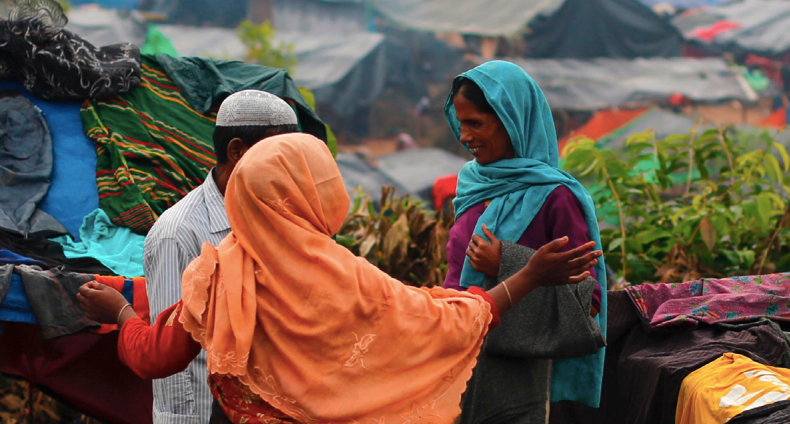
"For people affected by displacement, communication is critical - it is a lifeline."
This document, published by Deutsche Welle (DW) Akademie, looks at the issue of communication and media in the context of displacement settings. Drawing on examples of good practice and more detailed case studies, the paper encourages communication stakeholders to widen their thinking and practice in displacement contexts and explore ways in which more sustainable communication networks can take shape. It offers eight recommendations on issues like participation, coordination, and research to support more equitable communication and information-sharing. The report is based on consultations with a broad range of communication specialists, humanitarian professionals, and media working in displacement settings.
As explained in the report, "Big strides have been taken to improve participatory communication in displacement contexts, helped by global humanitarian commitments to dismantle top-down systems and create more responsive mechanisms to enable the participation of affected populations in response, recovery and longer-term development efforts. This is evidenced by recognition of and investment in the areas of communication, community engagement and accountability as pillars of humanitarian action. In this evolving humanitarian communication landscape, media goes beyond professional news gathering and broadcast. It is a flourishing arena encompassing citizen journalists, professional activists, civil society organizations, community groups, interfaith and other interest groups, community leaders, influencers and many more." Nevertheless, while significant progress has been made in terms of communication in international development and humanitarian responses in the past decades, the report makes the point that there is still room for improvement. Communication is still undervalued and underfunded, and still too often it is seen simply as a means for messaging by international actors.
Each section in the report highlights one or two of the eight recommendations that are meant to increase opportunities for people affected by displacement to have a say and lead communication initiatives or activities through media. The recommendations are supported by a discussion of best practices, as well as case studies from around the world that provide key insights into different communication models and participatory methods being used.
Recommendation 1: Ensure people affected by displacement are prioritised as both communicator and audience.
Two case studies are highlighted here to show how this can be achieved in practice. The first is Hagiga Wahid, a misinformation management project developed by the Sentinel Project to provide information and facilitate dialogue for South Sudanese refugees and Ugandan host communities in Rhino Camp Refugee Settlement in Arua, Uganda. The project is focused on countering harmful rumours, which contribute to conflict and tension between community groups. The second case study is a global project by Internews called Rooted in Trust. Described as "a global pandemic information response program", the project tracks and responds to harmful rumours at scale in more than 10 countries. The project focuses on working with communities affected by displacement and insecurity, working with them to provide reliable information via relevant channels in formats people need and want.
Recommendation 2: Make information needs assessments routine and participatory, and explore ways to share data with other stakeholders to avoid duplication.
This section look at the Sikika project in Kenya, which is being implemented by FilmAid Kenya and DW Akademie. By identifying significant information gaps for refugees in Kakuma and Kalobeyei Settlement and host communities in Turkana, the project seeks to improve information access and foster dialogue, with community members taking the lead. The project facilitates conversations between different community groups by creating content based on the perspectives and concerns of community members and by producing an audio magazine that is distributed to listener groups using WhatsApp, SD cards, and USB drives.
Recommendation 3: Invite media and media development organisations into humanitarian coordination mechanisms to play an active role in feedback collection, reporting, response and action.
Following the public exposure of abuse cases in the aid sector in 2018, the case study in this section is about the Community Outreach and Communication Fund (created by the United Nations High Commissioner for Refugees (UNHCR) and the International Council of Voluntary Associations), which supported 19 non-governmental organisations (NGOs) to carry out projects to raise awareness and offer training related to sexual exploitation and abuse (PSEA), specifically with regard to informing people about their rights, the responsibilities and conduct of aid organisations, and reporting channels. Many of the projects worked closely with media, with some partnering with large media networks to more effectively inform communities about PSEA and the process to make complaints.
Recommendation 4: Consider ways to build authentic partnerships with forcibly displaced people, which means sharing decision-making, balancing power, and providing funds and capacity building to enable local initiatives to take root.
A network of international NGOs called "Accelerating Localization through Partnerships" identified 5 key factors that need to be in place for an authentic local partnership to develop: (i) budget: adequate funds are allocated to the local partner; (ii) capacity building: continual training and support is given; (iii) responsiveness to feedback; (iv) equality in partnerships; and (v) ethical recruitment.
Recommendation 5: Allocate adequate time to support organisations to adopt participatory approaches in contexts where top-down, hierarchical communication methods have dominated.
As an example to inform the above two recommendations, the report looks at DW Akademie's Palonger Hota radio project in Cox's Bazaar, Bangladesh, the local implementing partner is not a media organisation but an NGO, which is developing expertise in media to provide information for refugee and host communities in Cox's Bazaar and to increase understanding and dialogue between communities. The project offers an opportunity for NGO staff to learn new skills and participate in communication initiatives that would otherwise be impossible, as Rohingya people are not permitted to work and face severe restrictions on their movements.
Recommendation 6: Assess and manage potential participation risks in the project's early phases, and develop strategies that allow people to take part without causing them or those around them harm.
As explained in the report, the success of media projects in displacement contexts to facilitate communication between different groups and enable people to have a say is rooted in a participatory editorial agenda. As an example to highlight how projects can provide vulnerable communities with the means to develop editorial agendas according to their information needs, the report looks at the community media projects of Réseau Africa Volontaire and the World Association for Christian Communication in Burkina Faso. The projects provide different community groups with training and equipment to establish local media channels and publicise information about the effects of climate change in order to support local climate mitigation strategies.
Recommendation 7: Consider media as a partner, tool, and platform to build connectedness, purpose, and solidarity for people affected by displacement, including host communities.
Media play an important role in building social cohesion and connectedness between diverse community groups and supporting the integration of refugees, migrants, and internally displaced persons (IDPs) into local communities. To highlight how media can contribute to reducing tensions and enabling dialogue and cooperation, the report looks at the Kallo Karayé project in Niger, run by Search for Common Ground and UNHCR. Part of the project, which works to promote leadership and community engagement and strengthen community resilience, involved carrying out a "conflict scan", a survey to collect information about conflict and tensions among refugee and host communities to inform the programmatic decisions of the actors operating in the target areas.
Recommendation 8: Apply commons-based approaches to sharing knowledge, resources, and the production of information, keeping in mind accessibility and language for local partners.
It is widely acknowledged that coordination is essential for effective humanitarian action. Over the last decade, efforts have increasingly been made to develop common services for communication, community engagement, and accountability in the form of inter-agency working groups, alliances, and common service platforms. In displacement contexts, coordination and communication challenges particularly arise from the movement of people across borders. The Cross Border Network project run by DW Akademie in South Sudan and Uganda sought to address this challenge by focusing on strengthening collaboration between journalists in neighbouring Uganda and South Sudan. The key objectives of the project are focused on: strengthening the capacity of journalists and media organisations to report on cross-border issues ethically, safely, and sensitively; providing content that brings to light the perspectives of migrants, refugees, and IDPs; and providing timely information to these communities.
DW Akademie website on July 28 2022. Image credit: DW Akademie