










































1 minute
Learning with Community Media: Stories from the Commonwealth and Latin America
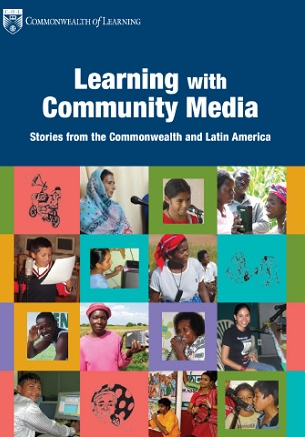
This book seeks to provide insights into the practice of participatory educational communication using community media, particularly radio and, increasingly, mobile devices. It shares a wide range of experiences of community media, as well as education and development groups, in conceiving, designing, delivering, and evaluating participatory communication programmes in developing countries of the Commonwealth and Latin America. It profiles educational participatory communication experiences from the perspective of facilitators, trainers, and stakeholder individuals and groups, as well as participants. It also provides stories of participatory communication and learning programmes by community-based media and development groups, bringing together experiences from developing areas of the Commonwealth with those of Latin America. Chapters address different themes and challenges faced by community media, including how to involve communities in ways that result in meaningful participation, what makes for compelling programming, and how to integrate mobile devices and telephony to engage audiences.
This publication is part of a process designed to help put education more squarely on the agenda of community media groups and to put community media on the radar of education and developmental groups. Both offer the opportunity to launch new educational programmes as well as to promote a more participatory approach to learning.
The guide is divided into the following parts:
- Part one: The educational potential of community media
- Part two: Stories of learning
- Part three: Praxis in Latin America
- Part four: Praxis in the Commonwealth
- Part five: Tools for integrating mobile devices and telephony
English
160
Commonwealth of Learning website on June 21 2013.