










































Knowledge and Attitudes Towards Influenza and Influenza Vaccination among Pregnant Women in Kenya
Kenya Medical Research Institute (Otieno, Nyawanda, Otiato, Adero, Wairimu, Atito); Emory University Rollins School of Public Health (Wilson, Gonzalez-Casanova, Malik, Omer); Centers for Disease Control and Prevention, Kenya (Verani, Widdowson, Chaves)
"Understanding determinants of influenza vaccine acceptance during pregnancy in low- and low to middle-income settings is important to inform rollout of maternal influenza vaccination programs and guide strategies to promote uptake of the vaccine."
Despite the World Health Organization (WHO) Strategic Advisory Group of Experts (SAGE) recommendation to prioritise pregnant women for influenza vaccination, many low- and middle-income countries (LMICs) have yet to make official recommendations; in places with such policies, uptake of the vaccine remains suboptimal. In an effort to inform decision-making on future plans to expand the pregnancy vaccination platform in Kenya, this study sought to understand knowledge and attitudes of Kenyan pregnant women on influenza vaccination and factors that would influence their willingness to receive influenza vaccines during pregnancy.
The researchers interviewed a convenience sample of 507 women at antenatal care facilities in 4 counties (Nairobi, Mombasa, Marsabit, Siaya) in Kenya, whom they had recruited from October 2017 through January 2018. The survey instrument was based upon previously used questionnaires and the compendium of survey questions developed by the WHO SAGE working group on vaccine hesitancy.
Overall, 369 (72.8%) women had heard of influenza. Among those, 288 (78.1%) believed that a pregnant woman would be protected if vaccinated, 252 (68.3%) thought that it was safe to receive a vaccine while pregnant, and 223 (60.4%) believed that a baby would be protected if the mother was vaccinated. If given an opportunity, 309 (83.7%) pregnant women were willing to receive the vaccine. Factors associated with willingness to receive influenza vaccine were mothers' belief in protective effect (odds ratio (OR) 3.87; 95% confidence interval (CI) 1.56, 9.59) and safety (OR 5.32; 95% CI 2.35, 12.01) of influenza vaccines during pregnancy.
Comparing these results with studies in countries where the government already recommends influenza vaccine during pregnancy, Kenyan women had more confidence in the effectiveness and safety of influenza vaccines. However, the researchers point out that it is difficult to predict if this high level of vaccine confidence would translate into actual acceptability of the influenza vaccine if offered. (Tetanus vaccine is currently the only vaccine recommended during pregnancy in Kenya and provided free of charge.)
The fact that approximately one-third of pregnant women interviewed had never heard of influenza suggests that education on the benefits of vaccination could be an effective strategy to improve vaccine acceptance. Furthermore, independent predictors of willingness to be vaccinated were the belief that the influenza vaccines are effective and safe for pregnancy. Thus, public health messages focusing on the effectiveness of the influenza vaccine in protecting mothers and babies and the long safety profile of influenza vaccine among this group may help prevent hesitancy when the programme is implemented in Kenya.
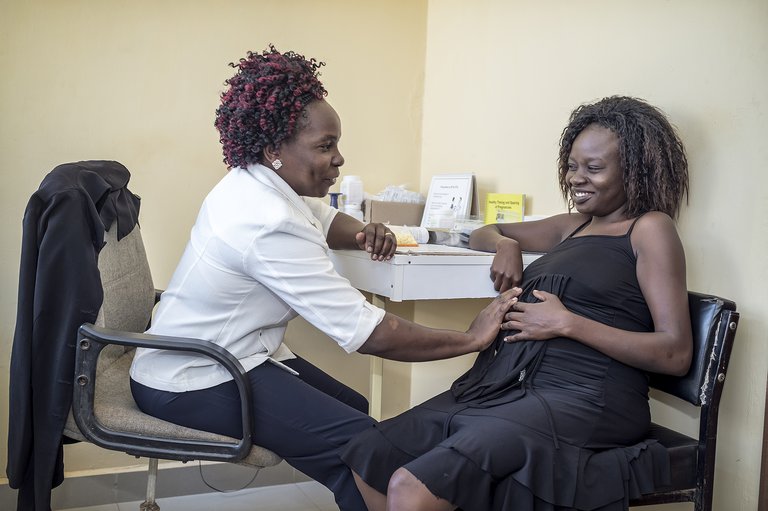
Another predictor of willingness to accept vaccination when comparisons were made with mothers who were not sure of receiving the vaccine was the belief that any maternal vaccines offered by the government programme in the community are beneficial. "Government recommendation for maternal influenza vaccination in Kenya may lead to high rates of vaccine acceptance because of the overall trust placed in the government vaccination programs." This shows the importance of government engagement on vaccine recommendations and targeted public health messages. Antenatal care (ANC) settings with government healthcare providers represent an opportunity to provide women with information on influenza vaccines.
In conclusion: "strategies for improving influenza vaccine acceptance may aim at improving overall knowledge of influenza among pregnant women, mitigating safety concerns, and educating hesitant mothers on the benefits of vaccinating during pregnancy for themselves and their new-borns."