










































Kenya Political Violence - Were Media Responsible?
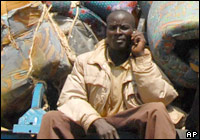
In early 2008 the development community watches carefully as Kenyan political tensions and violence rose. A central policy issue was the role of the media. Prompted by that question, The BBC WST, with Kenyan partners produced a paper that "...examines political polarity in the media and its function as a political tool..." For a summary and to access the full text click here.
Policy conclusions described as relevant to development policymakers include:
- "The media... play a central role in shaping Kenya’s democracy. The recent record of the media, according to many within it, is that media has undermined as well as invigorated that democracy....[The briefing urges] development actors to be better engaged and more supportive of media in the future.
- The problem facing Kenya's media is not an excess of media freedom... [but rather] a lack of it....Journalists and broadcasters face immense commercial and political constraints which are constraining their journalistic independence and integrity.
- Some local language radio stations have incited fear and hatred....Talk shows have provided the greatest opportunities for hate speech and... [hosts] are not trained in conflict reporting or moderation....[T]his [training] was [felt to be] a priority.
- [L]ocal language stations appear to have been playing an important role in calming tension and promoting dialogue. A strengthening of such a role... will form a critical contribution.
- Training... remains a major priority, [particularly] training talk show hosts and others engaged in facilitating public debate. Training [journalists] on conflict reporting [is] now consider[ed]... an urgent need.
- [A] debate [on media policy and regulatory environment] should be encouraged, and particular attention could usefully be focused on a public interest approach to broadcasting and media.
- Media monitoring by civil society and research organisations has done a good deal to discourage the broadcast of hate speech by media organisations. Such monitoring is currently haphazard and could be more systematic and better supported.
- Community media has... emerged with great credit [in calming the violence] and arguably provides a model for the future. It requires better, more strategic engagement and support in Kenya and elsewhere. This support is partly a question of policy engagement, partly one of financial, funding and sustainability models.
- The poor remuneration, status and safety of journalists is hampering a free and plural media. Substantial progress in strengthening the media will not be possible unless the working conditions of journalists are improved.
- There is no independent public service broadcaster in Kenya. If there is a debate and a move in the country to transform [a station] ... into one, it could usefully be intensively supported.
- Kenya faces the most important public debate in its history. The media will be central to its character, conduct and its outcome. An inclusive and balanced debate may need financial support.
- Coordination, information sharing and long term strategic planning of media support within Kenya could be substantially improved, including in ensuring that external media support is both demand led and strategically coherent. Much capacity building of media over recent years has been donor led (focused for example on specific health or other issues) rather than addressing the core challenges facing media in Kenya."
The document's overall conclusion is that "[t]he role of the media in Kenya's crisis was entirely preventable, and had it been prevented, the violence itself may well have been much more limited. Its role in the future may be critical in the reconciliation and restoration of democratic legitimacy in the months and years ahead."
For an expanded summary and to access the full text click here
Comments

Media-Society-Media-Society
Is there not a fundamental policy flaw at the heart of the BBC WST paper - a flaw reflected in overall media development policies by AID agencies - that in some way the "media" can be treated as different than society. When clearly there is a direct relationship - indeed not even a relationship but they are one and the same thing. Witness media in Russia under Putin - no public outcry. Or how about media in USA post 9/11 - overtly patriotic. Impossible to understand Canadian medi a in absence of understanding Quebec-Canada relationship and that 90% of Canadians live within 100 miles of USA border. So why are we so surprised when media itself reflects and communicates - gives voice to - the tensions in Kenya? Is that not just the "national conversation" that media so proudly claims as its role?

role of media
koli matolo
the media has a role of dissemminating information in the public interest,when kenyan media was barred from live broadcast the audiences were thrown in a kind of anxiety which only heightened the tension which was there as they waited for the results of the concluded elections. this communication blackout tensed kenyans even more thus the government played a role by creating the suspense. even if the media reported on the violence, the violence had to start from some where and definately the media picked it from there . may be their responsibility was lack of maturity and objectivity in reporting the volence.
kenya
so this is the political problems in kenya?