










































Journalism, 'Fake News' & Disinformation: Handbook for Journalism Education and Training
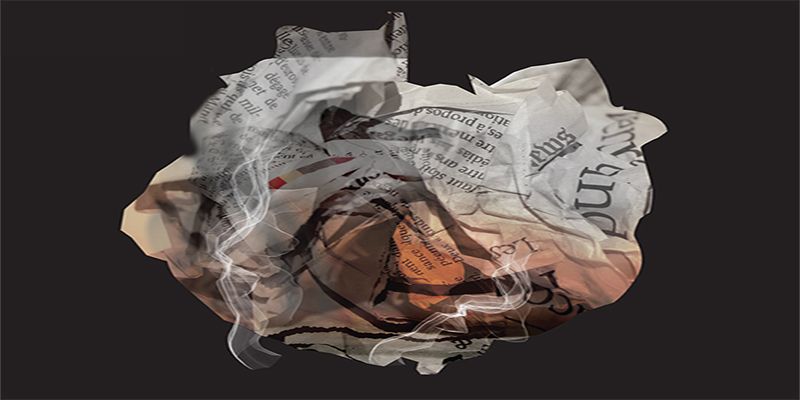
"Disinformation and misinformation go beyond challenging journalists' reputations and safety. They question their purpose and effectiveness, and they perpetuate the degradation of journalism to the detriment of civic discourse. Improving standards and social relevance is in the interests of all future journalists, and to society as a whole."
United Nations Educational, Scientific and Cultural Organization (UNESCO)'s International Programme for the Development of Communication (IPDC) engages with teaching, practising, and researching of journalism from a global perspective, including sharing international good practices. To that end, this handbook seeks to serve as an internationally relevant curriculum, open to adoption or adaptation, which responds to the emerging global problem of disinformation that confronts societies in general, and journalism in particular. Its over-arching purpose is "to deepen critical thinking capacities and strengthen defences among student journalists, professional journalists and others who undertake 'acts of journalism'."
According to IPDC, "[a] range of factors are transforming the communications landscape, raising questions about the quality, impact and credibility of journalism. At the same time, orchestrated campaigns are spreading untruths - disinformation, mal-information and misinformation - that are often unwittingly shared on social media." In this context, the handbook is designed especially for journalism educators - highlighting what can be done by journalists themselves and by the people who educate and train them - but may help other readers become more informed about the range of societal responses to disinformation problems, including those by governments, international organisations, human rights defenders, internet companies, and proponents of media and information literacy.
As a curriculum, this handbook falls into two parts: the first three modules frame the problem and give it context; the next four focus on responses to "information disorder" and its consequences. Specifically:
- Module One, Why it matters: truth, trust and journalism encourages thinking about the broader significance and consequences of disinformation (information that is false and deliberately created to harm a person, social group, organisation or country) and misinformation (information that is false but not created with the intention of causing harm), and how they feed the crisis of confidence in journalism.
- Module Two, Thinking about 'information disorder': formats of misinformation and disinformation unpacks the problem and gives a framework for understanding the dimensions of the problem.
- Module Three, News industry transformation: digital technology, social platforms and the spread of misinformation and disinformation notes that, in the 21st century, in most parts of the world, trust in media was declining before social media platforms entered the news arena, offering spaces and tools for anyone to share information, including fraudulent news - with implications for journalists, media and society.
- Module Four, Combatting disinformation and misinformation through Media and Information Literacy (MIL) looks at how those promoting journalism, including educators, practitioners, and media policymakers, should respond.
- Module Five, Verification: fact-checking 101 focuses on the discipline of verification, which is what separates professional journalism from the rest.
- Module Six, Social media verification: assessing sources and visual content is practical, dealing with challenges of verification and evidence-based journalism that have been thrown up by digital technology and social media.
- Module 7: Combatting online abuse: when journalists and their sources are targeted informs participants about the risks of online abuse in the context of "information disorder"; helps participants to recognise threats; and provides skills development and tools to assist in combatting online abuse.
IPDC points out that many of the techniques examined can be deployed in reporting tasks through "self-directed learning". Some case studies might also serve as inspiration for rooting local story ideas in more complex contextual underpinnings (e.g., a story about a hoax that fooled local journalists could be reported in the context of the history of hoaxes internationally, with an emphasis on recent developments in the viral distribution of disinformation and misinformation via social media). Along those lines, the lessons are intended to be adapted to suit particular national, cultural, institutional, and industry contexts of teaching and learning. The authors encourage educators, instructors, and participants to infuse the handbook's case studies, examples, and sources with those reflecting experiences in their own regions and in their own languages.
English, Bahasa Indonesia, Portuguse, Russian, Thai, Vietnamese
128
UNESCO website, December 2 2019.
- Log in to post comments