










































Innovative Vaccine Delivery Strategies in Response to a Cholera Outbreak in the Challenging Context of Lake Chilwa. A Rapid Qualitative Assessment
Agence de Médecine Préventive (Heyerdahl, Demolis, Rafael, Cavailler, Le Gargasson, Mengel, Gessner, Guillermet); University of Malawi, College of Medicine (Ngwira, Nyirenda); Ministry of Health Malawi (Mwesawina)
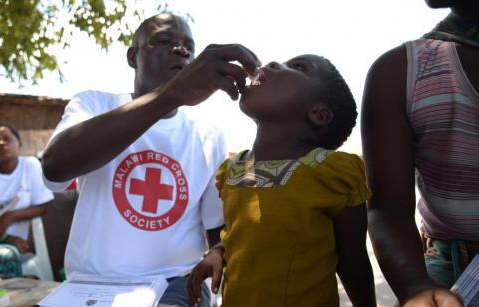
A reactive campaign using 2 doses of Shanchol oral cholera vaccine (OCV) was implemented between February and March 2016 in the Lake Chilwa Region of Malawi in an effort to reach fishing-dependent communities. Three strategies for the second vaccine dose delivery (including delivery by a community leader and self-administration) were used to facilitate vaccine access. From January to March 2016, researchers conducted a rapid qualitative assessment prior to and during the campaign to investigate anticipated and observed acceptability of OCV and delivery strategies among 313 study participants.
As is explained here, Lake Chilwa has experienced recurrent cholera outbreaks since the 1980s, which have had a high impact on the fishing communities. The most recent outbreak was reported in December 2015; the index case was a fisherman residing in zimboweras (floating homes on the lake). Based on the positive results of an OCV campaign organised in Nsanje District, Southern Malawi in March and April 2015, the Ministry of Health (MoH) decided to organise a reactive OCV campaign with support from the World Health Organisation (WHO), Médecins Sans Frontières (MSF), and Agence de Médecine Préventive (AMP), collaborating as an interagency OCV group.
Prior to and during the campaign, a short questionnaire, aimed at collecting social characteristics and key elements regarding perceptions of cholera and vaccines, was administered via in-depth interviews (IDI) with 67 participants and 35 focus group discussions (FGDs).
Participants explained that clusters of zimboweras usually include a so-called "tea room", and the tea room owner is described as influential. During the OCV intervention, tea rooms were used as a delivery point for vaccines and water, sanitation, and hygiene (WASH) items, and the owners acted as local focal points. The zimboweras were identified as the starting point of the 2015 outbreak, which elicited calls for the fishermen's eviction. According to community leaders living on the shore and the islands, half of the fishermen decided to stay and defend their floating homes. This conflict, spurred by the outbreak, culminated with a cluster of zimboweras being burned by angry villagers in Namanja. As a result, before the OCV campaign, some fishermen stated being afraid when they saw motorboats circling their zimboweras and people on board taking pictures (without communicating why) in early January 2016. Some fishermen reported that rumours were spreading about potential forced eviction. One rumour in particular suggested that the lake had been sold to Mozambique and that a vaccine campaign (by injection) would be organised to hurt the fishermen. Aside from these rumours, the participants were eager to receive OCV.
More specifically, before the campaign, 100% of respondents on the shore (n=49), 97% on the islands (n=36), and 97% in the zimboweras (n=32; see Annexes, Table 3) declared they would accept the vaccine if it were introduced. During the campaign, the vast majority of participants received, or were planning or willing to receive, the vaccine. Only a few refused, due to: vomiting after the first dose; the feeling that old age would make them immune to cholera; and the fear that the vaccine was a contraceptive, "not sexually safe". For the second dose, several participants indicated that vaccination dates, and where applicable sites, were changed or not communicated - leading to missed doses of OCV. All participants declared that receiving the vaccine would not negatively impact their own water and sanitation practices. However, half of them declared that other community members may behave less hygienically as a consequence.
Several HSAs reported that some Chichewa speakers may have misunderstood the nature of OCV because of international stakeholders' use of the word "cholera" in printed materials. "Cholera" reads as "tcholera" in Chichewa and can literally be understood as "it is a contraceptive" ("cho" meaning it is, "lera" an abbreviation of "kulera"). The word "kulera", which means to "rock a baby to sleep" has been used to describe family planning in Chichewa. The Chichewa word for cholera (the disease) is spelt "kolera". This suggests the need for ongoing vigilance in all communications during the campaign and about unexpected barriers to vaccine uptake.
The study found that lack of communication on lack of 100% vaccine efficacy and the delay between administration and protection likely contributed to some loss in vaccine confidence among participants witnessing cholera cases among vaccinated individuals.
The report also shares participants' perceptions of vaccine delivery strategies, of vaccine administration techniques (oral vs. injectable), of vaccine efficacy, and of vaccine safety.
Overall, the findings confirm the need to:
- ...identify and include hard-to-reach and vulnerable groups, such as fishermen, to ensure that OCV is delivered equitably.
- ...conduct logistical and sociological assessments to identify locally pertinent stakeholders (such as tea room owners), bottlenecks to acceptability (pre-campaign rumours, reactions to cases during the campaign), and practical hurdles to vaccine preservation (mobility of fishermen in practice).
- ...take findings from such assessments and incorporate them into campaign designs and pre-campaign communication tools.
- ...be aware of available information that can assist with campaign design (e.g., studies showing efficacy of orally administered vaccines, including OCV, could be used in social messaging).
In conclusion, the researchers suggest that acceptability, uptake, and continued WASH practices could be increased through communication on the level of protection afforded by the vaccine, the delay in seroprotection, and appropriate vaccine storage options for the self-administration strategy. Mass vaccination campaigns, especially those using new vaccines, can benefit from prior studies to increase the understanding and reach of the intended population - e.g., by understanding socio-cultural conditions that might influence vaccine acceptance.
Vaccine Volume 36, Issue 44, 22 October 2018, Pages 6491-6496. Image credit: Aurelie Baumel, MSF, 2016.
- Log in to post comments