










































Information Ecosystem Assessment: Flow, Needs, and Access in Ethiopia
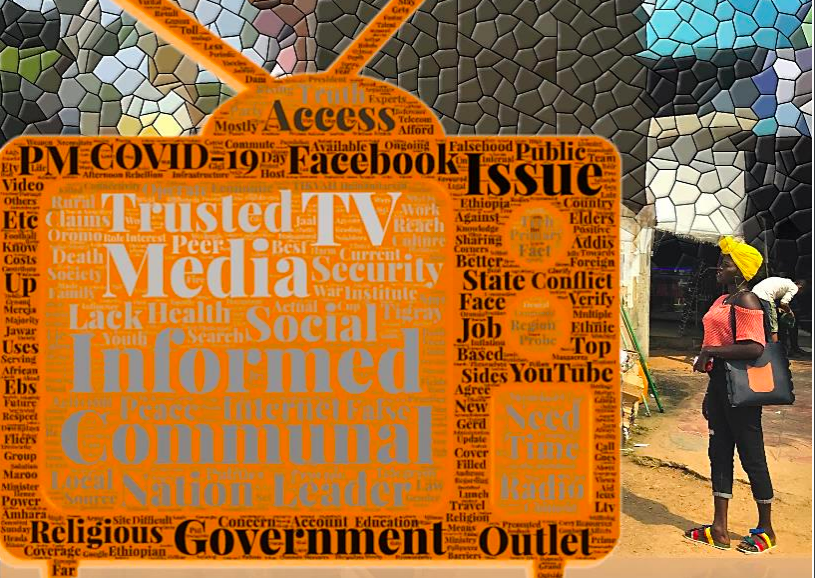
"While there are hopes for the ongoing media reform process, the opening of the political space, freedom of information, access to information, and citizen participation in the socio-political realm remains a challenge."
This assessment, conducted by Internews, seeks to provide a comprehensive understanding of the full spectrum of the information ecosystem in Ethiopia. Specifically, it explores what channels people have access to, what kinds of channels are available, what kinds of information is provided, and the main actors in the sector.
The assessment was conducted using Internews' Information Ecosystem Assessment (IEA) methodology, which is designed to analyse both the supply and demand sides of media production. To gain a comprehensive understanding of both urban and peri/urban/rural locations, the assessment was conducted in two locations in Ethiopia: Gambella Region and Addis Ababa City Administration. A total of 240 respondents participated in the assessment, of which about one-third are female. The report also includes a desk review looking at the national media landscape and the community media landscape.
To provide some context, the report explains how Ethiopia once ranked among the worst countries globally for media freedom. However, since media reforms that started being implemented in 2017, the media space in Ethiopia has opened up considerably. Yet it remains fluid, with a combination of positive and negative developments. The report seeks to shed light on how the media landscape has evolved and also provides some insight into how COVID-19 has affected this sector.
Overall, the findings of the study indicate that while, since 2018, there has been a more open space for the media to get information and share it with the community, there are still major gaps in the areas of access to timely information by the media, infrastructure for mainstream media operations in the regions, technical capacity of media practitioners, and information verification mechanisms.
In addition, there is a visible difference in the media landscape between the capital city, Addis Ababa, where there are adequate channels and relatively better access to information, and the Gambella Region, where there is next to no access to mainstream media, very poor infrastructure, and a restrictive government structure. The findings also show that consumer feedback and information verification mechanisms and practice are low among the media interviewed in this study. This is the result of lack of awareness and resources to establish and practice the mechanisms. Legacy media are quickly adapting to the digital media as complementary to their mainstream channels. But due to lack of a well-regulated digital media and the limited efforts and/or capacity of the government to enforce the existing laws, misinformation and fake news on social media has significantly eroded the recipients' trust.
On the consumers' side, the findings show that there is a dire need for credible and accurate information, with the topics most sought after being peace, security, and politics - possibly reflective of the current state of the nation. The absence of adequate verification sources has forced consumers to rely mainly on government-run channels for national issues.
Social media is generally the preferred channel of communication. It has provided a much freer space, convenient for access to a wide range of channels using mobile phones. However, due to hate speech, fake news, and misinformation, consumers' trust in information from social media sources has slumped. Word of mouth is still the most widely used and trusted channel to exchange information. In Gambella, there is also a need for alternative, independent media channels that produce content in local languages and that engage with audiences through feedback mechanisms.
Based on the findings, the report offers the following recommendations:
- Build the capacity of media professionals: Media professionals need to gain more knowledge on social media content development and management, and feedback and verification mechanisms.
- Create awareness about media and communication among government structures: Officials in the lower government structures determine the successful execution of laws and regulations. Therefore, creating awareness on existing laws and regulations, as well as accountability, could facilitate better access to information for consumers.
- Create awareness about communication and community engagement (CCE) and media for non-media information providers: Non-governmental organisations, community-based organisations, and other similar structures can benefit from having a better understanding and tools about community engagement and communication in the era of digital media.
- Design a localised approach to best serve consumers: Conducting further assessment and developing a communication strategy relevant to the intended consumer is key in successfully implementing a media- and communication-focused intervention.
- Advocate for information verification and feedback mechanisms: Building the capacity of existing platforms, providing financial and technical support, and advocating for the establishment of these systems can contribute to tackling fake news, rumours, and misinformation.
- Conduct further study: The findings of this assessment are not conclusive about the study areas. Thus, additional investigation needs to be done.
Internews website on July 22 2021.
- Log in to post comments