










































Time to read
less than1 minute
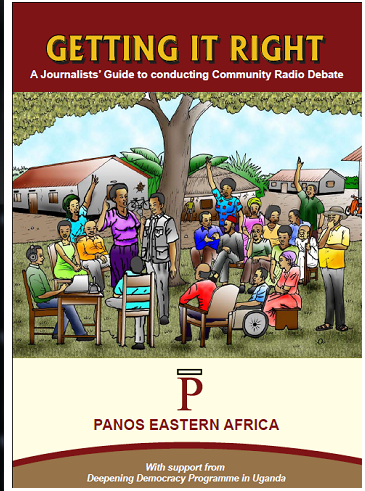
Getting it Right: A Journalists’ Guide to Conducting Community Radio Debate
Image
SummaryText
This guide, published by Panos Eastern Africa with support from Deepening Democracy Programme in Uganda in 2011, highlights the role of radio producers and moderators in reaching rural communities, recognising that they too can set agenda for news and debate on radio, thereby positively contributing to the country’s development. It offers a brief insight into the broadcast environment in Uganda, with a focus on radio and community radio in particular. It also guides community broadcasters through the process of choosing formats, producing a radio debate, preparing debaters, and eliciting audience involvement. In addition, the guide provides a brief look into Ugandan media’s legal context to enable readers to understand the confines within which the Ugandan media and specifically the broadcast media operate.
According to the publishers, this guide responds to challenges like poor professional standards among rural journalists, lack of skills and avenues for research, poor investment in professional development on the part of rural media owners, poor remuneration and lack of motivation, all unearthed during implementation of the Rural Radio Debate project. These have been compounded by a relatively restrictive legal regime. It underscores the importance of building a skilled caliber of journalists; research in journalism; and the role journalists, producers, and editors can play in ensuring free flow of information and ideas through debate involving grassroot communities.
The guide is divided into following chapters:
- Chapter One: The broadcasting industry
- Chapter Two: Radio debate
- Chapter Three: Legal regime governing the media in Uganda
- Chapter Four: Conclusion
Publication Date
Languages
English
Number of Pages
50
Source
Panos Eastern Africa website on February 15 2012.